Build Better with a Trusted Design and Build Company London
By londondesignbuild
137 Views
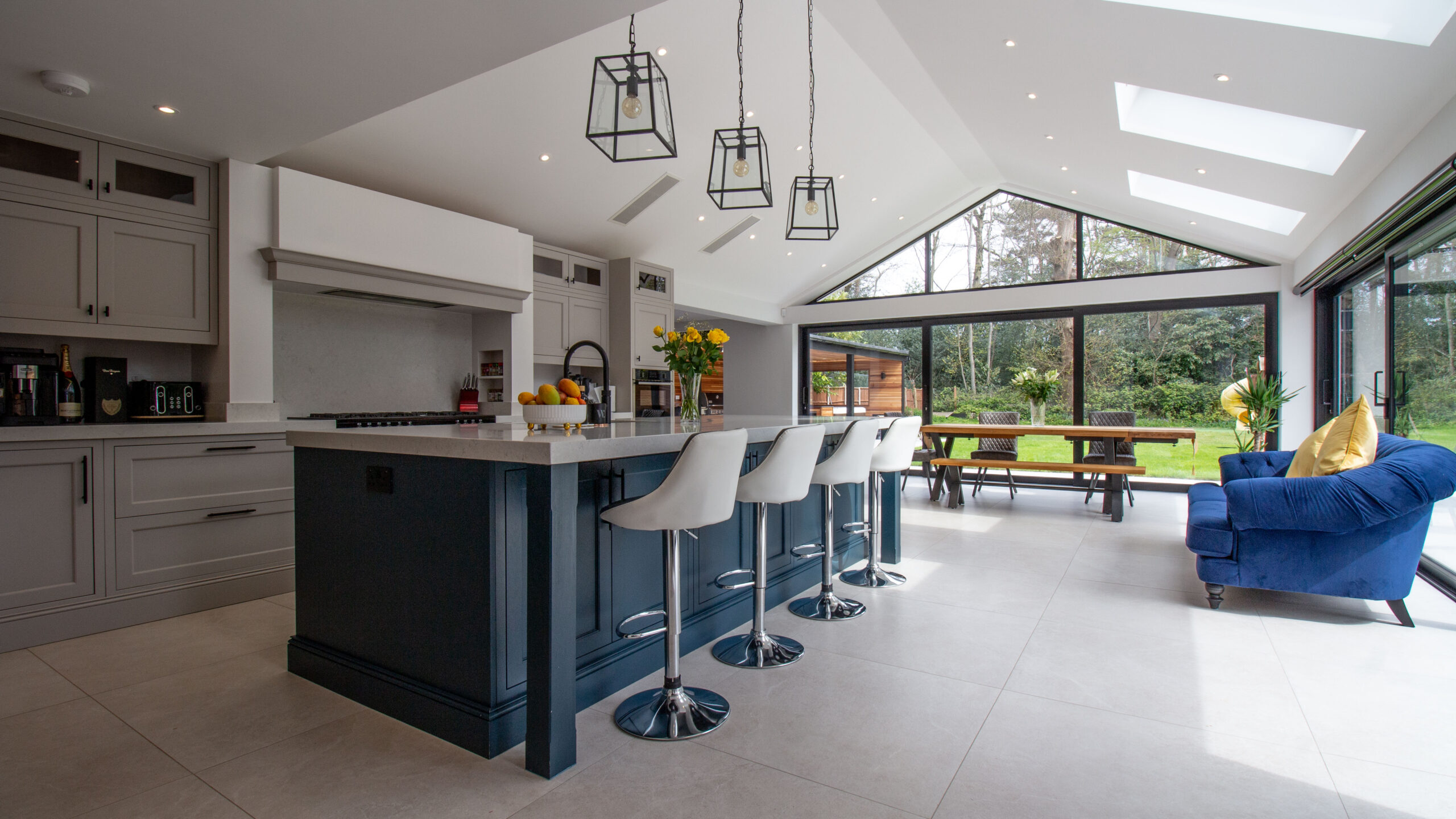
There is a particular kind of confidence that comes from knowing your building project is in the right hands. Not the forced optimism of someone who has signed a contract and is hoping for the best, but the genuine assurance that comes from having chosen a team with the proven expertise, the transparent processes, and the structural accountability to deliver what they promised. That confidence is not luck. It is the product of a deliberate decision made early, before drawings are produced or contracts are signed, about who you are going to trust with something that matters. Working with a trusted design and build company London is that decision, and understanding what genuine trustworthiness looks like in this industry is the first step toward making it with confidence rather than hope.
Why Trust Is the Scarcest Resource in London Construction
London's construction market is large, competitive, and remarkably varied in quality. At one end sit firms with deep expertise, rigorous processes, and a track record of delivering complex projects to satisfied clients. At the other end sit operations that present professionally, quote compellingly, and then systematically underdeliver once the contract is signed and the leverage has shifted.
Between those extremes lies a wide spectrum of capability, and the challenge for any client approaching a project is that distinguishing between points on that spectrum is genuinely difficult without the right framework.
The problem is compounded by the fact that construction is not a repeat purchase for most people. Homeowners renovate infrequently. Developers build regularly but still face the challenge of evaluating new firms in new contexts. Unlike buying a car or choosing a restaurant, there is no easy way to sample the product before committing. By the time you know whether your contractor was trustworthy, you are already deep into a relationship that is expensive to exit.
This is why the signals of trustworthiness that are visible before a project begins matter so much. They are the only reliable data available at the point when the most important decision is being made.
What Trusted Actually Looks Like in Practice
Trust in a design and build context is not a feeling. It is a set of observable behaviours that either are or are not present when you interact with a firm during the pre-contract phase. The way a company responds to your initial enquiry tells you something. The quality and detail of their proposal tells you more. The way they handle your questions, particularly the difficult ones about what happens when things go wrong, tells you almost everything.
Trusted firms are specific. They produce proposals that leave very little undefined, because vagueness is where disputes are born.
They explain their pricing in terms that a non-specialist can follow, because they want the client to understand what they are buying, not just accept a number. They talk about problems that arose on previous projects and what they did about them, because they are confident that their track record of problem resolution is an asset rather than a liability.
Firms that are not trustworthy behave differently. They are vague about what is included. They discourage detailed questions about pricing with reassurances that it will all work out. Their references are difficult to reach or suspiciously uniformly positive. They present the best case scenario as the expected scenario, because they need the contract more than they need the client to be properly informed.
The Role of Integration in Building Trust
One of the most reliable structural reasons to trust a design and build company over a traditional architect-plus-builder arrangement is the accountability that integration creates. When a single company is responsible for both the design of your project and its physical construction, there is nowhere for problems to hide. If the design produced a structural detail that the construction team found difficult to execute within budget, that is an internal problem to be solved internally. The client does not become the mediator between two parties blaming each other.
This integration also produces more honest pricing. A company that designs what it then has to build has a direct financial incentive to design accurately and price completely. Optimistic assumptions about what can be achieved for a given sum come back to cost the company rather than the client. This alignment of financial interests is not incidental to the design and build model. It is one of its fundamental advantages over traditional procurement.
Building Better Means Starting Better
The quality of a finished building is largely determined before the first tool appears on site. It is determined by the quality of the brief developed in the initial consultation, the thoroughness of the site investigation, the resolution of the structural and architectural design, the precision of the specification, and the realism of the programme. A trusted design and build company invests seriously in all of these upstream activities because it understands that the construction phase runs smoothly only when the preparation that precedes it has been done properly.
This upstream investment is one of the clearest differentiators between firms that consistently deliver and firms that consistently disappoint. The temptation to rush the pre-construction phase, to get to site quickly and resolve unknowns as they arise, is real and commercially understandable. It is also one of the most reliable predictors of a troubled project. Building better starts with preparing better, and preparing better takes time, expertise, and the discipline to do the work properly even when doing it quickly would feel more productive.
The Standard London Design and Build Sets
London Design and Build has built its reputation by treating every stage of the process, from first conversation through to post-completion aftercare, as an opportunity to demonstrate the values that genuine trustworthiness requires. Transparent pricing that clients can interrogate and understand. Integrated teams that carry full accountability for both design and construction outcomes. Communication structures that keep clients genuinely informed rather than managed. And a finished product that reflects the brief agreed at the start rather than a compromised version of it shaped by mid-project pressures.
For anyone approaching a building project in London who wants to build better rather than just build, the starting point is a company whose trustworthiness is visible before the contract is signed. Everything that follows tends to reflect the quality of that initial choice.