Cultural Storytelling Through Food: BI-NA-BI's Afro-European Vision
By candus misheel
156 Views
Why Food Becomes a Vehicle for Cultural Storytelling
Food has always been one of humanity's most powerful vehicles for cultural storytelling. The ingredients we choose, the techniques we use, the combinations we create, and the meanings we attach to specific dishes all carry layers of cultural meaning that simple consumption cannot exhaust. A meal shared between people from different backgrounds can communicate respect, curiosity, hospitality, and connection in ways that words alone cannot achieve. Cultural storytelling through food works because food engages all the senses simultaneously, creating embodied experiences that abstract communication simply cannot match.
The cultural storytelling dimension of food matters increasingly in modern Zurich, where diverse populations bring traditions from across the world into shared everyday life. Food choices at celebrations, gatherings, and even ordinary meals carry signals about identity, values, and openness to other traditions. Catering that engages thoughtfully with this cultural dimension contributes to broader conversations about how diverse communities can share food experiences that honor multiple traditions rather than defaulting to any single tradition or watering everything down to lowest common denominators.
How BI-NA-BI's Vision Took Shape
BI-NA-BI emerged from founder Marie Sack's vision of bridging African heritage and European sophistication through food. The brand was built around a clear philosophical commitment: that cultural diversity deserves celebration through unforgettable Afro-European culinary creations rather than apologetic accommodation within other traditions. The vision shaped every aspect of how the catering work would unfold, from sourcing decisions through menu design through service approaches.
Five years of catering work in Zurich has refined this vision through countless events ranging from intimate family celebrations to large weddings to corporate gatherings. Each event has contributed to the team's understanding of how Afro-European fusion actually lands with diverse audiences, what specific combinations resonate most strongly, and how the broader vision translates into specific dishes and service approaches that guests genuinely appreciate. The accumulated experience makes the vision concrete rather than aspirational, expressed through actual menus and events rather than only through marketing language. BI-NA-BI's cultural fusion vision now extends across buffet catering and every other format for celebrations of every type and scale.
Telling Stories Through Specific Dishes
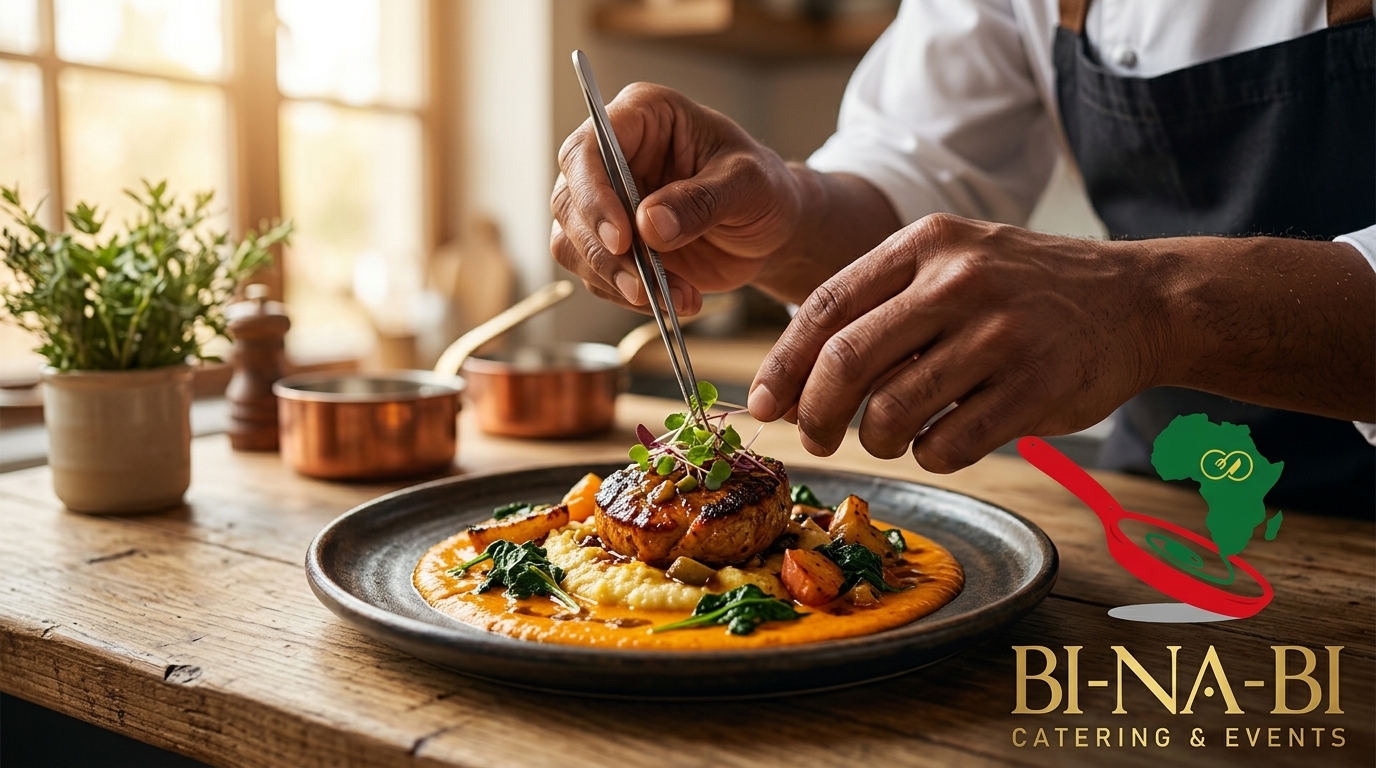
Specific dishes embody the cultural storytelling approach in concrete ways. Spicy plantain with basil-infused sauce tells a story of African ingredients meeting European herb tradition, neither tradition dominating but both contributing to something new. Roasted aubergine with a hint of African nutmeg uses a Mediterranean staple as the canvas for warming African aromatics, suggesting how familiar ingredients can be transformed by careful borrowing across traditions. Grilled fish prepared with Swiss herbs honors the local landscape while connecting to broader culinary heritage.
Plantain mash paired with seasonal Swiss vegetables demonstrates how a single plant ingredient can serve as the heart of a dish rather than just a side, with the plantain anchoring the plate while local vegetables provide complementary flavors and textures. Custom dessert presentations like chocolate-spice mousse and tropical fruit parfaits close meals with sweet finales that combine European dessert traditions with the brighter notes of African and tropical influences. Each dish carries cultural meaning that guests can taste even when they cannot articulate it specifically.
How Hosts Use Catering to Tell Their Own Stories
Hosts increasingly use their catering choices to tell stories about their own identities and values. A multicultural couple choosing Afro-European fusion catering for their wedding signals that their marriage is a meeting of traditions rather than a choice between them. A company hosting Afro-European corporate catering signals openness to cultural diversity and willingness to invest in distinctive experiences for its team. A family celebrating a milestone with thoughtful fusion catering signals that the family identity includes multiple cultural threads rather than a single dominant tradition.
These signals matter beyond the immediate event because they communicate to attendees something about the host's values and worldview. The communication happens implicitly rather than explicitly, through the experience itself rather than through speeches or explanations. Guests who attend catered events come away with impressions of the host that affect subsequent interactions and relationships. Hosts who recognize this storytelling dimension of catering choose with greater intention than those treating catering as just food provision.
Connecting Generations Through Cultural Food
Cultural food carries particular significance across generations within multicultural families. Older generations often hold strong connections to traditional dishes from their cultural origins, while younger generations may have more complicated relationships with those traditions, balancing connection to heritage with the modern lives they actually lead. Catering that bridges these generational perspectives matters significantly for family celebrations.
Afro-European fusion catering serves this bridging function naturally because the underlying philosophy honors traditional elements while introducing creative combinations that feel modern. Grandparents recognize traditional flavors and ingredients, even while encountering them in new combinations. Younger family members find the fusion approach aligns with how they actually navigate their cultural identities in daily life. The shared meal becomes a moment where multiple generations can connect with the family's heritage in their own ways while still sharing the experience together. Many family hosts describe this generational connection as among the most meaningful outcomes of their catering choices.
Cooking Workshops as Storytelling Extensions
BI-NA-BI's cooking workshops extend the cultural storytelling beyond catered events into hands-on learning experiences. Workshop participants engage directly with the ingredients, techniques, and traditions that shape Afro-European fusion cooking. The hands-on engagement makes the cultural learning more durable than passive observation could produce, with participants developing genuine confidence in plant-based and meat-inclusive cooking that combines traditions thoughtfully.
The workshop format also creates social environments where participants exchange their own cultural food stories alongside the formal instruction. Conversations about family traditions, food memories, and culinary curiosities often emerge naturally during the cooking and eating phases of workshops. The collective storytelling that emerges adds depth to the formal learning, creating experiences that participants describe as among the most meaningful culinary engagements they have encountered. While the brand's specialty is Afro-European fusion rather than thai catering zürich or other Asian cuisines, BI-NA-BI's culinary storytelling reaches beyond catering into these workshop experiences and broader cultural engagement that extends across the brand's full range of activities.
Building Bridges Through Every Plate
The deepest aspiration of BI-NA-BI's work is the building of bridges between cultures through shared food experiences. Every plate that combines African and European elements respectfully contributes to broader cultural conversations about how diverse communities can share traditions without losing what makes any single tradition meaningful. Every event that brings together guests from different backgrounds around thoughtful fusion catering contributes to the kind of community building that food has always supported.
For hosts whose own values include cultural openness, sustainability, and meaningful celebration rather than generic event execution, BI-NA-BI offers a catering partner whose work expresses values that align with theirs. The food becomes more than just nourishment, becoming a small part of larger cultural conversations about identity, heritage, and connection in modern Zurich. Marie Sack and the team have built the brand around this aspiration, refining the work through five years of events that have demonstrated what culturally meaningful catering can be at its best. From Oerlikon and across the city, BI-NA-BI's bistro und catering zürich oerlikon outreach offers catering, workshops, and food experiences that consistently deliver on the cultural storytelling vision that has shaped the brand from its origins.
Frequently Asked Questions
Q1: What does cultural storytelling through food actually mean?
A: It means that the ingredients, techniques, and combinations in a dish carry cultural meaning that guests experience even when they cannot articulate it specifically, communicating identity and values through embodied experience.
Q2: How does BI-NA-BI specifically express Afro-European fusion?
A: Through specific dishes that combine African ingredients and spices with European technique and presentation, with each dish reflecting genuine engagement with both traditions rather than superficial mixing.
Q3: Is the cultural storytelling element accessible to guests unfamiliar with these traditions?
A: Yes. The dishes are designed to be welcoming and delicious to guests of every background, with the cultural depth available to those who want to engage with it but never required for enjoyment.
Q4: Can family events incorporate specific cultural traditions beyond Afro-European fusion?
A: Yes. Custom menu design begins with detailed conversation about each family's specific cultural backgrounds and traditions, with menus designed to honor those specific elements.
Q5: How do cooking workshops contribute to the cultural storytelling?
A: Workshops extend cultural engagement through hands-on learning where participants engage directly with ingredients, techniques, and traditions, often exchanging their own cultural food stories during the workshop experience.