ISO 13485 Certification for Software Developers in Medical Devices
By Jake Scott
144 Views
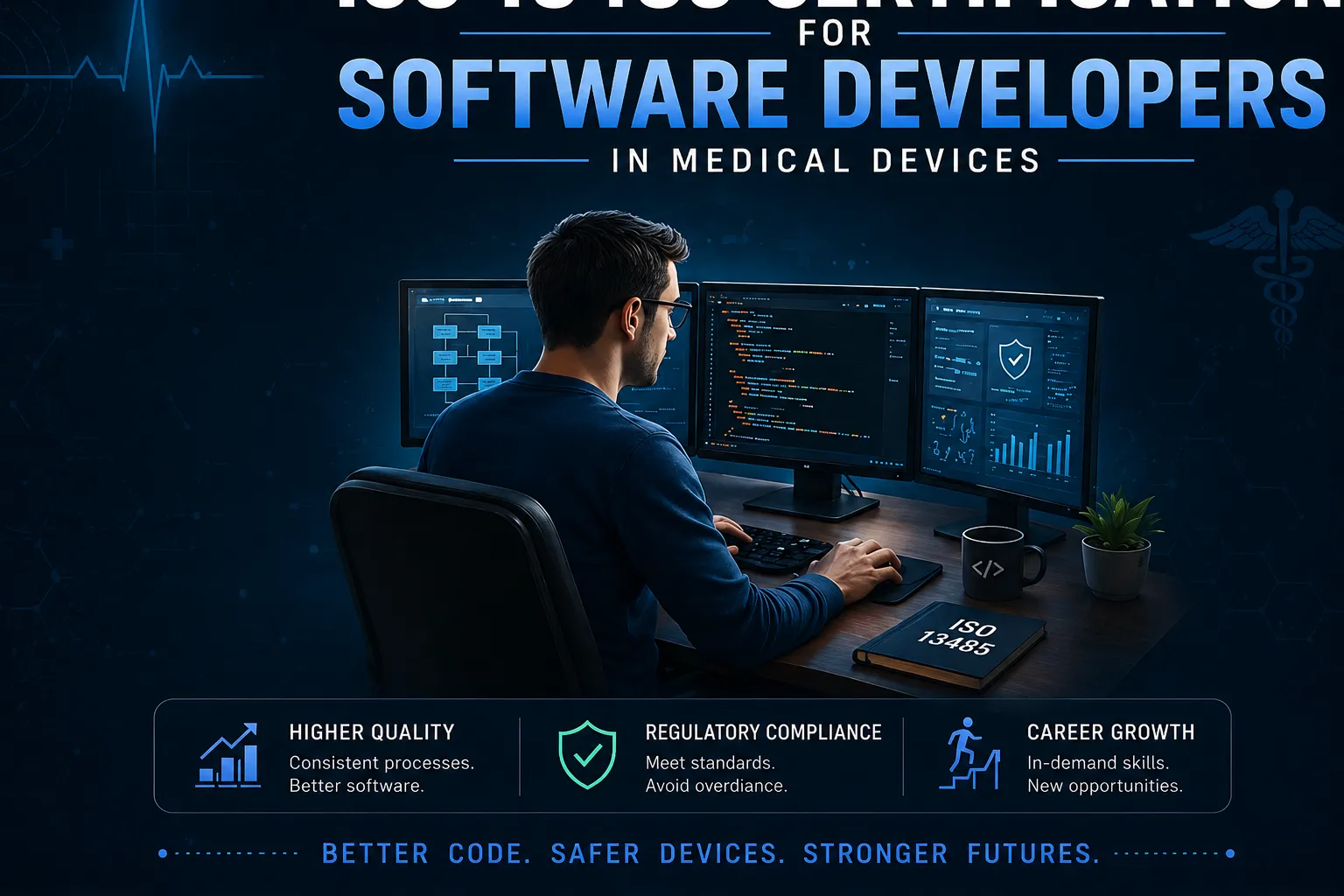
When Code Stops Being Just Code
There’s a quiet, almost subtle moment when software development in the medical space starts to feel different. You still write functions, review pull requests, and fix bugs. But once you step into ISO 13485 certification, your perspective begins to shift. Your code no longer focuses only on performance or usability—it carries responsibility. A small logic flaw doesn’t remain just a bug; it can ripple into something far more serious. That awareness doesn’t create fear, but it does bring a steady sense of discipline. Over time, you start thinking differently, almost instinctively, about how every line behaves—not only in ideal conditions but also in messy, unpredictable real-world scenarios.
Documentation That Actually Means Something
Most developers don’t naturally gravitate toward documentation. It often feels like an extra step that slows down progress. But within ISO 13485 certification, documentation transforms into something far more meaningful. It becomes a living record of thought processes, decisions, and justifications. Instead of writing for compliance alone, developers begin to document to preserve clarity. Every design choice, every risk consideration, and every validation step tells a story about how the system evolved.
When something unexpected happens—and it inevitably will—this documentation becomes invaluable. It allows teams to trace back decisions, understand assumptions, and identify gaps without relying on memory. Over time, developers stop seeing documentation as a burden and start treating it as an essential part of building reliable software. It doesn’t interrupt the workflow; it strengthens it.
Risk Isn’t a Separate Task—It’s Everywhere
In many software environments, teams treat risk assessment as a distinct activity—something reserved for meetings or formal reviews. Under ISO 13485 certification, that separation fades away. Risk becomes part of the development mindset itself. It appears in design discussions, code reviews, and even small implementation choices.
Developers begin asking deeper and more practical questions. What happens if this function fails silently? How does the system behave if input data becomes corrupted? What if latency affects a critical operation? These questions don’t slow development; they refine it. They push teams to think beyond the obvious and anticipate real-world challenges before they occur.
As this mindset develops, risk management stops feeling like an obligation and starts feeling like a natural extension of good engineering. It sharpens judgment and leads to more resilient systems without creating unnecessary complexity.
Agile Development Meets Structured Expectations
At first glance, Agile methodologies and ISO 13485 certification seem to pull in different directions. Agile encourages flexibility, rapid iteration, and minimal overhead, while ISO emphasizes structure, traceability, and control. This contrast can create tension, especially for teams accustomed to fast-paced development cycles.
However, over time, teams begin to find balance. Agile doesn’t disappear—it adapts. Sprints continue, stand-ups remain, and iterative development still drives progress. The difference lies in the level of intention behind each step. Teams start planning with greater awareness of regulatory expectations. They integrate documentation into sprint workflows instead of treating it as a separate task.
Although this approach may feel slower initially, it often reduces rework later. The clarity gained during early stages prevents confusion and misalignment down the line. Eventually, teams realize that structure doesn’t limit agility—it supports it in a more sustainable way.
Testing Becomes a Mindset, Not a Phase
In traditional software development, testing often appears as a final phase before release. In medical device software, that approach doesn’t hold up. ISO 13485 certification reshapes testing into a continuous activity that runs alongside development.
Developers no longer write code and pass it along for validation. Instead, they stay deeply involved in testing, considering edge cases, failure scenarios, and unusual conditions from the beginning. They don’t just test what the system should do—they actively explore what it must never do.
This shift changes how quality is perceived. Testing becomes less about catching defects and more about ensuring reliability and safety. Over time, developers gain confidence in their work because they understand not only how it performs under normal conditions but also how it behaves under stress. That level of assurance becomes essential in environments where software directly affects human well-being.
Traceability Connects the Entire Story
Traceability often appears complex at first, especially for developers unfamiliar with regulated environments. It requires linking requirements to design elements, code implementations, and testing outcomes. Initially, this can feel like an added layer of effort.
But once teams experience its value, traceability starts to make sense. It creates a clear and structured connection between every part of the system. If a requirement changes, developers can immediately identify which components need updates. If a defect appears, they can trace it back to its origin without guesswork.
This clarity reduces uncertainty and speeds up problem-solving. Instead of searching through codebases or relying on assumptions, teams can follow a defined path. Although maintaining traceability requires discipline, it pays off in moments when quick and accurate answers matter most.
Collaboration Feels More Purposeful
ISO 13485 certification changes how teams collaborate. Developers no longer operate in isolation; they become part of a broader ecosystem that includes quality assurance specialists, regulatory experts, and product stakeholders. This shift brings more discussions, more reviews, and sometimes more complexity.
However, these interactions also create deeper alignment. Conversations move beyond features and timelines to include safety, compliance, and real-world impact. Developers gain insight into how their work fits into the larger system, while other teams develop a better understanding of technical constraints.
Over time, collaboration becomes more intentional. It may involve more effort upfront, but it reduces misunderstandings later. Teams begin to work with a shared purpose, which strengthens both the process and the final product.
The Subtle Shift in Developer Mindset
Working within the framework of ISO 13485 certification gradually reshapes how developers think. The focus shifts from quick fixes to long-term stability. Developers become more deliberate in their decisions, considering not only immediate outcomes but also future implications.
This doesn’t mean innovation slows down. Instead, it becomes more thoughtful. Developers question assumptions, validate ideas more thoroughly, and approach challenges with a broader perspective. They start to value consistency and reliability as much as creativity and speed.
Over time, this mindset becomes second nature. It no longer feels like an adjustment—it simply becomes the way work gets done. That transformation defines the difference between standard software development and development in a regulated environment.
Why ISO 13485 Certification Matters for Software Quality
Software quality takes on a deeper meaning under ISO 13485 certification. It extends beyond performance metrics and user satisfaction to include safety, consistency, and trust. Every line of code contributes to a system that must operate reliably under a wide range of conditions.
The certification provides a structured framework that ensures processes remain consistent and risks are managed effectively. It encourages teams to think proactively rather than reactively. Instead of addressing issues after they arise, developers work to prevent them from occurring in the first place.
This approach leads to fewer unexpected failures and more predictable outcomes. Over time, it builds confidence—not only within the development team but also among stakeholders and end users. That confidence becomes a defining characteristic of high-quality medical device software.
Career Growth Feels More Grounded
For software developers, working within ISO 13485 certification opens up unique career opportunities. The medical device industry values professionals who understand both technical development and regulatory requirements. This combination of skills sets developers apart in a competitive landscape.
As developers gain experience in this environment, they often take on more specialized roles. Responsibilities expand to include risk management, validation strategies, and compliance considerations. Career growth becomes less about rapid advancement and more about building deep, reliable expertise.
This type of growth may not always appear flashy, but it offers long-term stability. Developers develop a strong foundation that supports a wide range of opportunities within regulated industries. Over time, this expertise becomes highly valuable and widely recognized.
Why Choosing ISO 13485 Certification Makes Sense
Choosing to work within the framework of ISO 13485 certification requires commitment. It demands attention to detail, patience, and a willingness to follow structured processes. At times, it may feel more demanding than other development environments.
However, it also provides a clear sense of purpose. Developers contribute to systems that have a direct impact on human health and safety. The work carries meaning beyond technical achievement. It becomes part of something larger.
For those who seek more than fast-paced development cycles, this path offers a rewarding alternative. It challenges developers to grow, think critically, and deliver work that truly matters. The effort required becomes worthwhile when viewed through that lens.
The Quiet Confidence It Builds Over Time
One of the most significant outcomes of working under ISO 13485 certification is the confidence it builds. This confidence doesn’t come from speed or volume—it comes from consistency and reliability. Developers know they have followed structured processes, considered risks, and validated their work thoroughly.
This assurance develops gradually. Each project, each decision, and each challenge contributes to a deeper understanding of what it means to build dependable software. Over time, developers begin to trust not only their systems but also their own judgment.
That quiet confidence changes how they approach their work. It shifts the focus from simply delivering features to delivering solutions that people can rely on. In the context of medical devices, that distinction carries real significance.
In the end, ISO 13485 certification doesn’t just shape processes—it shapes people. It encourages developers to think differently, work more deliberately, and build software that stands up to real-world demands. And once that mindset takes hold, it becomes a lasting part of how they create, collaborate, and grow.
Related Reading
Why Business & Finance is Transforming the Global Industry Landscape
Welcome to our in-depth exploration of Business & Finance. In an era defined...
Expert Insights: Navigating the Complex World of Business & Finance
Welcome to our in-depth exploration of Business & Finance. In an era defined...