Radon Mitigation for Basements vs. Crawl Spaces vs. Slab-on-Grade Homes
By Air Sense Environmental
98 Views
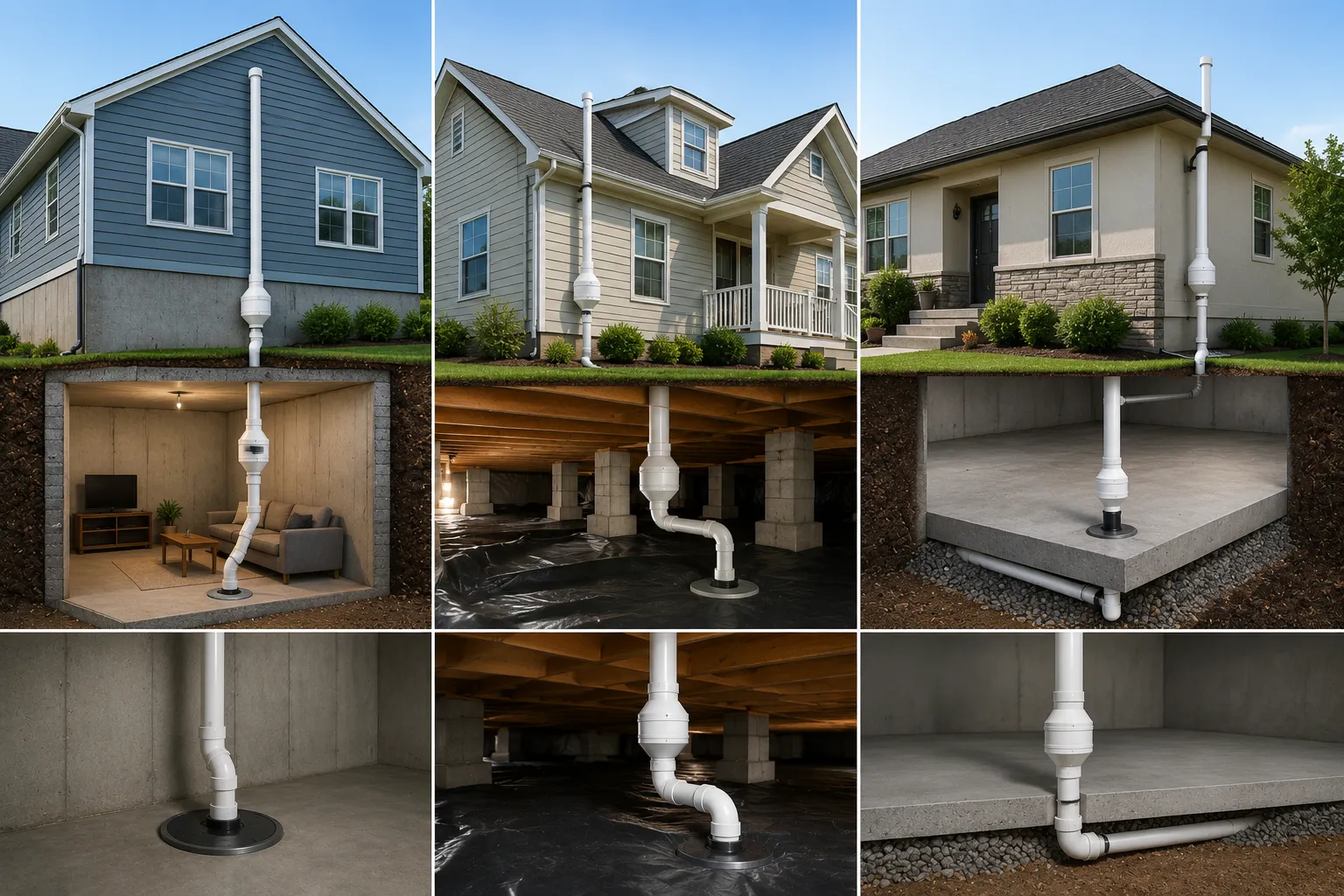
One of the first things I ask on any estimate call is what kind of foundation the home has, and I can practically feel people bracing for a complicated answer. Here's the thing, your foundation type is honestly the single biggest factor in how a radon mitigation St Louis system gets designed. A basement, a crawl space, and a slab-on-grade home each pull soil gas differently, and the fix has to match. Let's break down what changes for each one.
The Short Answer
Basement homes are generally the most straightforward to mitigate, using a single sub-slab suction point drilled through the poured concrete floor. Crawl spaces usually need a vapor barrier system laid across the dirt floor combined with suction, since there's no solid slab to drill into. Slab-on-grade homes sit somewhere in between, similar to a basement mechanically, but the suction point placement and pipe routing get more creative since there's no basement to run pipe through discreetly.
Basement Foundations
Why Basements Are the Easiest to Mitigate
A poured concrete basement slab gives a technician a clean, solid surface to work with. Drilling one hole through the slab, usually tucked into a utility room or unfinished corner, creates a direct suction point beneath the entire footprint of the house in most cases. This is the foundation type behind the majority of radon mitigation St Louis jobs I run, simply because so many homes in this region have basements. It also tends to be the foundation type where radon testing St. Louis results come back most predictable, since a single open basement space usually reflects the whole home's exposure fairly evenly.
Typical System Setup
From that single suction point, PVC pipe runs up through the basement, often along a wall or through a closet, and exits through the roofline or an exterior wall where the fan is mounted. Sealing foundation cracks and gaps around the sump pit rounds out the job. Most basement installations wrap up in two to four hours.
Crawl Space Foundations
Why Crawl Spaces Need a Different Approach
There's no concrete slab to drill into with a crawl space, just exposed dirt or gravel underneath the house. Radon still seeps up from that soil the same way it does under a basement, but the mitigation approach has to work with an open dirt floor instead of a sealed one.
Vapor Barrier Systems Explained
The standard fix here involves laying a heavy plastic vapor barrier across the entire crawl space floor, sealing the seams and edges carefully, then creating a suction point beneath that barrier tied into the same kind of fan system used in basement homes. Think of it like putting a lid on a pot. The barrier traps the soil gas underneath, and the suction point pulls it out before it can seep upward into the living space above. This is more labor-intensive than a basement job, since sealing an entire dirt floor properly takes real time, which is why crawl space radon mitigation St Louis pricing typically runs a bit higher than a straightforward basement installation.
Slab-on-Grade Foundations
Where the Suction Point Goes
Slab-on-grade homes, common throughout parts of the St. Louis metro, have a poured concrete floor sitting directly on the ground with no basement underneath at all. Mechanically, this is similar to a basement setup, drilling a suction point through the slab, but the challenge shifts to where that point gets placed and how the pipe gets routed, since there's no basement level to run pipe through out of sight.
Landscaping and Slab Access Challenges
Without a basement, the exhaust pipe usually has to run along an exterior wall or through a closet up into the attic, which sometimes means more visible piping than a basement homeowner would have. I always walk through pipe routing options with slab-on-grade clients specifically, since aesthetics matter more when there's no basement to hide the plumbing.
Mixed Foundation Homes: The Trickiest Category
Plenty of homes, especially older ones with additions built decades apart, combine two or even all three foundation types under one roof. A basement under the original structure, a crawl space under a later addition, maybe a slab-on-grade sunroom tacked on more recently. These jobs almost always need more than one suction point, sometimes tied into a single fan, sometimes requiring two separate systems, to create consistent negative pressure across the whole footprint. This is where an accurate walkthrough before installation really matters, since guessing wrong on suction point placement means the system underperforms in the section it wasn't designed to cover. It's a lesson every experienced radon mitigation St Louis contractor learns quickly once they've worked on enough older homes with additions.
A Job That Combined All Three
I quoted a home in Kirkwood last year that had literally all three foundation types under one roof, a 1960s basement structure, a crawl space addition from the eighties, and a slab-on-grade sunroom added within the last decade. Each section needed its own consideration. The basement got a standard suction point. The crawl space needed a full vapor barrier tied into a second suction point. The sunroom's slab got its own smaller suction point tied into the same fan system as the crawl space, since running a third separate fan would have been overkill for that smaller footprint. The whole job took most of a day instead of the usual few hours, but the post-test came back consistent and low across every zone of the house, which confirmed the layout actually worked as designed. It's one of the more complex radon mitigation St Louis jobs I've handled, and a good reminder that no two mixed-foundation homes are ever quite the same.
How to Know What Your Home Needs
Honestly, the best way to know is a proper walkthrough rather than guessing based on general rules. A technician needs to see your actual foundation, note where it transitions between types if it does, and design suction points accordingly. This is also where radon testing St. Louis appointments before mitigation matter, since a professional test often reveals which specific area of the house is contributing most to elevated readings, information that directly shapes where suction points get placed. Getting radon testing St. Louis results zone by zone in a mixed-foundation home can make the difference between a system that works and one that only partially solves the problem.
If you're not sure what foundation type your home falls into or how that affects pricing and installation, our radon mitigation page covers the basics of each system type, and our radon testing page explains how testing results help pinpoint problem areas before a technician ever shows up with a drill.
Conclusion
Basements, crawl spaces, and slab-on-grade homes each need a mitigation approach tailored to how they're actually built, not a one-size-fits-all system. Basements are usually the quickest and most straightforward, crawl spaces require a vapor barrier to compensate for the lack of a solid slab, and slab-on-grade homes fall somewhere in between mechanically while presenting their own routing challenges. Mixed foundation homes need the most careful planning of all three, since guessing wrong on suction point placement leaves part of the house under-protected. Whatever foundation type your home has, an accurate radon mitigation St Louis system starts with understanding exactly how your house is built, not assuming it matches the neighbor's setup next door. That understanding usually starts with radon testing St. Louis results that pinpoint where the problem actually is before any installation decisions get made. If you're ready to find out what your specific home needs, reach out to Air Sense Environmental and I'll walk your foundation in person before recommending anything.
FAQs
1. Does a crawl space always cost more to mitigate than a basement? Generally yes, since sealing an entire dirt floor with a vapor barrier takes more labor and material than drilling a single hole through a basement slab, though the exact difference depends on the crawl space's size.
2. Can the same fan handle multiple suction points across different foundation types? Often yes, a single properly sized fan can serve two or more suction points if the layout allows for it, though larger or more complex homes sometimes need separate fans for each zone.
3. Is a slab-on-grade home always cheaper to mitigate than a basement home? Not necessarily. While the mechanical approach is similar, exterior pipe routing on a slab-on-grade home can sometimes add complexity that offsets any savings from the simpler suction setup.
4. How do I know if my home has a mixed foundation without checking myself? A quick way to check is looking at when different sections of your home were built, additions are the most common source of mixed foundations, though a professional walkthrough will confirm this definitively.
5. Does foundation type affect how accurate my radon testing St. Louis results will be? Not the accuracy of the test itself, but it does affect where testing should happen, since different foundation zones in a mixed-foundation home can have meaningfully different radon levels worth testing separately. A single radon testing St. Louis appointment covering only one zone might miss a problem sitting in another part of the house.