Alcohol Prep Pads For Clinics Why Bulk Ordering Saves Time And Money
By Roy James
164 Views
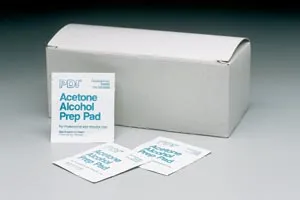
There are supplies in every clinic that never make it to the top of the priority list not because they are unimportant, but because they are so consistently needed that ordering them feels routine. Alcohol prep pads fall squarely into that category. Every injection. Every blood draw. Every catheter insertion. Every skin prep before a procedure. Alcohol prep pads are used dozens of times a day in any active clinical environment, and yet many clinics still order them in small quantities, reorder reactively when stock runs low, and pay far more per unit than they need to.
This article makes the case for ordering alcohol prep pads bulk and more importantly, explains what to look for, how to store them correctly, and how to calculate the right order volume so your clinic never runs short.
Why Small-Quantity Ordering Is Costing Your Clinic Money
Most clinics that order prep pads in small quantities one or two boxes at a time do so out of habit. The boxes are small, the unit cost seems manageable, and it feels like a minor line item. But the math tells a different story.
The True Cost of Reactive Ordering
Consider a clinic that uses 50 prep pads per day across injections, blood draws, and IV prep. That is 1,500 pads per month, or 15 boxes of 100. If those boxes are ordered one at a time through a retail or small-quantity channel, the per-unit cost can be three to four times higher than buying by the case.
Over a year, that difference is not trivial. For a mid-size clinic, the savings from switching to alcohol prep pads bulk clinic purchasing can easily run into hundreds of dollars annually on a single supply line item.
The Hidden Cost of Stock-Outs
Running out of prep pads mid-shift is a more serious problem than it sounds. Staff either delay procedures (unacceptable in urgent care), improvise with less appropriate supplies (a patient safety risk), or spend time locating emergency stock from another department or ordering platform. None of these outcomes are good, and all of them are entirely preventable with adequate bulk inventory.
A two-week buffer of your most-used consumables and prep pads should absolutely be on that list is a minimum standard for any clinical supply room that is being managed proactively rather than reactively.
How to Calculate the Right Bulk Order Volume for Your Clinic
Guesswork is the enemy of supply room efficiency. Here is a straightforward way to calculate how many prep pads your clinic actually needs per month.
Step 1: Estimate average daily usage across all procedures injections, blood draws, IV insertions, dressing changes, equipment wipes.
Step 2: Multiply by your monthly working days.
Step 3: Add a 20% buffer for waste, spills, and unexpected volume increases.
Example:
- Daily usage: 60 pads
- Monthly working days: 22
- Base monthly need: 1,320 pads
What to Look for When Buying Alcohol Prep Pads in Bulk
Not every prep pad on the market is the same, and when you are ordering at volume, the differences matter. Here is what to evaluate before placing a bulk order.
Isopropyl Alcohol Concentration
As noted above, 70% isopropyl alcohol is the clinical standard. Some lower-cost pads use concentrations below this threshold. Check the product specification before ordering — especially if you are switching suppliers. A pad labeled simply "alcohol prep pad" without a stated concentration is not a pad you want in your supply room.
Pad Size and Saturation
Prep pads come in different sizes typically small (roughly 1.2 x 1.2 inches) and medium (roughly 1.7 x 1.7 inches). For standard injection prep, small pads are sufficient. For larger surface areas catheter site prep, wider skin disinfection medium pads are more appropriate.
Individually Wrapped and Sterile
Every prep pad used for skin antisepsis before an invasive procedure must be individually wrapped and sterile. Bulk pads in open containers are not appropriate for injection or IV prep — they are exposed to air, handling, and potential contamination. Individual foil or paper wrappers maintain sterility until the moment of use.
Latex-Free
In clinical settings where patient allergy profiles vary, latex-free materials are the standard. Confirm that the prep pads you order are latex-free particularly the outer wrapper and the pad fabric itself.
Non-Woven Pad Material
The fabric of the pad matters for application quality. Non-woven materials hold saturation evenly and release alcohol consistently during swabbing. Woven or low-quality pad materials can absorb unevenly, leaving dry spots or depositing fibers on the skin surface.
Storing Alcohol Prep Pads Correctly
Bulk purchasing only works if stored properly. Alcohol prep pads are sensitive to temperature and packaging integrity.
Temperature: Store between 59°F and 86°F (15°C to 30°C). Excessive heat accelerates evaporation through packaging, leaving pads dry before they are opened.
Light exposure: Keep away from direct sunlight and UV sources. Sustained light exposure degrades isopropyl alcohol over time.
Humidity: Avoid damp or humid storage areas. Moisture can compromise packaging seals and reduce shelf life.
Stacking: Do not stack cases too high compression over time can affect individual wrapper seals. Follow manufacturer stacking guidelines.
Rotation: Use first-in, first-out rotation. Alcohol prep pads typically carry a shelf life of two to three years from manufacture date. Check dates on incoming shipments and always pull older stock first.
At Apex Med Supply, sterile alcohol prep pads are available in bulk packs for clinics, schools, and healthcare facilities across Florida individually wrapped, 70% isopropyl alcohol, latex-free, and best priced for volume buyers. Whether you need a single case to trial or a standing monthly order, our stock is consistent and our shipping is fast.
Conclusion:
Alcohol prep pads are one of the most used and most underestimated supplies in any clinical environment. They are cheap per unit, which makes it easy to dismiss bulk purchasing as unnecessary. But that logic breaks down quickly when yours account for the real cost of reactive ordering, supply disruptions, and paying retail prices for a daily-use consumable. Switching to alcohol prep pads bulk clinic purchasing is not a complicated decision. You know your usage. You know your volume. You know that running out mid-procedure is not acceptable.