How Your Bedroom Setup Can Improve Everyday Sleep Comfort
By Eli & Elm
37 Views

A comfortable bedroom is about more than choosing attractive bedding. The mattress, pillows, blankets, lighting, temperature, and even the amount of available space can influence how inviting the room feels at the end of the day.
Everyone has different preferences when it comes to sleep. Some people like a firm mattress and a structured pillow, while others prefer softer bedding that can be adjusted easily. Because of these differences, creating a comfortable bedroom is often less about following a universal formula and more about understanding what works with your own routine.
Start With the Basics of Your Sleep Setup
The mattress is naturally one of the main elements of a bedroom, but it is only part of the overall setup. Pillows and bedding also contribute to how the bed feels and how easily you can settle into your normal sleeping position.
Start by looking at the items you use every night.
Is your head pillow comfortable? Does your bedding give you enough room to move? Do you prefer a cooler or more layered setup? Are there unnecessary cushions taking up space?
These simple questions can reveal areas where small changes may make the room feel more practical.
You do not necessarily need to replace everything at once. Sometimes rearranging existing pillows or changing how they are positioned can make the setup feel more suitable.
Why Pillow Arrangement Matters
Pillows do more than provide a place to rest your head. Depending on their shape and size, they can become part of a broader arrangement around the body.
A standard pillow may be enough for someone who prefers a simple setup. Others may enjoy having an additional pillow available for positioning, reading, relaxing, or changing their arrangement during the night.
The important factor is balance. Too few pillows may not provide the arrangement you prefer, while too many can make the bed feel crowded.
Think about how you actually use your pillows instead of following a particular bedroom trend.
Where a Body Pillow Can Fit
A body pillow offers a different shape from a traditional pillow because of its longer design. This gives people more flexibility when arranging their sleeping space.
Some may prefer keeping it alongside the body during sleep, while others may use it when reading or relaxing in bed. It can also be moved or repositioned depending on the activity.
A body pillow does not need to dominate the entire bed. Its usefulness depends on whether its size, shape, and feel fit naturally into the available space.
For people exploring different designs and configurations, an Eli & Elm Body Pillow is one option to consider when comparing construction, dimensions, and personal comfort preferences.
Consider the Space Around You
Bedroom size can influence which pillow arrangement works best.
A spacious bed may comfortably accommodate several pillows, while a smaller bed may benefit from a simpler arrangement. A large body pillow can provide plenty of surface area, but it also requires additional room.
Before choosing a pillow, consider where it will sit when you are sleeping and where you will put it when you are not using it.
A few practical questions can help:
- How much free space is available on the bed?
- Do you frequently change positions?
- Can you easily move the pillow?
- Will it work with your existing bedding?
- Where will you store it during the day?
Choosing something that fits your actual space can be more useful than simply choosing the largest option.
Think About Materials and Firmness
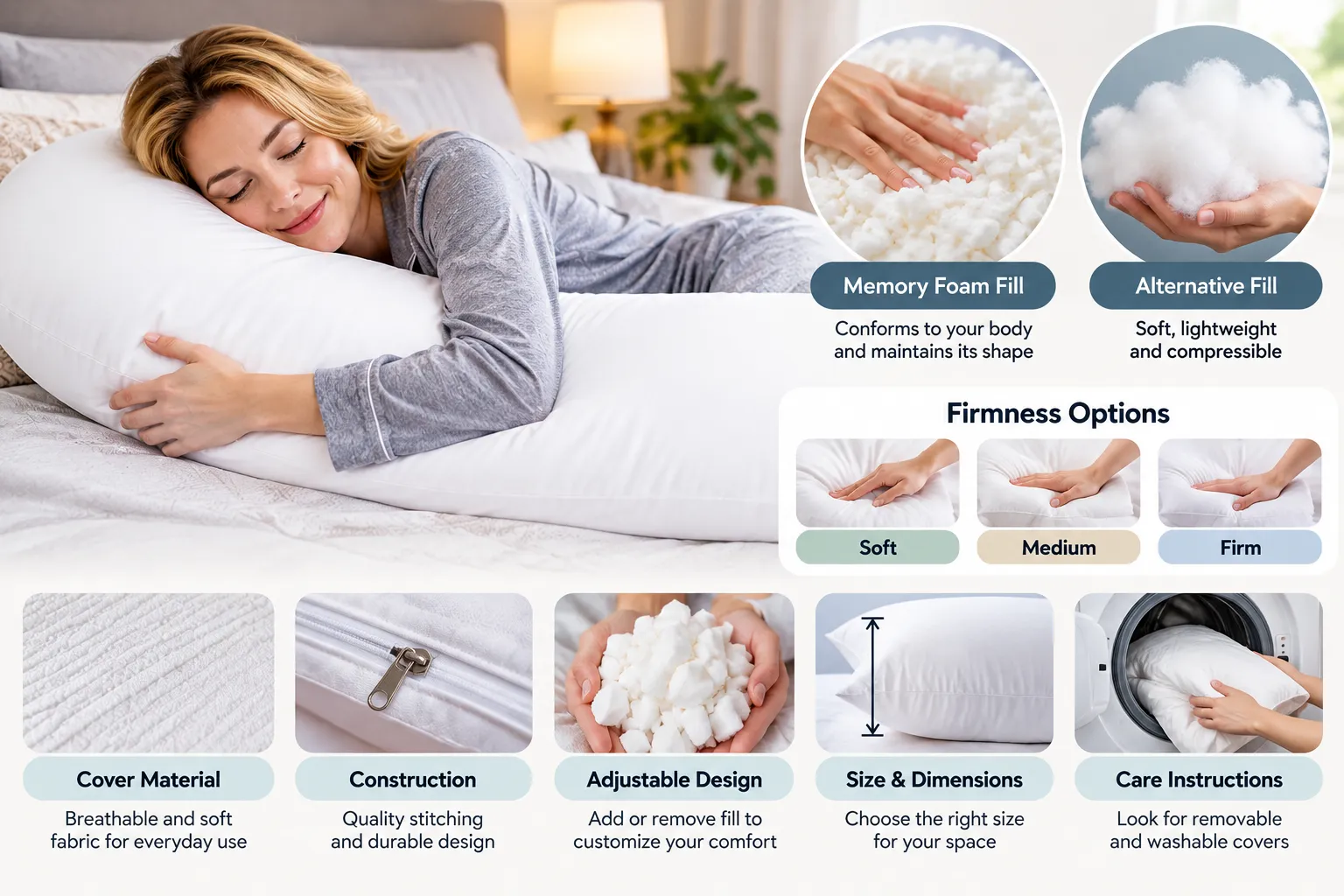
The materials inside a pillow can influence how it feels, how well it holds its shape, and how easily it can be repositioned.
Some people prefer soft, compressible pillows, while others like a more structured feel. Adjustable designs may appeal to people who want greater control over the pillow's feel.
When comparing pillows, look beyond the appearance. Check the filling, cover material, dimensions, firmness, construction, and care instructions.
These details can be particularly important when a pillow will be used regularly.
Keep the Bedroom Simple
A comfortable bedroom does not have to be filled with accessories.
Too many decorative cushions, blankets, or unnecessary items can make the bed harder to organize. A simpler setup may make it easier to maintain a consistent nighttime routine.
Try keeping the items you use regularly within easy reach and storing anything unnecessary elsewhere.
This approach also makes it easier to adjust the room according to the season or your changing preferences.
Create a Routine That Feels Natural
Your bedroom environment is only one part of your overall routine. How you use the space can also affect how comfortable it feels.
For example, some people may find it useful to dim the lights before bed, put away electronic devices, arrange their pillows, and give themselves a few quiet minutes before trying to sleep.
Others may prefer reading for a short time or simply relaxing in bed.
There is no single routine that everyone needs to follow. The useful approach is to identify habits that feel realistic and repeatable.
Check Your Setup From Time to Time
Comfort preferences can change. A pillow that felt ideal several months ago may eventually feel different because of regular use, changes in its shape, or changes in your personal preferences.
It is worth occasionally reviewing your bedroom setup.
Check whether pillows have maintained their shape, whether covers and bedding are still in good condition, and whether the arrangement still gives you enough space.
If something feels uncomfortable or inconvenient, try changing one element at a time rather than replacing everything immediately.
Final Thoughts
A comfortable bedroom does not depend on one particular product or arrangement. It is the result of several small choices working together.
Your mattress, pillows, bedding, available space, room environment, and personal routine all contribute to how the space feels.
A body pillow can be one flexible part of that setup, particularly for people who prefer having additional space to adjust their pillows while sleeping, reading, or relaxing.
The best approach is to build a bedroom around your own habits rather than trying to copy someone else's setup. Pay attention to what you use, what you move, and what genuinely makes the space feel comfortable.
Small, practical adjustments can often make a bedroom feel more organized and personalized without requiring a complete redesign.