Buying a Watch Through a Resale App? Here’s the Appraisal Step You Must Know About
By Prestige Valuations USA
82 Views
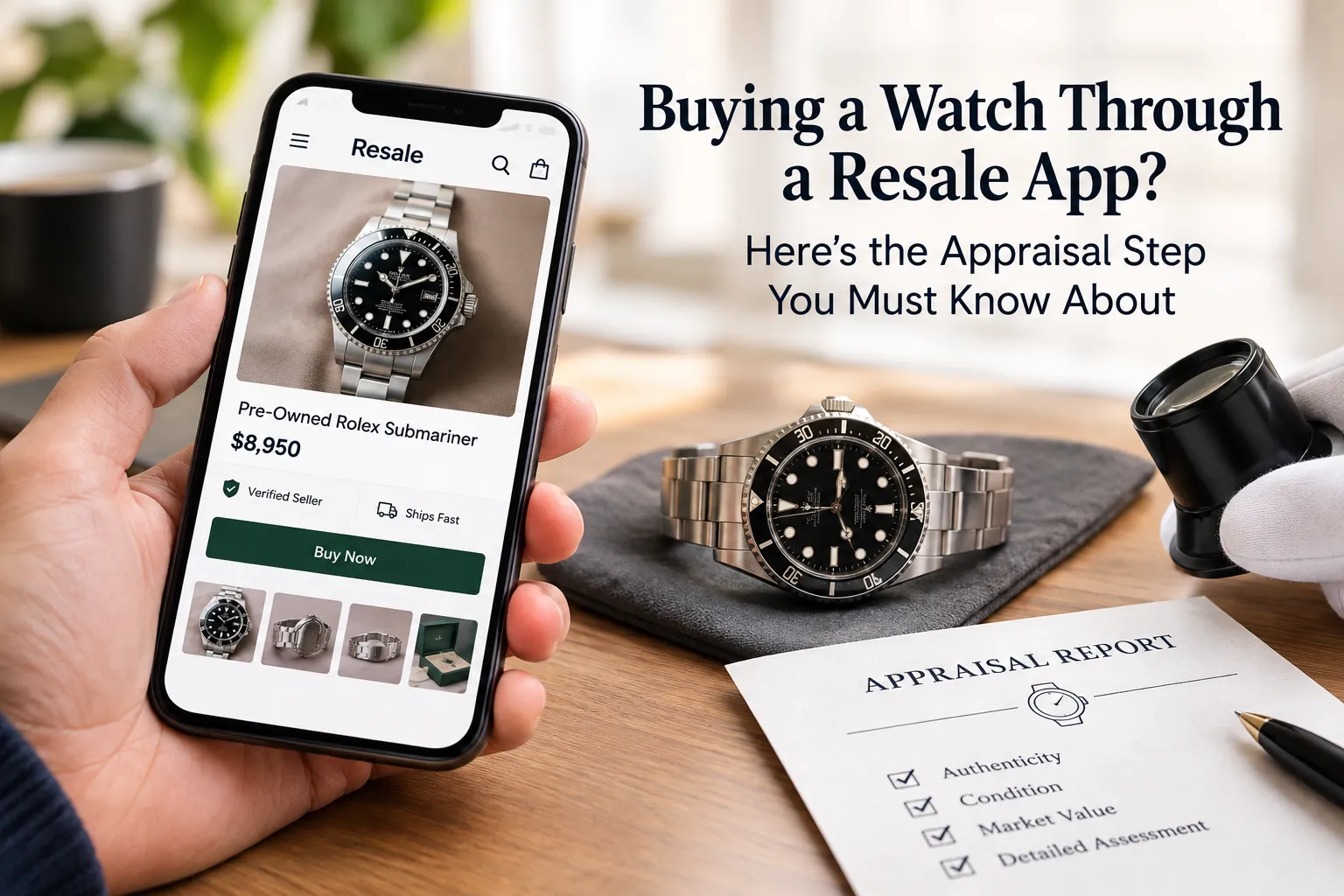
Peer-to-peer watch resale has exploded over the past few years; confusing the two can result in someone ending up with a watch that is not authentic. A genuine gap has opened up that almost nobody flags at the point of purchase. When you buy a watch through an app, it arrives with a “certificate of authenticity” issued by the platform; however, many buyers mistakenly assume that this certificate is the only necessary paperwork. But, in reality, it isn’t. A platform’s authentication check and a proper watch appraisal serve two entirely different purposes; confusing the two can result in someone ending up with a watch that is technically authenticated but functionally uninsured.
What Resale Platform Authentication Actually Covers
It’s important to clarify what these platforms check, as the terms “authenticated” and “certified” can make the process seem more thorough than it is.
Authenticity Isn't the Same as Valuation
A resale platform’s authentication process is generally built to answer one question: “Is this watch genuine, not counterfeit?” That’s a real and useful check, particularly given how sophisticated counterfeit watches have become. But confirming a watch in real life says nothing about its current market value, its condition relative to comparable pieces, or the level of documented detail an insurer would need to process a claim without dispute.
Why This Gap Surprises Buyers
Most buyers reasonably assume that if a platform has already “verified” the watch, the paperwork side of ownership is handled. But in reality, it isn’t, and the gap only becomes visible at the worst possible moment, most probably during an actual claim, when a platform’s authentication certificate turns out not to be the document an insurer was expecting to see.
What a Proper Watch Appraisal for Insurance Actually Requires
A watch appraisal for insurance purposes is a specifically different document, built around a different set of requirements than a resale authentication certificate.
The Level of Detail That Actually Matters
A proper insurance appraisal documents the watch’s design, the metal it’s made from, its model number, and its identification number, all the necessary details specific enough to distinguish your exact watch from every other example of the same model. It also includes photographs of the watch itself and any accompanying documentation, since resale-purchased watches frequently arrive with incomplete original paperwork, making independent verification and documentation by a qualified appraiser even more important for documenting what does exist.
Establishing What You Actually Paid vs. What It’s Truly Worth
A resale purchase price isn’t automatically the same as the current replacement value, particularly for watches bought through a marketplace where pricing can vary significantly between sellers for the same model. A proper appraisal establishes an accurate, defensible replacement figure independent of what any single transaction happened to cost.
Why This Matters More for Resale-Purchased Watches Specifically
There’s a reason this gap deserves its own conversation rather than being treated as a subset of general watch insurance advice.
Provenance Is Often Thinner Than It Looks
Watches bought through peer-to-peer platforms frequently come with a shorter, less complete ownership history than watches purchased through an authorized dealer. Original boxes, service records, and warranty documentation are commonly missing or incomplete, making independent verification and documentation by a qualified appraiser even more important.
Counterfeit Sophistication Has a Second-Order Risk
Even setting aside outright counterfeits, the broader rise in convincing fakes has made insurers understandably more cautious about claims involving resale-purchased watches without independent, professional documentation. A resale platform’s own certificate, however legitimate, is not the same as third-party verification from an appraiser with no financial stake in the sale.
Who Should Actually Be Doing This Assessment
Getting this right depends on the appraisal. The success of this assessment hinges on the expertise of the appraiser, who must possess current and specific knowledge rather than relying on a generalist template.
How Online Watch Valuation Fits into a Resale Purchase
The practical good news is that closing this gap doesn’t require anything as inconvenient as shipping the watch somewhere else after already dealing with a resale transaction.
A Process Specifically Designed for This Situation
Online watch valuation allows the watch to be assessed from clear photographs and whatever documentation exists without requiring the watch to leave your possession again so soon after finally receiving it. For a watch that’s already been through one shipping transaction to reach you, that matters more than it might for a watch that’s been sitting in a family collection for years.
Making It Part of the Purchase Process, Not an Afterthought
Buyers who completely avoid this gap are typically those who view appraisal as the final step of the purchase process, rather than a task to be completed later. Building a proper watch appraisal into the same week as the resale purchase closes the gap before it has time to become a problem.
Summing Up
To sum up, the process of purchasing a watch through a resale app doesn’t end with the arrival of the watch and the platform’s confirmation of its authenticity. The process concludes only when the watch is properly documented and valued by an independent party, and many buyers are unaware that this crucial final step is often overlooked until they actually need it and find out it was never completed.
Related Reading
Why Lifestyle & Culture is Transforming the Global Industry Landscape
Welcome to our in-depth exploration of Lifestyle & Culture. In an era define...
Expert Insights: Navigating the Complex World of Lifestyle & Culture
Welcome to our in-depth exploration of Lifestyle & Culture. In an era define...