Consumer Product Safety Services: Expert Compliance Support for UK and EU Businesses
46 Views
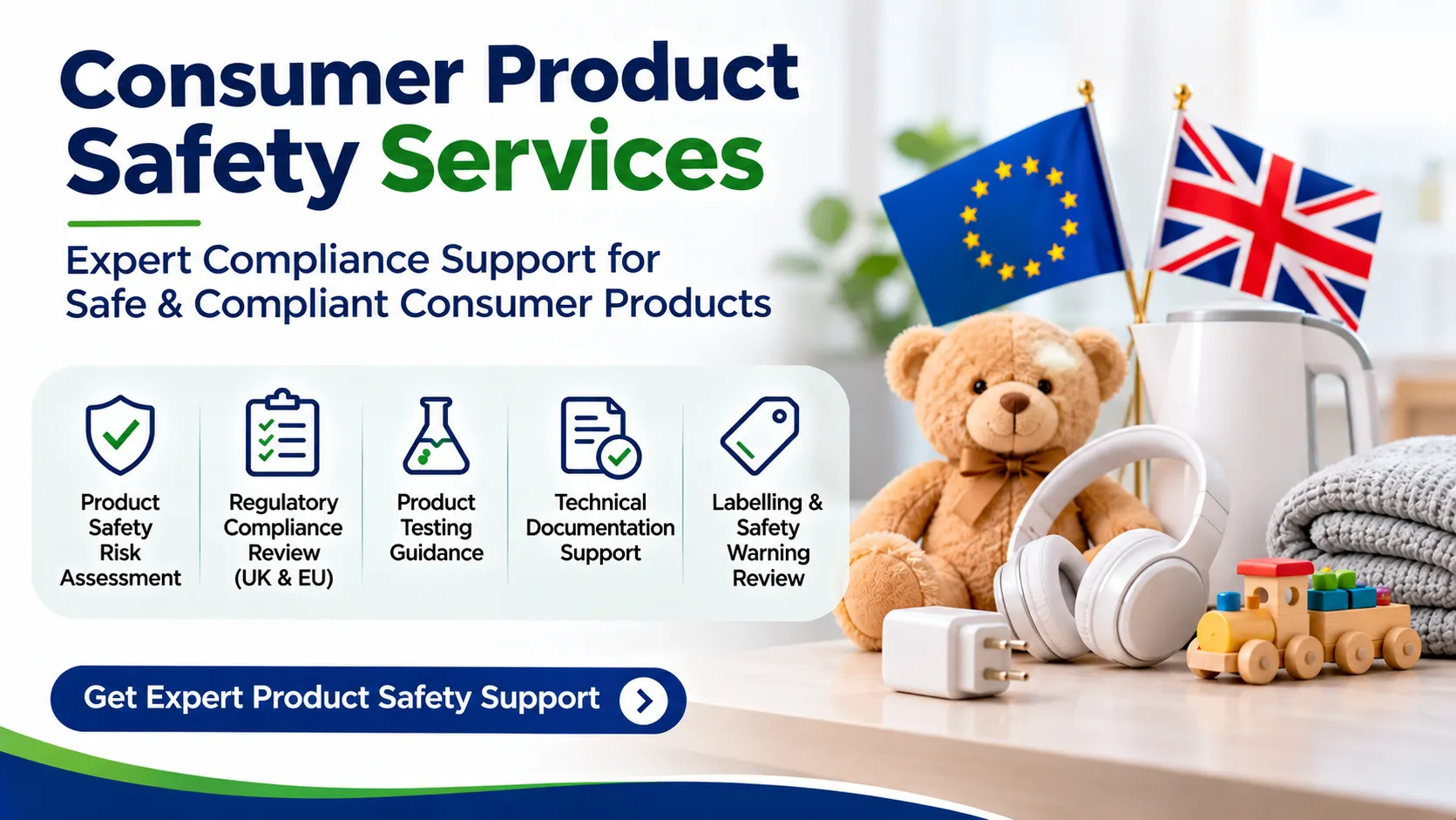
Consumer products must meet relevant safety requirements before they are placed on the market. From electrical equipment and toys to furniture, household goods and everyday accessories, businesses have a responsibility to ensure that the products they manufacture, import or distribute are safe for consumers.
Understanding product safety legislation can be challenging, particularly for businesses operating across multiple markets. Different product categories may be subject to specific regulations, testing requirements, technical documentation and labelling obligations.
Professional Consumer Product Safety Services can help businesses understand these requirements, assess potential risks and prepare the documentation needed to demonstrate product compliance. Working with experienced Consumer Product Safety Consultants can also help identify regulatory gaps, improve product safety processes and support businesses throughout the product lifecycle.
What Are Consumer Product Safety Services?
Consumer Product Safety Services cover the regulatory, technical and assessment activities that help businesses ensure their products meet applicable safety requirements.
These services are relevant to companies involved in product design, manufacturing, importing, distribution and retail. The exact requirements depend on the product type, intended use, target market and applicable legislation.
Consumer product safety support may include:
-
Product safety risk assessments
-
Regulatory compliance reviews
-
Product testing coordination and guidance
-
Technical documentation reviews
-
Product labelling and warning assessments
-
Chemical and material compliance guidance
-
CE and UKCA marking guidance, where applicable
-
Compliance gap assessments
-
Ongoing regulatory support
By addressing product safety requirements early, businesses can identify potential issues before products reach consumers.
Why Is Consumer Product Safety Compliance Important?
Product safety compliance is essential for protecting consumers and maintaining confidence in a brand. Products that do not meet applicable safety requirements may create risks such as injury, fire, electrical hazards, chemical exposure or other potential harm.
For businesses, inadequate product safety management can also result in regulatory investigations, product recalls, financial losses and reputational damage.
A structured approach to product safety helps organisations:
Protect Consumers: Identify and reduce potential risks associated with the design, materials, manufacturing and intended use of products.
Meet Regulatory Requirements: Understand and address the safety obligations applicable to products being placed on the UK and EU markets.
Improve Product Quality: Identify design or manufacturing issues that could affect product safety and performance.
Support Market Access: Prepare relevant assessments, test reports and technical documentation required for applicable markets.
Build Customer Confidence: Demonstrate a commitment to product safety, responsible manufacturing and regulatory compliance.
What Do Consumer Product Safety Consultants Do?
Consumer Product Safety Consultants help businesses understand and manage the safety and regulatory requirements relevant to their products.
Their role is to assess existing processes, identify potential compliance gaps and provide guidance on the actions required to address them.
Depending on the product and business requirements, consultancy support may include the following activities.
1. Product Safety Risk Assessment
A product safety risk assessment helps identify hazards associated with a product and evaluate the potential risks to consumers.
The assessment may consider:
-
Product design and construction
-
Materials and components
-
Intended use and foreseeable misuse
-
Mechanical and physical hazards
-
Electrical and thermal risks
-
Chemical exposure
-
Fire and flammability risks
-
Packaging and product warnings
-
Relevant user groups, including children or vulnerable consumers
The findings help businesses understand potential safety concerns and determine whether additional testing, design changes or protective measures may be necessary.
2. Regulatory Compliance Assessment
Different consumer products are subject to different regulatory requirements. For example, toys, electrical equipment, machinery, personal protective equipment and general consumer goods may fall under separate legislation and standards.
Consumer Product Safety Consultants can help businesses identify the regulatory framework applicable to their products and review whether existing processes and documentation address the relevant requirements.
A regulatory compliance assessment may cover:
-
Applicable UK and EU legislation
-
Product-specific safety requirements
-
Relevant harmonised or designated standards, where applicable
-
Testing and conformity assessment requirements
-
Product marking and labelling obligations
-
Importer and manufacturer responsibilities
-
Technical documentation requirements
This helps businesses establish a clearer understanding of the steps required before placing products on the market.
3. Product Testing and Safety Evaluation
Product testing is an important part of demonstrating that products meet relevant safety and performance requirements.
Depending on the product category, testing may involve mechanical, electrical, chemical, thermal or other assessments.
Examples include:
-
Electrical safety testing
-
Electromagnetic compatibility (EMC) testing
-
Mechanical safety testing
-
Chemical substance testing
-
Flammability testing
-
Toy safety testing
-
Material and component assessments
Consultants can help businesses understand which tests may be relevant, review available test reports and identify areas where additional evaluation may be required.
Testing requirements should always be determined according to the applicable legislation, product characteristics and relevant standards.
4. Technical Documentation and Compliance Records
Businesses may need to maintain technical documentation demonstrating how their products meet applicable safety requirements.
Depending on the product and legislation, this documentation may include:
-
Product descriptions and specifications
-
Design and manufacturing information
-
Product safety risk assessments
-
Test reports and certificates
-
Material and component information
-
Applicable standards and regulations
-
Instructions and safety warnings
-
Declarations of conformity, where required
Consumer Product Safety Consultants can help review technical files, identify missing information and organise relevant compliance records.
Maintaining accurate and up-to-date documentation is important for demonstrating compliance and responding to requests from market surveillance authorities.
5. Product Labelling and Safety Warning Reviews
Product labels and instructions provide consumers with important information about safe product use.
Depending on the product and applicable legislation, labelling may need to include:
-
Manufacturer or importer identification
-
Product identification details
-
Relevant safety warnings
-
Instructions for safe use
-
Age restrictions, where applicable
-
Traceability information, such as batch or model numbers
-
Required conformity markings, where applicable
Incorrect or incomplete labelling can create compliance issues and increase the risk of product misuse.
A product labelling review can help businesses identify missing information and assess whether warnings and instructions are appropriate for the intended users.
Consumer Product Safety Requirements in the UK and EU
Businesses selling products in the UK and European Union must understand the product safety requirements applicable to each market.
Although the UK and EU frameworks share some common principles, their regulatory arrangements are not identical. Requirements also vary significantly depending on the type of product being sold.
UK Consumer Product Safety Requirements
In the UK, consumer product safety is governed by general product safety legislation alongside product-specific regulations.
The General Product Safety Regulations 2005 establish important safety obligations for consumer products that are not fully covered by more specific legislation. Product-specific requirements may also apply to categories such as toys, electrical equipment and personal protective equipment.
Businesses should consider:
-
Whether their products are safe under normal and reasonably foreseeable conditions of use
-
Whether appropriate risk assessments have been conducted
-
Whether product information and warnings are adequate
-
Whether relevant technical documentation is available
-
Whether manufacturer and importer responsibilities have been addressed
-
Whether appropriate procedures exist for handling safety concerns and product recalls
The applicable requirements depend on the product category and whether the product is being placed on the Great Britain or Northern Ireland market.
EU Consumer Product Safety Requirements
The European Union has established a regulatory framework for consumer product safety, including Regulation (EU) 2023/988, commonly known as the General Product Safety Regulation (GPSR).
The GPSR applies to consumer products within its scope and establishes obligations for economic operators, including manufacturers, importers and distributors.
Key areas include:
-
Product safety assessments
-
Technical documentation
-
Product identification and traceability
-
Manufacturer and importer information
-
Safety information and warnings
-
Responsibilities of economic operators
-
Reporting and corrective action procedures
-
Requirements relating to online product sales
Certain product categories are also covered by specific EU legislation, which may apply alongside or take precedence over general product safety requirements for particular aspects.
Businesses selling in both the UK and EU should review the relevant requirements separately rather than assuming that compliance in one market automatically establishes compliance in the other.
Which Products Require Consumer Product Safety Compliance?
Consumer product safety requirements apply across a wide range of industries and product categories.
Examples include:
Electrical and Electronic Products: Household appliances, chargers, lighting products, electronic accessories and other electrical equipment may require electrical safety and EMC assessments, along with applicable conformity procedures.
Toys and Children's Products: Toys and products intended for children may be subject to specific safety, mechanical, chemical and labelling requirements.
Furniture and Household Products: Furniture, furnishings and household accessories may need assessments relating to stability, structural safety, materials and flammability, depending on their intended use and applicable requirements.
Personal Care and Lifestyle Products: Certain personal care accessories, household items and lifestyle products may require material, chemical or physical safety assessments.
Consumer Accessories: Everyday accessories and general merchandise may be subject to general product safety obligations and additional product-specific requirements.
Online Retail Products: Businesses selling consumer goods through e-commerce platforms must also consider their product safety responsibilities when making products available to consumers online.
Common Consumer Product Safety Compliance Challenges
Businesses can encounter several challenges when managing product safety requirements, particularly when introducing new products or expanding into international markets.
Some common issues include:
-
Not identifying all applicable product safety regulations.
-
Using unsuitable or incomplete test reports.
-
Failing to conduct appropriate product risk assessments.
-
Maintaining incomplete technical documentation.
-
Providing insufficient safety warnings or instructions.
-
Overlooking chemical and material restrictions.
-
Incorrectly applying CE or UKCA marking requirements.
-
Failing to maintain product traceability records.
-
Not having appropriate procedures for handling safety incidents and recalls.
Addressing these issues during product development and before market placement can help reduce compliance risks and avoid unnecessary delays.
How to Choose the Right Consumer Product Safety Consultants
Selecting appropriate consultancy support is important for businesses that need to understand complex product safety requirements.
When choosing Consumer Product Safety Consultants, consider the following factors:
Knowledge of Applicable Regulations: Look for consultants who understand the UK and EU regulatory frameworks relevant to your product categories.
Product-Specific Experience: Different products involve different safety risks. Consultancy support should reflect the product's design, materials, intended use and target market.
Risk Assessment Expertise: A suitable consultant should be able to help identify potential hazards and explain how risks can be assessed and addressed.
Technical Documentation Support: Check whether the consultancy can help review technical files, test reports, product information and other compliance records.
Clear and Practical Guidance: Recommendations should explain the applicable requirements and provide realistic actions that businesses can implement.
Ongoing Compliance Support: Product regulations and standards can change. Businesses may benefit from continued guidance when updating products, changing suppliers or entering new markets.
How Connect 4 Compliance Can Help with Consumer Product Safety
Understanding product safety requirements can be challenging, particularly for manufacturers, importers and distributors selling across multiple markets.
Connect 4 Compliance provides regulatory compliance support to help businesses understand applicable product safety obligations and address relevant documentation and assessment requirements.
Depending on your product category and business needs, support can include:
-
Consumer product safety compliance guidance
-
Product regulatory requirements reviews
-
Product safety risk assessment support
-
Technical documentation reviews
-
Product testing guidance
-
Labelling and safety warning reviews
-
UK and EU regulatory compliance support
-
Compliance gap assessments
Whether you are developing a new consumer product, importing goods or expanding into international markets, professional guidance can help you understand the regulatory steps involved and identify potential compliance gaps.
Conclusion
Consumer product safety is an important responsibility for every business involved in manufacturing, importing, distributing or selling products. Understanding the applicable regulations, assessing potential hazards, maintaining technical documentation and providing appropriate safety information all contribute to responsible product placement.
Professional Consumer Product Safety Services can help businesses navigate these requirements and establish a more structured approach to product compliance. Working with experienced Consumer Product Safety Consultants can also help identify regulatory gaps, review safety documentation and understand the testing and assessment activities relevant to individual products.
Need support with consumer product safety compliance in the UK or EU?
Connect 4 Compliance can help your business understand applicable regulatory requirements and work towards meeting its product safety responsibilities.
Related Reading
Why Business & Finance is Transforming the Global Industry Landscape
Welcome to our in-depth exploration of Business & Finance. In an era defined...
Expert Insights: Navigating the Complex World of Business & Finance
Welcome to our in-depth exploration of Business & Finance. In an era defined...