Could Better Packaging Stop Costly Product Damage?
By Mark Dawson
84 Views
Product damage during delivery can turn a perfectly good order into an expensive headache. A box may look fine from the outside, while the product inside has taken a few serious knocks along the way. For businesses, that can mean replacements, refunds, unhappy customers and wasted stock.
The good news? You do not always need complicated packaging to avoid this. The right protective material, used correctly, can make a noticeable difference. From cushioning empty spaces to protecting sharp corners and delicate surfaces, you have plenty of practical options. Let’s look at some of the most useful protective packaging materials and where each one actually makes sense.
Why Does Protective Packaging Matter So Much?
Think about how a parcel travels. It may be loaded onto a vehicle, moved through a warehouse, placed alongside heavier cartons and handled several times before reaching your customer. Even careful couriers cannot eliminate every bump.
Good protective packaging helps reduce the impact of those movements.
Packaging risk Protection that can help
Movement inside the box Air cushioning or loose fill
Scratches and surface marks Foam wrap or tissue
Crushed corners Corner and edge protectors
Heavy impact Bubble wrap or rigid cushioning
Large empty spaces Inflatable or loose-fill protection
For example, an online retailer sending ceramic mugs could wrap each mug in foam and cushion the package. A furniture business, meanwhile, may need stronger edge protection around polished panels and corners.
Which Protective Materials Can You Use?
Air Cushioning
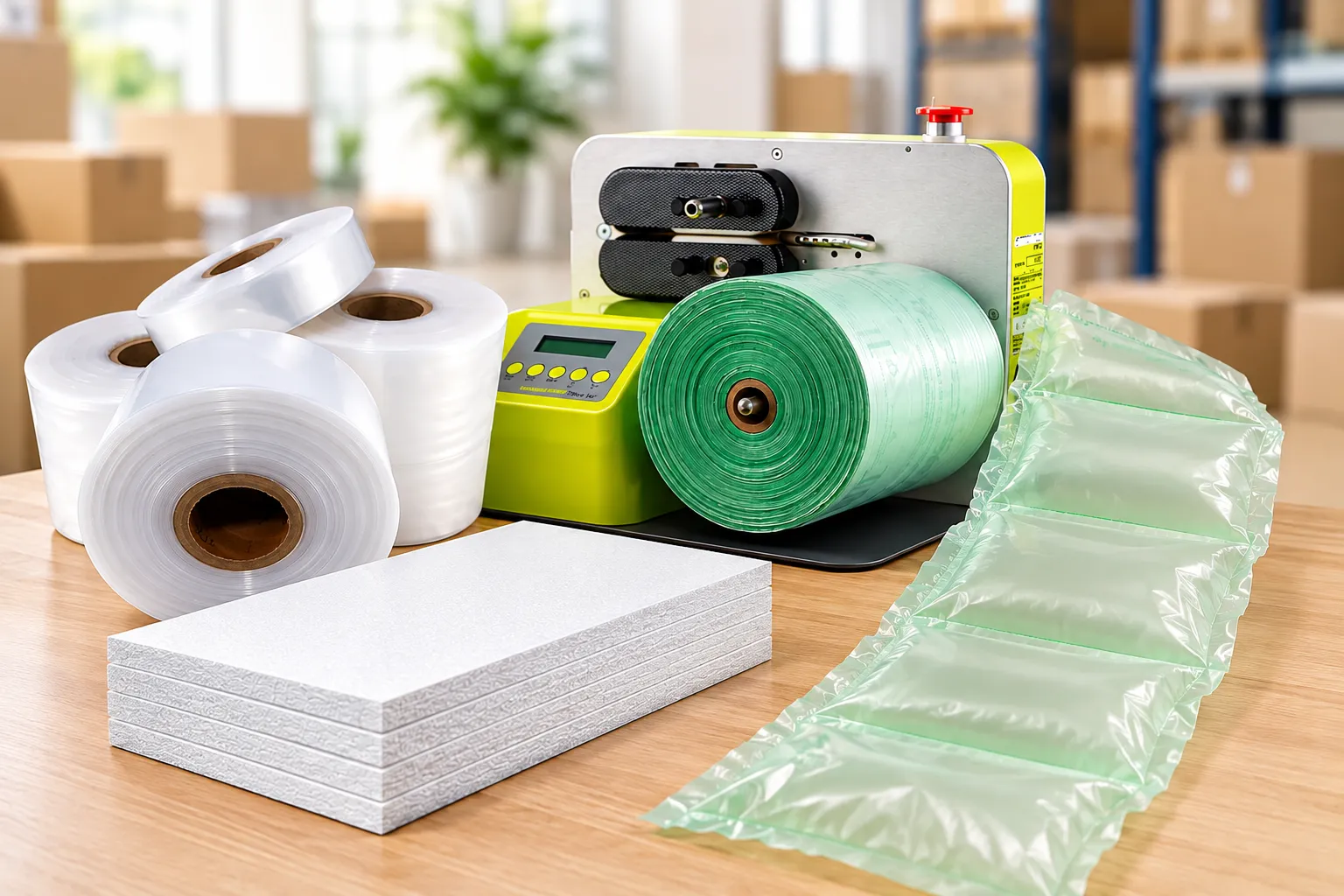
If you have ever opened a parcel and found those small inflatable cushions inside, you already know how useful they can be. Air pillows are especially handy for filling empty spaces inside cartons so products don't rattle around during transit.
They work well for:
- E-commerce orders with different-sized products
- Lightweight goods that need movement control
- Filling gaps around boxed products
- Businesses looking to reduce bulky void-fill storage
They are especially useful for fulfilment teams because the material can be produced when required rather than storing large quantities of loose cushioning.
Foam And Soft Surface Protection
Not every product needs heavy cushioning. Sometimes, the biggest concern is a scratch, scuff or unwanted surface mark. Foam wrap provides a soft layer between the product and the outer packaging.
It can be useful for:
- Glassware and ceramics
- Painted or polished surfaces
- Electronics and screens
- Furniture and finished wood
For instance, a furniture supplier shipping a glossy cabinet door could use foam protection against the surface before adding stronger outer cushioning. This simple extra layer can prevent cosmetic damage that leads to complaints.
Rigid Sheets and Corner Protection
Some products need more than soft cushioning. Polystyrene sheets can provide lightweight insulation and cushioning around larger or fragile items, while shaped corner protection helps defend the areas most likely to take a hit.
These options are useful for:
- Furniture and large panels
- Glass and framed products
- Appliances and equipment
- Items with vulnerable corners
Corner protection is particularly important for pallets and large products because edges can take considerable pressure during handling and storage. Foam and polystyrene corner protectors are commonly used for this reason.
Flexible Plastic Protection
For businesses packaging long, narrow or unusually shaped products, standard bags do not always cut it. Layflat tubing offers a flexible way to create protective sleeves around products by cutting it to the required length and sealing the ends.
It can suit:
- Long components and profiles
- Furniture parts
- Industrial products
- Products with unusual dimensions
This approach can save time because you are not restricted to a fixed bag size for every item. You can create the length you actually need, which is useful when product dimensions vary.
Bubble and Corrugated Protection
Sometimes, you need reliable cushioning around an item. Bubble wrap remains useful for fragile goods because its air-filled structure helps absorb knocks. At the same time, corrugated paper rolls can provide a practical protective layer without taking up excessive storage space.
For example, a business shipping glass bottles might wrap each item before placing it in a sturdy carton. A manufacturer sending metal components could use corrugated protection to separate surfaces and reduce rubbing during transit.
How Can You Choose the Right Protection?
Start with the product, not the packaging material. Ask yourself what is most likely to cause damage: impact, movement, scratches, pressure or exposed corners?
Then consider:
- Product weight and size
- How fragile the item is
- Amount of space in the carton
- Expected handling and storage conditions
- Whether packaging needs to be used manually or at volume
For high-volume operations, air pillow machines can produce and deploy inflatable cushioning much faster. That can help when packing teams handle hundreds of parcels daily.
Can Better Packaging Really Reduce Product Damage?
It can certainly reduce avoidable damage when the material matches the risk. A delicate product does not automatically need the thickest possible protection. It needs protection where it is most vulnerable.
A good combination might be foam against a polished surface, cushioning around the product and edge protection around exposed corners. That layered approach is often more practical than relying on one material to do everything.
Conclusion
Product protection does not have to mean throwing loads of packaging into a box. It is about understanding what can go wrong and choosing materials that deal with those risks. Whether you are sending ceramics, furniture, electronics or industrial components, the right combination of cushioning, surface protection and corner defence can help products arrive in much better condition.
FAQs
What is the best protective packaging for fragile products?
Bubble wrap, foam wrap, corner protection and suitable void fill can work together for fragile products.
Are air pillows suitable for heavy products?
They are mainly useful for cushioning and filling gaps, rather than directly supporting very heavy products.
When should I use polystyrene sheets?
They are useful when larger fragile items need lightweight cushioning and additional separation from the outer carton.
What is layflat tubing used for?
It creates protective sleeves for long, narrow or irregularly shaped products where standard bags may not fit.
Do packaging machines help with high-volume packing?
Yes. Air pillow machines can produce cushioning quickly, helping busy packing operations maintain a steady workflow.