Don't Move Dirty Data: The Critical Role of Archiving in Your SAP S/4HANA Migration
By usama
9 Views
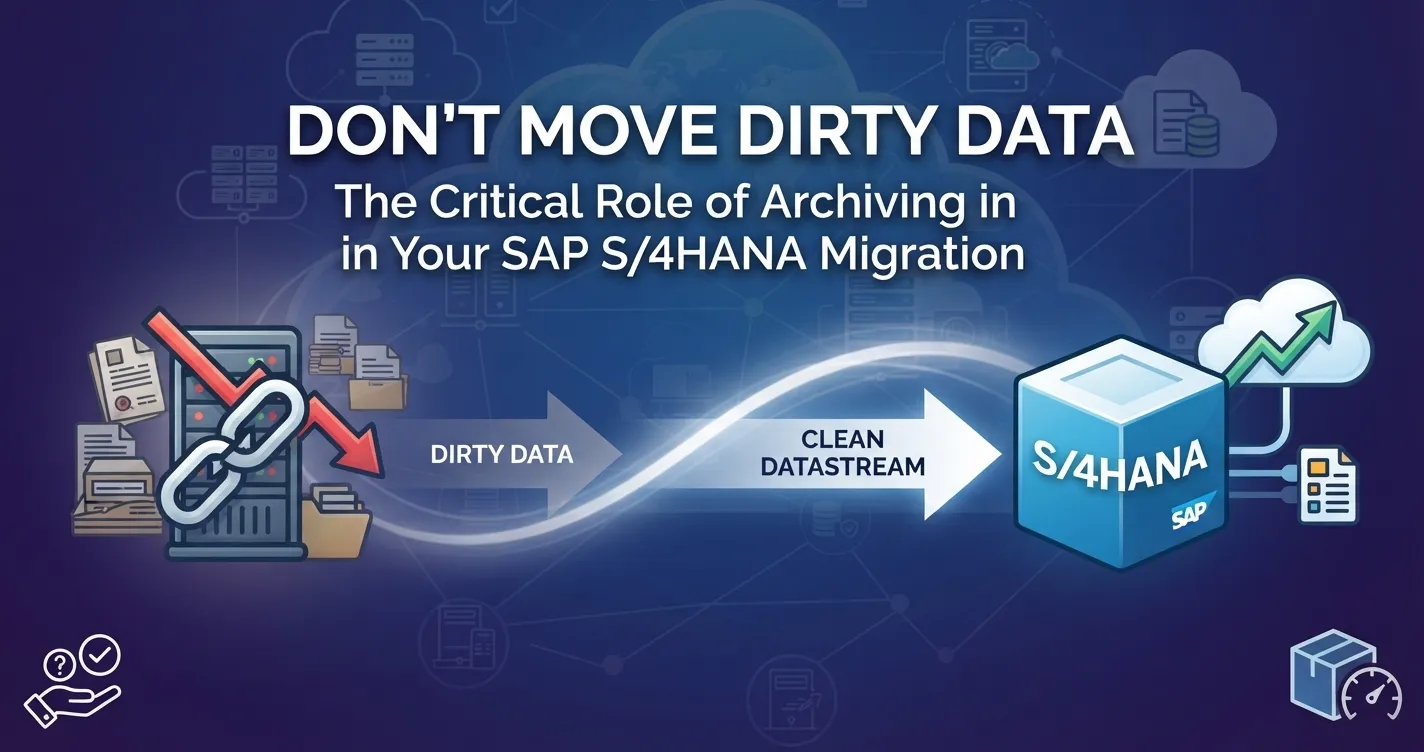
For most organizations running legacy SAP ECC systems, the move to SAP S/4HANA is not a matter of if, but when. The business case is clear: real-time analytics, simplified data models, and a modern user experience with Fiori. However, the road to S/4HANA is often paved with a common, yet often overlooked, obstacle: decades of accumulated legacy data.
Many IT teams rush into an SAP S/4HANA migration without addressing the sheer volume and quality of their existing data. They simply copy their entire, bloated database—full of obsolete customer records, closed orders from ten years ago, and redundant financial tables—into the new, high-performance in-memory system. This approach is a recipe for disaster.
The Cost of Migrating Bloated Data
Moving terabytes of unnecessary historical data into SAP S/4HANA creates several critical problems:
-
Exploding Cloud Costs: SAP HANA is an in-memory database. Storing vast amounts of inactive data on expensive RAM drives is significantly more costly than storing it on traditional disk. Migrating dirty data directly inflates your cloud infrastructure bill from day one.
-
Longer Project Timelines: The more data you migrate, the longer the migration process takes. Massive data volumes increase the time required for data cleansing, transformation, and the final cutover window. This extends costly business downtime.
-
Performance Degradation: While HANA is incredibly fast, loading it with years of irrelevant data can impact query performance for operational reporting, negating the very speed benefits you are trying to achieve.
The Solution: Data Volume Management (DVM)
A successful migration requires a robust Data Volume Management (DVM) strategy. This means defining what data is critical for current operations and what data can be safely archived.
-
Analyze and Assess: Start by analyzing your database to identify the largest tables and oldest data. Understand the legal retention periods for different types of business documents.
-
Archive Strategically: Implement SAP Information Lifecycle Management (ILM) or other archiving tools to move inactive data to lower-cost storage tiers while maintaining accessibility for audits or reporting.
-
Cleanup and Purge: Delete temporary files, logs, and inconsistent data that have accumulated over years of operation.
A Prerequisite for Success
Treating data archiving as a mandatory pre-project step, rather than an afterthought, is crucial. Partnering with specialized consultancies experienced in SAP S/4HANA migration can provide the expertise needed to execute a DVM strategy effectively, ensuring you migrate only clean, relevant data.
By reducing your data footprint before the move, you not only lower TCO and accelerate the project but also lay a solid foundation for a truly agile and high-performing digital core.