Purchase vs Rental Models: Selecting the Right Disinfection Kiosk Strategy for Commercial Use
By GlowMe Smart India
195 Views
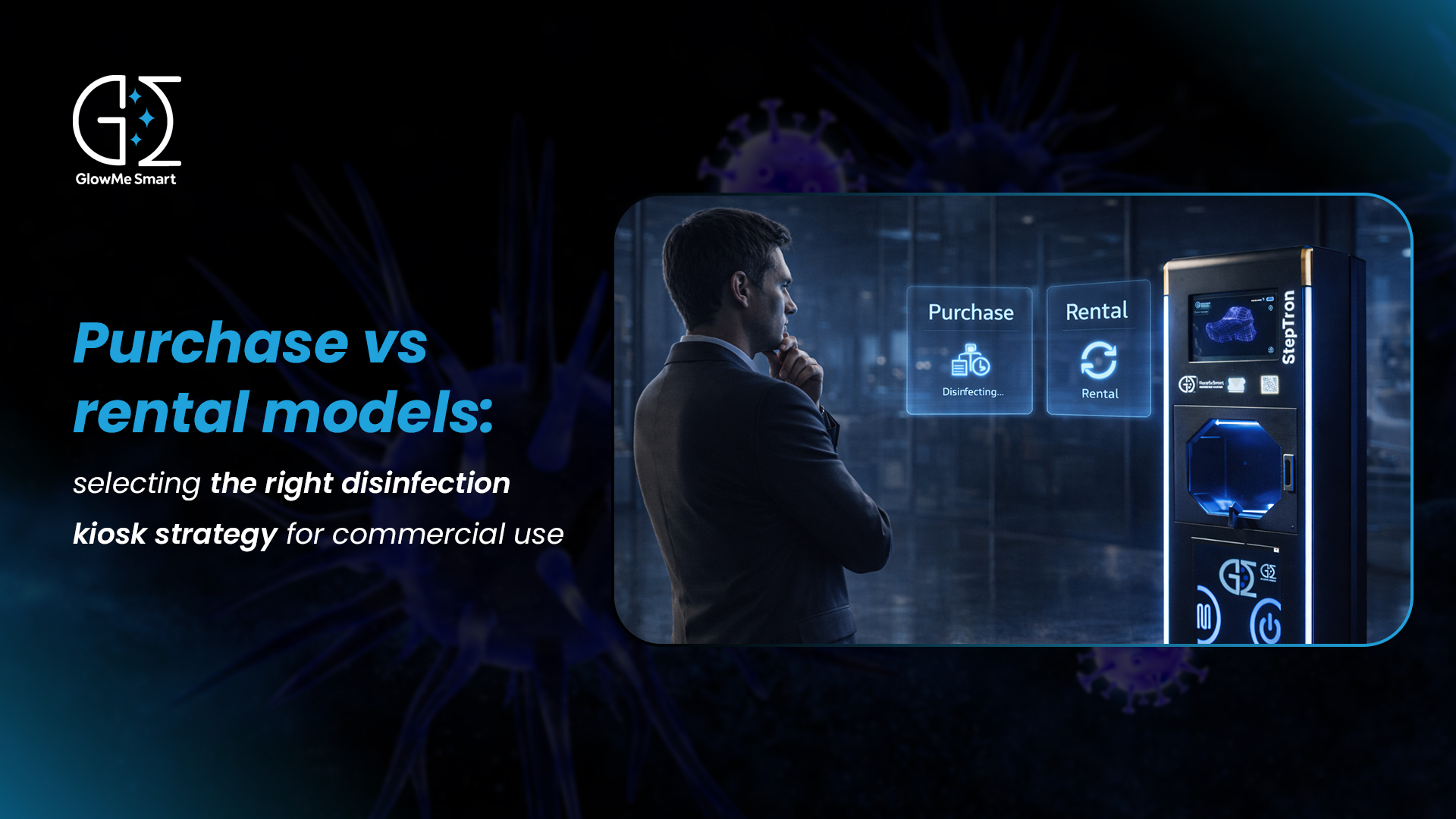
A disinfection kiosk rental gives businesses a practical way to maintain hygiene standards without committing to a full upfront investment. It allows offices, hospitals, factories, and public spaces to introduce automated sanitization quickly while keeping costs flexible and manageable.
Choosing between renting, leasing, or buying is not just about pricing. It directly impacts how the kiosks are used, maintained, and scaled across different locations. The right model depends on how often the kiosk is needed, how critical hygiene is to operations, and how much control a business wants over the system.
A well-planned decision ensures the kiosk supports daily movement instead of becoming an unused asset. Glowme Smart continues to bring structured hygiene kiosks into commercial environments where consistency matters.
What does a disinfection kiosk strategy mean for commercial use?
A disinfection kiosk strategy is the way a business plans how hygiene equipment is deployed, managed, and sustained over time. It connects operational needs with budget, foot traffic, and safety expectations.
In simple terms, it answers one key question:
- How will these kiosks fit into daily operations without creating friction?
Instead of treating it as a one-time purchase, businesses that plan strategically ensure the kiosk becomes part of their workflow - from entry points to high-risk zones.
Why should businesses compare rental, leasing, and purchase models first?
Each model serves a different purpose, and selecting the wrong one can lead to unnecessary costs or operational inefficiencies.
Rental works best for short-term or uncertain needs. Leasing helps with predictable budgeting. Buying is suited for long-term, high-usage environments.
Understanding this difference early prevents businesses from overinvesting or underutilizing hygiene systems.
When does renting a disinfection kiosk make the most sense?
Renting is ideal when the requirement is temporary, seasonal, or still being tested. It allows businesses to act quickly without long-term commitment.
- Event and Exhibition Spaces: Temporary venues can maintain hygiene standards without owning equipment after the event concludes.
- Corporate Campaigns: Offices can introduce kiosks during seasonal health concerns or phased return-to-office plans.
- Temporary Work Locations: Construction or project-based environments benefit from hygiene kiosks during limited operational timelines.
- Pilot Installations: Businesses can test placement, user behavior, and service needs before deciding on a permanent solution.
Renting keeps the process flexible while giving real-world insights into how the kiosk performs.
When should you buy disinfection kiosk systems?
Buying becomes the better option when the kiosk is part of daily operations and used consistently in the same location.
- Hospitals and Clinics: Entry points and treatment areas require continuous hygiene control without interruption.
- Manufacturing Units: Production zones depend on consistent sanitization to maintain quality and safety standards.
- Educational Institutions: Daily student movement makes permanent installations more practical.
- Commercial Spaces: Offices, malls, and shared buildings benefit from having a fixed hygiene system in place.
Ownership gives full control over usage, placement, and maintenance, making it suitable for long-term planning.
How does hygiene kiosk leasing support better budget control?
Hygiene kiosk leasing offers a middle ground between renting and buying. It allows businesses to use equipment long-term while spreading the cost over time.
For growing businesses or multi-location operations, leasing helps maintain consistency without heavy capital investment.
- Multi-Location Expansion: Businesses can deploy kiosks across branches without large upfront costs.
- Upgrade Flexibility: Equipment can be updated after the lease period instead of being held for years.
- Service Integration: Some leasing models include maintenance support, reducing operational pressure.
- Budget Stability: Fixed payments make financial planning more predictable across departments.
Leasing works well for businesses that want structure without ownership responsibility.
Which model works best for different commercial sanitizing kiosks needs?
The right choice depends on usage frequency, location type, and operational priorities.

Each model fits a different stage of business growth and hygiene requirements.
What should businesses evaluate before choosing a model?
Before deciding, businesses should assess how the kiosk will function in real conditions rather than just comparing costs.
- Foot Traffic: High daily usage often justifies leasing or buying instead of repeated rentals.
- Risk Level: Hospitals, food units, and factories require stricter hygiene than low-traffic spaces.
- Service Support: Maintenance, repair response, and refill availability must be clearly defined.
- Placement Planning: Entry points should allow smooth flow without causing congestion.
- Budget Preference: Whether the cost is treated as an expense or an investment influences the decision.
These factors ensure the kiosk remains effective after installation.
Why automate your commercial hygiene investment?
Automating hygiene creates consistency that manual processes often fail to deliver. It ensures every user follows the same sanitization process without supervision.
- Consistent Hygiene Levels: Every user experiences the same level of sanitization regardless of time or staff availability.
- Improved User Confidence: Visible kiosks increase trust among visitors and employees.
- Reduced Manual Effort: Facility teams can focus on broader cleaning tasks instead of monitoring entry points.
- Better Compliance Readiness: Automated kiosks support inspections with consistent hygiene practices.
Automation turns hygiene into a structured process rather than a dependent activity.
How should you make the final decision?
The final decision should align with how often the kiosk will be used and how critical hygiene is to operations.
- Choose a rental when flexibility is needed.
- Choose leasing when budget planning matters.
- Choose purchase when usage is permanent and consistent.
Instead of focusing only on cost, businesses should think about usability, service support, and long-term efficiency.
How can Glowme Smart fit into your next hygiene upgrade?
Choosing the right model today sets the direction for how your facility manages hygiene tomorrow. Glowme Smart helps businesses align usage, service, and long-term planning through flexible options like disinfection kiosk rental or ownership-based deployment. Instead of treating it as a one-time setup, the focus stays on consistent performance, easy maintenance, and scalability as operations grow. Whether your requirement is temporary or permanent, the goal is to build a system that supports daily movement without disruption. A structured approach ensures hygiene stays reliable, visible, and easy to manage across every entry point.
Plan smarter hygiene today with Glowme Smart—reach to us for expert guidance on choosing the right disinfection kiosk strategy.