Gravity Roller Conveyor vs Skatewheel: Which One Suits Your Product?
By alexjoe
8 Views
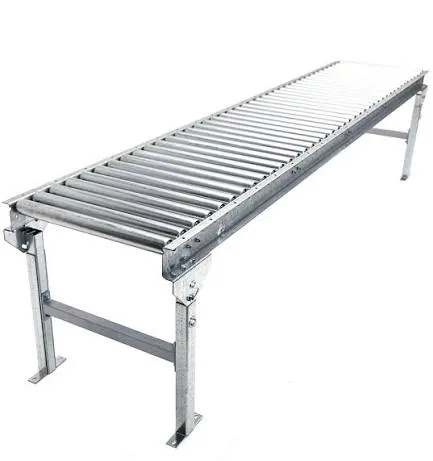
Two lines can look almost identical from across the warehouse. They tilt at a gentle slope; they let boxes move along on their own, and neither one draws a watt of power. But get up close, and the difference matters more than most buyers expect. One rides on tubes, the other on little wheels, and picking the wrong one can mean stalled cartons, tipped parcels, or a line that doesn't flow the way you hoped.
So before you buy, it pays to know which style actually suits what you're moving. Here's how the two stack up, and how to tell which one belongs on your floor.
What Sets Them Apart
A gravity roller conveyor runs on rows of tubes that span the full width of the frame. Each tube turns on a fixed axle, and the product rides across several of them at once. That full-width contact is the whole story. It spreads the load evenly and gives a flat, rigid bottom plenty to sit on.
A skatewheel line swaps those tubes for rows of small wheels, scattered across the frame in a staggered pattern. There's less surface touching the product, so there's less friction holding it back. Lighter items get moving on a gentler slope, and the wheels take corners more willingly than a straight tube ever could.
Matching the Line to the Product
This is where the choice really gets made. The thing you're moving decides almost everything, so start there.
Heavy or rigid loads want tubes. A loaded tote or a sturdy carton sits happily across a roller bed, and the full-width support keeps it tracking straight. Light or small parcels lean the other way. A padded envelope or a flimsy box barely has the weight to overcome roller friction, so it tends to stall. On wheels, that same envelope glides.
There's also the matter of the bottom surface. A smooth, firm base rides fine on either style. But something with an uneven or soft bottom, like a bag or a wrapped bundle, can sag between widely spaced tubes and hang up. Closely set wheels give it more points of contact and a better shot at a clean run.
Thinking About Curves and Layout
Straight runs are easy. Either style handles a point-A-to-point-B slide without complaint. The difference shows up the moment you need to turn.
Wheels bend around a curve naturally, since the ones on the outside of the turn can spin faster than the ones on the inside. That makes a skatewheel line the easy pick for a layout that snakes around a bench or doubles back on itself. A tube-based gravity conveyor can turn too, but it takes tapered rollers built for the job, which adds cost and planning. If your floor is all straight shots, that's a non-issue.
Weighing Cost and Wear
Up front, skatewheel tends to run a little cheaper per foot, and its lighter build is easy to move or re-angle as the work shifts. That flexibility suits a packing bench that gets rearranged often.
Tubes earn their keep over the long haul. They shrug off knocks that would bend or pop a wheel, and they hold up better under steady weight day after day. For a line that runs hard, a gravity roller conveyor usually ages more gracefully. Keeping a few spare tubes or wheels on the shelf is worth it either way, since one seized part can slow a whole run until you swap it.
A Quick Way to Decide
If you move heavy, rigid, flat-bottomed goods in mostly straight lines, go with tubes. They're tougher, steadier, and built for a load. If you move light, small, or oddly shaped items, or your layout has to curve, wheels will treat you better and cost a touch less doing it.
Plenty of operations end up running a mix, tubes on the heavy main line and wheels on the light feeder benches. There's no rule saying you have to commit to one across the whole floor.
The honest answer is that neither style wins outright. One suits the load, the other suits the layout, and the wise move is to match the line to the real work in front of you. Get that call right and a well-chosen gravity conveyor will roll your product along quietly for years, no motor and no power bill required.