How Many Instant Personal Loans Can You Have at Once?
By bankcreds
44 Views
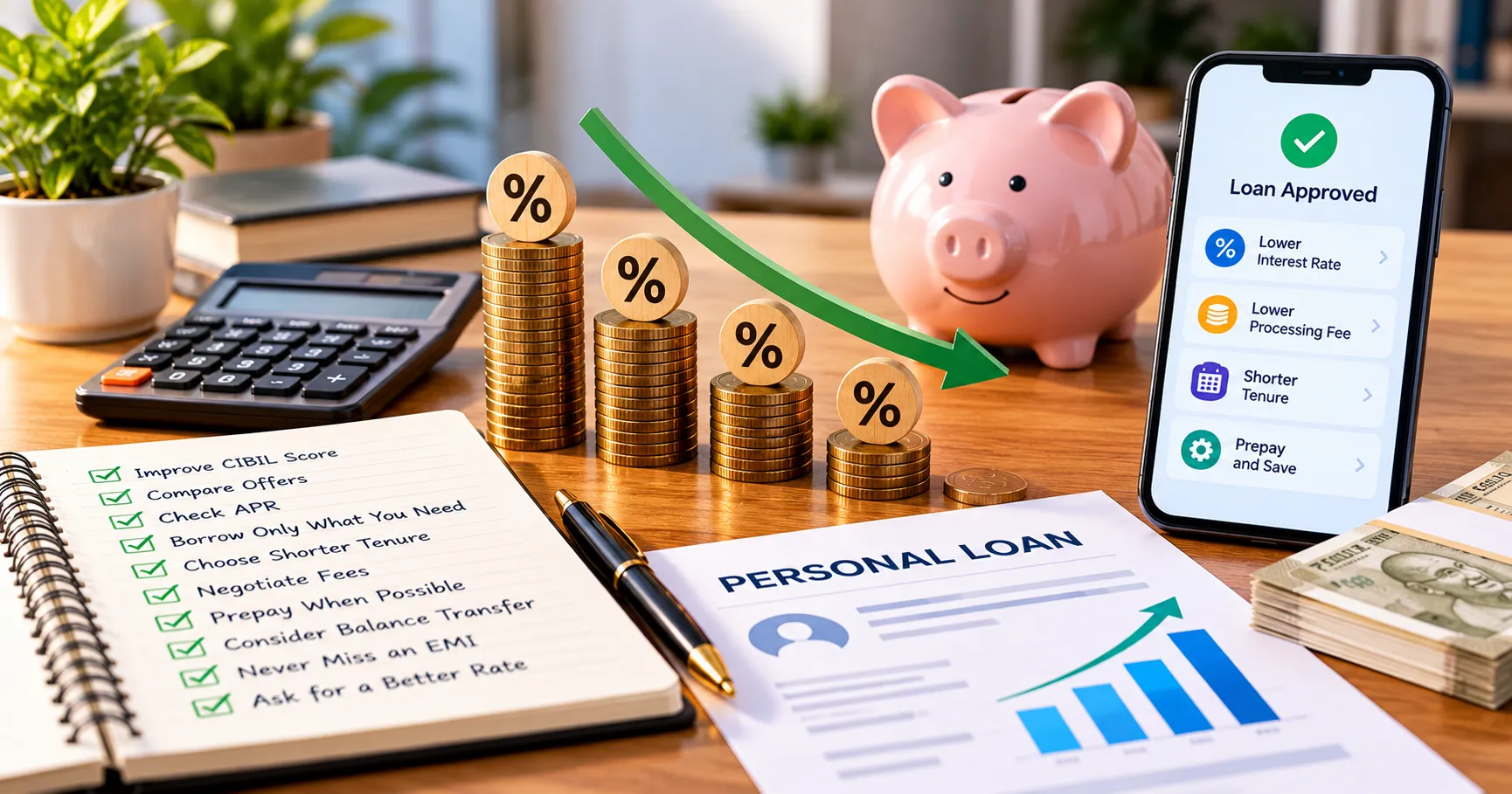
Instant loan apps make borrowing feel effortless. One pre-approved offer here, another notification there, and before you know it, you might have two or three loans running at the same time.
That raises a fair question: how many instant personal loans can you have at once? Is there a legal limit? And what does having multiple instant personal loans do to your CIBIL score and future borrowing? Let's break it down.
The short answer
There is no legal limit on the number of personal loans you can have in India. The RBI doesn't cap it.
But in practice, the limit is set by:
- Your income: lenders check how much of your salary already goes to EMIs.
- Your CIBIL score: too many loans and enquiries can lower it.
- Each lender's rules: some won't lend if you already have several unsecured loans.
For most salaried people, once total EMIs cross about 40% to 50% of in-hand pay, new lenders start saying no, however many loans that adds up to.
How lenders decide if you can take another loan
The debt-to-income ratio (FOIR)
Lenders look at your FOIR (Fixed Obligation to Income Ratio). It's simply your total monthly EMIs divided by your monthly income.
Here's an example. Say you earn ₹60,000 a month in hand and already pay:
- ₹12,000 EMI on a personal loan
- ₹9,000 EMI on a car loan
Your FOIR is ₹21,000 ÷ ₹60,000 = 35%.
If a lender allows up to 50%, you can take another loan with an EMI of up to about ₹9,000. If it allows only 40%, you have room for just ₹3,000. That's why the same person can get very different answers from different lenders.
Total EMIs as % of income How lenders usually see it Under 30% Comfortable, new loans easy 30–40% Acceptable at most lenders 40–50% Tight, some lenders decline Over 50% High risk, most lenders decline Your credit report
Every loan you take shows up on your credit report. Lenders can see:
- How many active loans you have
- How many new loans you've opened recently
- How many lenders have checked your report in the past few months
- Whether you've ever paid late
Several new unsecured loans in a short time is a warning sign, even if you've paid every EMI.
How multiple instant loans affect your CIBIL score
Having more than one loan isn't automatically bad. Paying several loans on time can actually build a strong credit history. The problems come from:
- Hard enquiries: each formal loan application adds one. Many in a few weeks suggest you're desperate for credit, and your score can dip.
- High debt load: a lot of unsecured debt compared to your income makes lenders nervous.
- Missed payments: juggling several EMI dates makes it easier to miss one, and a single missed payment can hurt your score significantly.
From 1 July 2026, lenders report your credit data to bureaus four times a month instead of once. So new loans, and any missed payments, show up on your report much faster. Lenders will get a near real-time view of how much you owe.
"Having two loans isn't the problem. Losing track of them is."
The hidden cost of stacking small app loans
Many people end up with multiple loans because apps offer small amounts, like ₹20,000 or ₹50,000, rather than the full amount they need. Taking three small loans instead of one planned loan can cost much more.
Here's an example of borrowing ₹1,50,000 for 12 months:
Option Rate Fee Total monthly EMI Total cost One loan from a bank or NBFC 14% 1.5% + GST ₹13,468 ₹14,272 Three ₹50,000 app loans 30% each 3% + GST each ₹14,623 ₹30,787 
The three small loans cost more than twice as much. You also pay three processing fees, deal with three EMI dates, and get three new accounts on your credit report.
When multiple loans can make sense
There are situations where having more than one loan is reasonable:
- You have a home or car loan and need a small personal loan for an emergency. Secured and unsecured loans together are common and don't worry lenders much if your FOIR is healthy.
- You took a loan years ago, have repaid most of it, and need a top-up or a new loan for a separate goal.
- Your income has grown, and your total EMIs are still comfortably under 40%.
When to avoid another loan
- You're taking a new loan to pay an existing EMI. That's the start of a debt trap.
- Your total EMIs already take up more than 40% to 50% of your income.
- You've applied to several lenders in the past month and been rejected.
- You don't have an emergency fund, so one bad month could mean missed payments.
Better alternatives to juggling many loans
- Debt consolidation: take one larger loan at a lower rate to close several small, expensive ones. You get one EMI, one date and often a lower total cost.
- Top-up on an existing loan: if you already have a good-standing loan, your lender may offer a top-up at a similar rate, often with less paperwork.
- Balance transfer: move an expensive loan to a lender offering a lower rate.
- Secured options: a gold loan or a loan against a fixed deposit usually costs less than an extra unsecured loan.
Tips if you already have multiple loans
- List every loan: lender, amount, rate, EMI and due date.
- Set up auto-debit for each EMI, and keep a buffer in your account.
- Prepay the most expensive loan first whenever you have extra money.
- Stop applying for new credit until your FOIR is below 40%.
- Check your credit report to make sure every loan is shown correctly, including ones you've closed.
Can AI tools help?
Yes, they're useful for getting organised. List your loans in ChatGPT, Claude or Gemini, with rates and EMIs, not account numbers, and ask for your FOIR, the order to prepay them in, or whether consolidating would save money.
But remember, AI doesn't know your lender's rules or your full credit report. Use it for planning, and confirm offers with the lender.
Frequently asked questions
Is there a limit on how many personal loans I can take? No legal limit. Lenders decide based on your income, existing EMIs and credit score.
Can I take two personal loans from the same bank? Often yes, if your income supports it. Many banks prefer to offer a top-up on the existing loan instead.
Do multiple loans reduce my CIBIL score? Not by themselves. Too many applications, high debt relative to income or missed payments are what hurt your score.
Can I get an instant loan if I already have an EMI? Yes, as long as your total EMIs, including the new one, stay within the lender's FOIR limit, usually 40% to 50% of income.
Should I consolidate multiple loans into one? If you can get a lower overall rate and fees make sense, yes. One loan is easier to manage and usually cheaper than several small ones.
The bottom line
You can legally have as many instant personal loans as lenders will give you, but your income and credit score set the real limit. Keep your total EMIs under about 40% of your take-home pay, avoid stacking small app loans, and consolidate when it saves money.
Fewer loans, planned well, almost always cost less than many loans taken in a hurry.
Disclaimer: This article is for general information only and is not financial advice. Lending criteria vary by lender. Confirm the latest terms before borrowing.
Related Reading
Why Business & Finance is Transforming the Global Industry Landscape
Welcome to our in-depth exploration of Business & Finance. In an era defined...
Expert Insights: Navigating the Complex World of Business & Finance
Welcome to our in-depth exploration of Business & Finance. In an era defined...