How Relationship Counselling Helps Couples Break Unhealthy Communication Patterns
By Premlata Kumar
51 Views
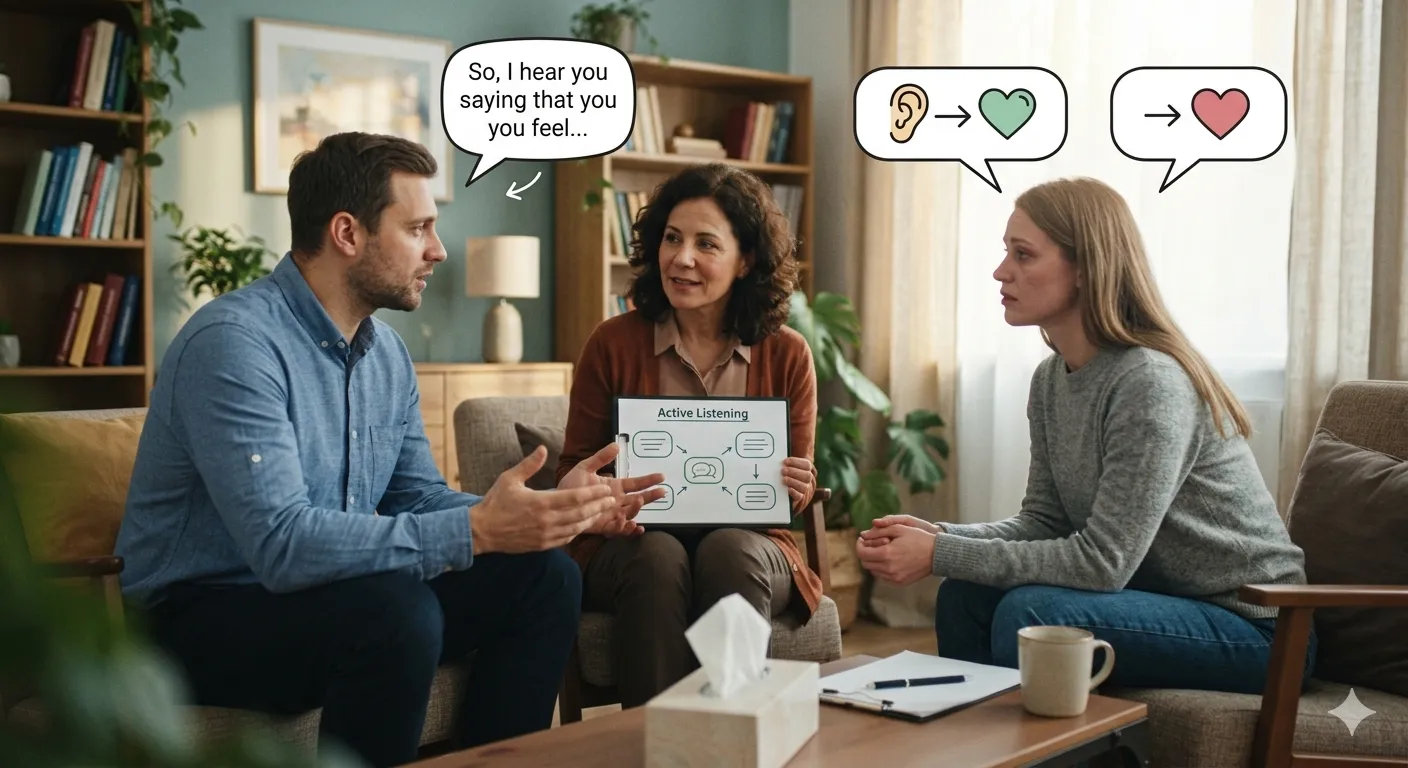
Every relationship has disagreements. Couples can have different expectations, priorities, communication styles, and emotional needs. The problem is not necessarily having conflict; it is what happens when the same communication pattern keeps repeating.
One conversation may begin with a small disagreement and quickly turn into criticism, defensiveness, silence, or anger. Over time, repeated arguments can create emotional distance and make partners feel unheard or misunderstood.
Relationship counselling can help couples understand these patterns and develop healthier ways of communicating. Rather than simply deciding who is right or wrong, counselling focuses on understanding the interaction between partners and finding more constructive ways to respond to relationship difficulties.
Why Do Couples Keep Having the Same Arguments?
Many recurring arguments are about more than the immediate issue. A couple may argue about household responsibilities, money, family involvement, phone use, parenting, intimacy, or spending time together. However, the deeper concern may involve feeling unappreciated, ignored, unsupported, or emotionally disconnected. For example, a disagreement about one partner not responding to messages may actually be connected to concerns about trust or emotional availability. When the underlying issue remains unresolved, the same disagreement can return in a different form.
Common patterns include:
- Criticism followed by defensiveness
- One partner pursuing a conversation while the other withdraws
- Repeated blame
- Avoiding difficult discussions
- Assuming instead of asking
- Bringing up previous mistakes
- Becoming emotionally overwhelmed
- Expecting a partner to understand unspoken needs
Recognising these patterns is often an important first step toward changing them.
How Can Counselling Improve Relationship Communication?
One purpose of couples counselling is to create a structured environment where both partners can communicate without allowing every conversation to become another argument.
A therapist may help partners identify:
- How they respond when they feel hurt
- What triggers defensiveness or anger
- How they express emotional needs
- Where misunderstandings usually occur
- Which arguments keep repeating
- How each partner interprets the other's behaviour
For example, one partner may become quiet during conflict because they feel overwhelmed. The other partner may interpret that silence as indifference and continue asking questions. The first partner then withdraws further. Neither person may be intentionally trying to make the situation worse, but the interaction pattern keeps reinforcing itself. Counselling can help couples recognise this cycle and practise a different response.
What Communication Strategies Are Used in Relationship Counselling?
The exact approach depends on the couple's concerns, but therapists may introduce practical communication skills.
1. Active Listening
Listening is more than waiting for your turn to speak.
Active listening involves paying attention to what the other person is trying to communicate, asking clarifying questions, and reflecting back what you understood.
Instead of immediately responding with:
“You always do that.”
A partner might say:
“So you're saying that you felt ignored when I didn't discuss the decision with you. Is that what you meant?”
This can reduce assumptions and create space for clarification.
2. Expressing Feelings Without Blame
Communication becomes difficult when feelings are expressed through accusations.
Instead of:
“You don't care about me.”
Try:
“I felt disconnected when we didn't have time to talk this week.”
This does not remove disagreement, but it changes the conversation from attacking a person's character to explaining an experience.
3. Identifying Emotional Triggers
Certain situations can trigger strong emotional reactions. A partner may become especially sensitive to criticism, rejection, silence, or feeling ignored because of previous experiences or established relationship patterns. Understanding these emotional triggers can help partners pause before automatically reacting.
4. Managing Defensiveness
Defensiveness can appear when someone feels blamed or attacked.
They may deny the concern, counterattack, explain excessively, or shift attention to the other person's mistakes.
Learning to recognise defensiveness can make it easier to respond without escalating the conversation.
5. Setting Healthy Boundaries
Not every disagreement needs to continue indefinitely.
Couples may benefit from agreeing that certain behaviours—such as insults, threats, shouting, or deliberately humiliating a partner—are not acceptable during disagreements.
Clear healthy communication boundaries can create a more respectful environment for difficult conversations.
Can Relationship Counselling Help With Frequent Arguments?
It can help couples understand why arguments keep repeating and develop alternative ways of responding.
The therapist may look beyond the visible disagreement and explore the emotional needs underneath it.
For example:
Visible issue: “You never spend time with me.”
Possible underlying concern: “I don't feel emotionally important to you.”
When couples learn to communicate the underlying need rather than only arguing about the surface issue, conversations may become more meaningful.
This does not mean every conflict will disappear. Healthy relationships can still involve disagreement. The aim is to develop better ways of handling differences.
What If One Partner Communicates and the Other Withdraws?
This is a common interaction pattern.
One person may want to resolve the issue immediately, while the other needs time before discussing it. The first person may interpret withdrawal as avoidance, while the second may experience continued questioning as pressure.
Instead of forcing the conversation or completely avoiding it, couples can establish a structured pause.
For example:
“I need some time to calm down, but I do want to discuss this. Can we continue the conversation tonight?”
This communicates both a need for space and a willingness to return to the issue.
How Can Counselling Improve Emotional Intimacy?
Communication is not only about solving arguments. It also affects emotional connection.
When partners regularly feel heard, understood, and respected, they may find it easier to discuss vulnerable subjects such as insecurity, disappointment, fear, intimacy, expectations, and personal needs.
Emotional intimacy can become difficult when conversations are dominated by criticism, unresolved resentment, or avoidance.
Counselling can provide opportunities to practise expressing emotions more directly instead of expecting a partner to guess what is wrong.
For example:
“I am worried that we are becoming emotionally distant.”
is more useful than:
“You don't care about this relationship anymore.”
The first statement opens a conversation. The second may immediately create defensiveness.
When Should Couples Consider Relationship Counselling?
There is no requirement to wait until a relationship reaches a crisis.
Professional support may be worth considering when couples experience:
- Frequent unresolved arguments
- Communication breakdown
- Growing resentment
- Emotional distance
- Repeated misunderstandings
- Trust difficulties
- Problems discussing intimacy
- Major life transitions
- Difficulty resolving recurring disagreements
Some couples seek counselling to address an existing problem, while others use it to improve communication before difficulties become more serious.
A qualified therapist can assess the couple's circumstances and help determine which therapeutic approach and communication strategies may be appropriate.
What Happens During Relationship Counselling?
The process can vary depending on the therapist, concerns, and relationship.
Sessions may involve discussing relationship history, identifying recurring communication patterns, exploring emotional needs, practising new communication skills, and reviewing progress between sessions.
The therapist is not simply there to decide which partner is right.
Instead, the focus may be on understanding the relationship dynamic and helping both people communicate more effectively.
Therapy also cannot guarantee a particular relationship outcome. Couples may decide to continue the relationship, make significant changes, or explore other options depending on their circumstances.
Frequently Asked Questions About Relationship Counselling
How does relationship counselling help couples?
It can help couples understand recurring communication patterns, express emotions more clearly, listen more effectively, manage conflict, and work through relationship difficulties.
Can counselling improve communication between partners?
Counselling can provide structured opportunities to practise communication skills such as active listening, emotional expression, empathy, and constructive problem-solving.
Is relationship counselling only for couples who are struggling?
No. Some couples seek professional support during major life transitions or when they want to improve communication and emotional connection before problems become more serious.
Can couples counselling stop arguments completely?
No. Disagreements are a normal part of close relationships. Counselling focuses on developing healthier ways to manage disagreements rather than eliminating every difference.
Key Takeaway
Healthy relationships are not defined by never having disagreements. They are shaped by how partners respond when differences, hurt, and difficult emotions arise.
Relationship counselling can help couples move beyond repeated blame, defensiveness, silence, or misunderstanding by identifying unhealthy communication patterns and practising more constructive ways of interacting.
Active listening, emotional awareness, empathy, boundaries, and respectful conflict resolution can all contribute to healthier relationship communication.
When recurring arguments begin affecting emotional wellbeing or creating distance between partners, speaking with a qualified therapist can provide a structured space to understand the problem and work toward meaningful change.