How Small Fashion Stores Can Increase Buyers Through Digital Sales
By Thomson Addition
194 Views
Introduction
Small fashion stores are finding new ways to compete in the growing online market. Buyers now compare products, prices, reviews, and delivery options before making a purchase. Because of this shift, independent fashion sellers must build a stronger online presence to attract and retain customers. Digital sales channels give smaller brands the chance to reach audiences far beyond local markets without investing heavily in physical stores.
Modern consumers prefer convenience, mobile-friendly shopping, and fast communication. Small stores that focus on customer experience, branding, and digital marketing can grow steadily even in a competitive industry. With the right strategy, smaller retailers can turn limited resources into profitable online opportunities.
This article explains practical methods fashion retailers can use to increase buyers through digital sales while building long-term customer trust and consistent revenue.
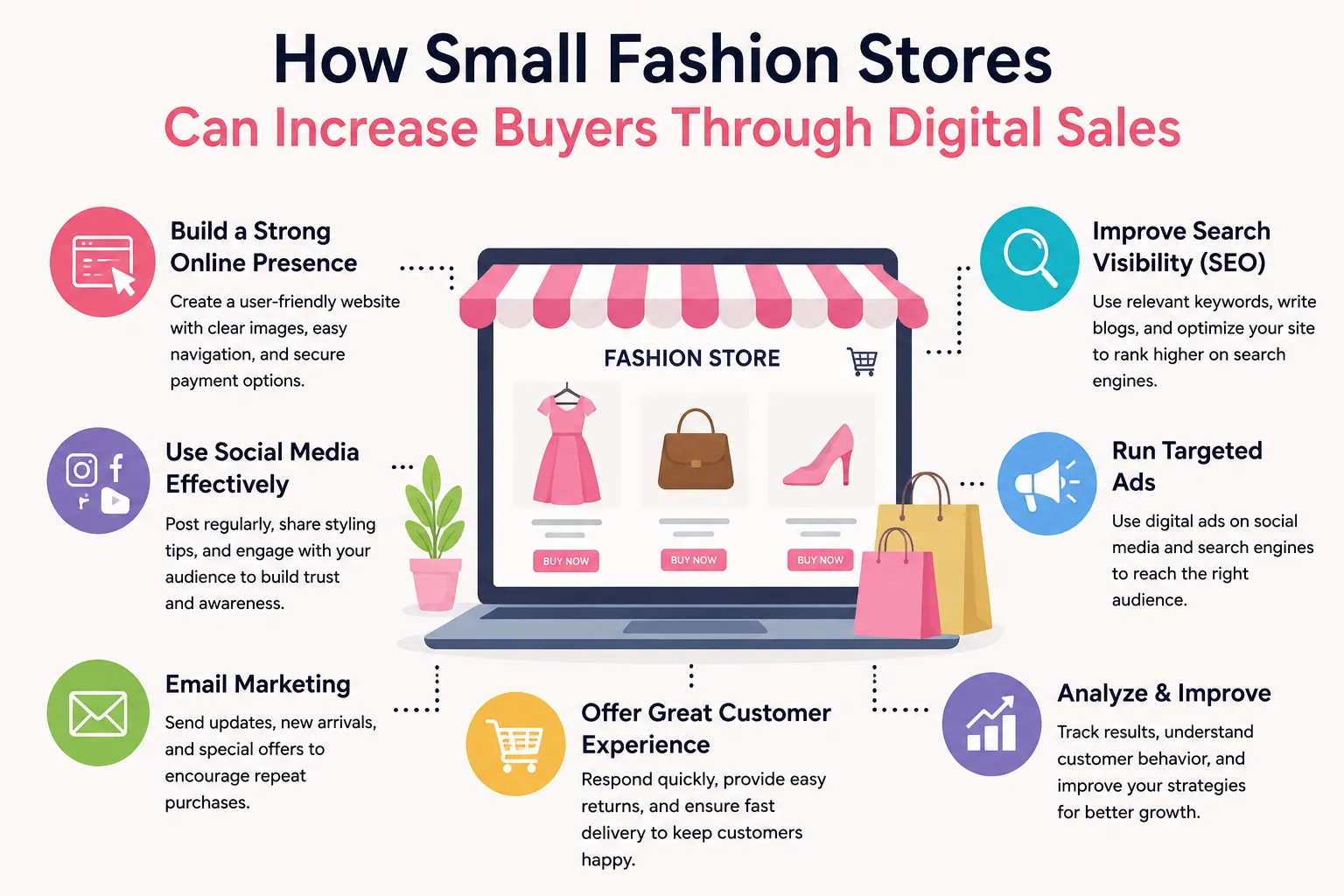
Building a Strong Online Presence for Fashion Stores
The first step toward increasing digital buyers is creating a professional online identity. Customers often judge a brand within seconds after visiting a website or social media profile. A modern and trustworthy appearance helps shoppers feel confident while browsing products.
A successful Online Jewelry Ecommerce Business or fashion-related store depends heavily on presentation, product visibility, and customer interaction. Buyers are more likely to purchase from brands that look reliable and provide clear information.
Create a User-Friendly Website
A fashion website should be easy to navigate on both desktop and mobile devices. Simple menus, fast-loading pages, and high-quality product images improve the shopping experience. Customers usually leave websites that feel slow or confusing.
Fashion stores should also focus on organized product categories. Buyers must quickly find dresses, accessories, shoes, or seasonal collections without searching through unnecessary pages.
Improve Product Descriptions
Product descriptions help buyers understand fabric quality, sizing, colors, and styling options. Clear descriptions reduce confusion and increase customer confidence during purchases.
Strong descriptions should include:
- Material and fabric information
- Available sizes and fitting details
- Styling suggestions for different occasions
These details make online shopping easier and reduce product return rates.
Use Professional Product Photography
Fashion products depend heavily on visual appeal. Poor-quality images can lower trust even if the products are excellent. Professional photos attract attention and improve engagement on websites and social media platforms.
Fashion brands should include:
- Front and back product images
- Close-up shots showing texture and details
- Lifestyle images featuring real-world use
Visual storytelling creates a stronger emotional connection with buyers.
Using Social Media to Reach More Buyers
Social media platforms have become major sales channels for fashion businesses. Small stores can promote products, communicate with customers, and build brand awareness without spending large amounts on advertising.
Fashion-related content performs well because people enjoy discovering trends, styling ideas, and seasonal collections online. Platforms like Instagram, Pinterest, Facebook, and TikTok allow small stores to reach highly targeted audiences.
Post Consistent Fashion Content
Consistency helps brands stay visible in crowded social media feeds. Fashion stores should share content regularly to maintain engagement and keep followers interested.
Useful content ideas include:
- Product launches
- Styling tutorials
- Customer testimonials
- Behind-the-scenes content
- Seasonal trend updates
Posting valuable content increases audience trust and encourages repeat visits.
Collaborate With Influencers
Micro-influencers often deliver strong results for smaller fashion stores. These influencers usually have loyal audiences who trust their recommendations. Partnering with local or niche influencers helps brands reach buyers who already enjoy fashion-related content.
Stores can offer free products, affiliate partnerships, or sponsored collaborations. Authentic recommendations usually perform better than heavily promotional advertisements.
Run Targeted Advertising Campaigns
Digital advertising allows fashion stores to reach specific groups based on age, interests, shopping habits, and location. Small budgets can still generate good results when campaigns focus on the right audience.
Effective ads often include:
- Clear product images
- Short and engaging captions
- Limited-time discounts
- Strong call-to-action buttons
Targeted campaigns help increase traffic and improve conversion rates.
Building Customer Trust Through Reviews and Engagement
Trust is one of the biggest factors influencing online purchases. Buyers want assurance that products match descriptions and arrive on time. Positive customer experiences encourage repeat purchases and word-of-mouth promotion.
Small fashion stores can compete with larger brands by focusing on customer satisfaction and transparent communication.
Encourage Customer Reviews
Reviews help potential buyers feel more confident before placing orders. Positive feedback also improves brand credibility and supports better search visibility.
Stores should politely request reviews after completed purchases. Offering small loyalty rewards or discount codes may encourage more customers to leave feedback.
Respond Quickly to Questions
Fast communication improves the customer experience. Buyers often ask about sizing, shipping, delivery time, or return policies before making a purchase.
Quick responses show professionalism and help customers feel valued. Stores should answer messages through:
- Website chat systems
- Social media messages
- Email support
- Comment sections
Good customer support can directly influence buying decisions.
Offer Secure Payment Options
Customers avoid websites that appear unsafe or unreliable. Secure payment gateways and visible trust badges help reduce hesitation during checkout.
Stores should support multiple payment methods such as:
- Credit and debit cards
- Digital wallets
- Cash-on-delivery options in selected regions
Providing flexible payment methods improves convenience for buyers.
Improving Search Visibility With SEO Strategies
Search engine optimization helps small fashion stores appear in search results when buyers look for clothing, accessories, or jewelry online. Organic traffic can reduce advertising costs while delivering long-term visibility.
SEO requires consistency, quality content, and proper website structure.
Focus on Relevant Keywords
Fashion stores should target keywords related to their products, audience interests, and shopping trends. Keywords should appear naturally in product pages, blogs, and category descriptions.
Examples may include:
- Affordable fashion accessories
- Trendy women’s clothing
- Handmade jewelry collections
- Sustainable fashion products
Proper keyword placement helps search engines understand the website content.
Publish Informative Blog Content
Blogs help fashion stores attract organic visitors while building authority within the industry. Informative articles also keep websites active and improve ranking opportunities.
Popular fashion blog topics include:
- Seasonal fashion trends
- Styling guides
- Fabric care tips
- Accessory matching ideas
- Shopping advice
Useful content encourages readers to spend more time on the website.
Optimize Mobile Performance
Many fashion buyers now shop using smartphones. Mobile-friendly websites load faster and provide smoother navigation. Search engines also prioritize mobile performance when ranking websites.
Stores should regularly test:
- Page loading speed
- Mobile design layout
- Checkout usability
- Image responsiveness
Better mobile experiences often lead to higher conversion rates.
Email Marketing for Repeat Customers
Email marketing remains one of the most cost-effective methods for increasing repeat sales. Small fashion stores can stay connected with customers through newsletters, promotions, and personalized recommendations.
Unlike social media algorithms, email gives brands direct access to buyers.
Send Personalized Product Suggestions
Personalized emails based on customer preferences often generate higher engagement. Buyers are more likely to respond when recommendations match their interests.
Stores can suggest:
- Matching accessories
- New arrivals
- Seasonal collections
- Previously viewed products
Personalization improves customer loyalty and purchasing frequency.
Promote Limited-Time Discounts
Limited offers create urgency and encourage faster decisions. Flash sales, festive discounts, and exclusive subscriber promotions help increase conversions.
Effective promotional emails should include:
- Clear discount details
- Product images
- Expiration dates
- Direct shopping links
Short and visually appealing emails usually perform best.
Build Loyalty Programs
Loyalty programs reward repeat customers and increase long-term engagement. Fashion buyers appreciate rewards that provide savings or exclusive benefits.
Popular loyalty incentives include:
- Reward points for purchases
- Early access to new collections
- Special birthday discounts
Retention strategies often cost less than acquiring new customers.
Using Video Content to Increase Engagement
Video marketing has become extremely valuable for fashion brands. Short videos help customers see how products look, fit, and move in real situations.
Platforms like Instagram Reels, YouTube Shorts, and TikTok provide strong opportunities for organic reach.
Create Styling Demonstrations
Styling videos help customers understand how products can be worn for different occasions. Fashion stores can showcase complete outfit combinations and seasonal looks.
These videos improve buyer confidence and encourage additional purchases.
Share Behind-the-Scenes Content
Customers enjoy seeing the creative process behind fashion brands. Behind-the-scenes videos make businesses appear more authentic and relatable.
Stores can share:
- Product packaging
- Design processes
- Photoshoot preparation
- Daily business activities
Authentic content often creates stronger audience connections.
Use Live Shopping Sessions
Live shopping events allow brands to interact directly with customers while showcasing products in real time. Buyers can ask questions and receive instant responses.
Live sessions can include:
- New collection launches
- Exclusive discounts
- Styling advice
- Product demonstrations
This interactive format improves engagement and drives immediate sales.
Expanding Sales Through Online Marketplaces
Small fashion stores can increase visibility by selling through established online marketplaces. These platforms already have large customer bases and strong search traffic.
Popular marketplaces allow smaller brands to compete alongside larger retailers.
Reach Wider Audiences
Online marketplaces expose products to shoppers who may never visit independent websites. This increases brand awareness and creates additional sales opportunities.
Build Credibility Faster
Customers often trust established marketplaces because of buyer protection policies and verified review systems. Selling through these platforms can help new stores gain credibility more quickly.
Combine Marketplace and Website Strategies
Stores should use marketplaces as an additional channel instead of relying on them completely. Independent websites provide better control over branding, customer data, and profit margins.
Balancing both channels creates more stable business growth.
Understanding Customer Data and Shopping Behavior
Data analysis helps fashion stores make smarter marketing and product decisions. Understanding buyer behavior improves inventory planning, advertising, and customer targeting.
Small stores can use analytics tools to identify trends and improve performance.
Track Website Performance
Website analytics reveal which pages attract the most visitors and where customers leave during the buying process.
Important metrics include:
- Traffic sources
- Product page performance
- Cart abandonment rates
- Average order value
These insights help businesses identify areas needing improvement.
Analyze Customer Preferences
Studying customer behavior helps stores understand which products generate the highest demand. Fashion trends change quickly, making data-driven decisions extremely valuable.
Stores can monitor:
- Popular colors
- Seasonal demand changes
- Best-selling categories
- Repeat purchase patterns
This information improves product planning.
Adjust Marketing Based on Results
Digital marketing campaigns should evolve according to performance data. Stores must continuously test new strategies, ad formats, and audience targeting methods.
Regular optimization helps improve advertising efficiency and overall profitability.
Conclusion
Small fashion stores can compete successfully in digital markets by focusing on customer experience, strong branding, and smart marketing strategies. A professional website, active social media presence, search visibility, and personalized communication all contribute to stronger buyer engagement.
Digital sales growth does not always require massive budgets. Consistency, quality content, and customer trust often create better long-term results than expensive advertising alone. Fashion retailers that adapt to changing online shopping habits can build loyal customer communities and increase revenue steadily over time.
By combining social media marketing, SEO, video content, customer reviews, and data analysis, small fashion stores can expand their reach and attract more buyers in today’s competitive online marketplace.