Content Marketing: The Power of Valuable Content
By BrandFlashers
66 Views
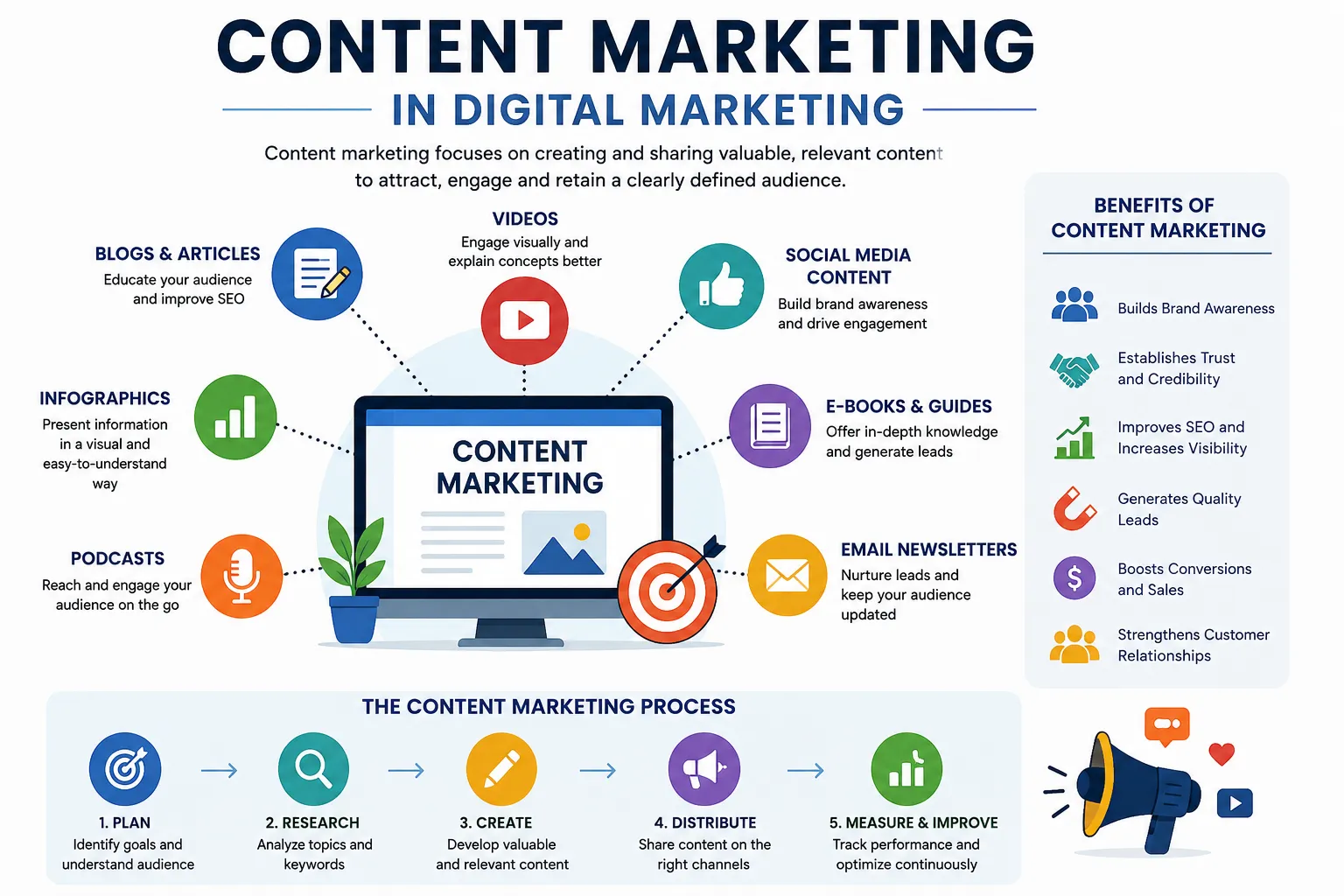
* **Content marketing** is a digital marketing strategy focused on creating and sharing useful, relevant, and valuable content to attract a specific audience.
* Instead of directly promoting a product or service, content marketing aims to **educate, inform, entertain, and build trust** with potential customers.
* It can help businesses improve brand visibility, generate leads, build authority, and support long-term customer relationships.
## What Is Content Marketing?
* Content marketing involves creating content that addresses the **needs, questions, interests, and problems** of a target audience.
* Common content formats include:
* Blog posts and articles
* Social media posts
* Videos and reels
* Infographics
* E-books and guides
* Case studies
* Podcasts
* Email newsletters
* Good content should provide value rather than simply repeat promotional messages.
## Why Is Content Marketing Important?
* **Builds Brand Awareness**
* Consistent, useful content helps more people discover and remember a brand.
* **Develops Trust**
* Helpful content can demonstrate knowledge and expertise, making customers more confident about a business.
* **Supports SEO**
* High-quality content can target relevant search queries and help websites attract organic search traffic.
* **Generates Leads**
* Guides, articles, videos, and other resources can encourage visitors to subscribe, contact a business, or request more information.
* **Supports Customer Decisions**
* Educational content can answer questions and help potential customers understand products or services before making a purchase.
## Types of Content Marketing
* **Blog Content**
* Useful for answering customer questions, sharing insights, and targeting relevant search terms.
* **Social Media Content**
* Helps brands engage audiences through posts, short videos, stories, polls, and other interactive formats.
* **Video Marketing**
* Makes complex information easier to understand and can increase audience engagement.
* **Email Content**
* Newsletters and personalized emails can keep existing and potential customers connected with a brand.
* **Visual Content**
* Infographics, charts, and graphics can communicate information quickly and attract attention.
## How to Create an Effective Content Marketing Strategy
* **Know Your Audience**
* Understand your customers' interests, challenges, needs, and online behavior.
* **Set Clear Goals**
* Decide whether your content aims to increase traffic, generate leads, build awareness, improve engagement, or support sales.
* **Choose Relevant Topics**
* Create content around questions and problems your target audience actually searches for.
* **Focus on Quality**
* Content should be accurate, original, useful, easy to read, and relevant.
* **Use Multiple Channels**
* Repurpose valuable content across blogs, social media, email, videos, and other suitable platforms.
* **Maintain Consistency**
* A regular publishing schedule helps maintain audience engagement and brand visibility.
## Common Content Marketing Mistakes
* Creating content without understanding the audience.
* Focusing only on promotional messages.
* Publishing low-quality or duplicate content.
* Ignoring search intent and SEO.
* Using inconsistent publishing schedules.
* Not measuring content performance.
* Prioritizing quantity over usefulness.
## Key Content Marketing Metrics
* **Website Traffic:** Measures how many visitors content attracts.
* **Engagement:** Includes interactions such as comments, shares, likes, and time spent on content.
* **Leads:** Shows how effectively content encourages users to take valuable actions.
* **Conversions:** Measures desired actions such as purchases, registrations, or inquiries.
* **Organic Traffic:** Helps evaluate the contribution of content to search visibility.
## Tips for Better Content Marketing
* Create content that solves real customer problems.
* Use clear and simple language.
* Add relevant keywords naturally.
* Create strong headlines.
* Include visuals where they improve understanding.
* Update outdated content regularly.
* Promote content through suitable channels.
* Track results and improve your strategy based on data.
## Conclusion
* **Content marketing is a long-term digital marketing strategy that focuses on delivering value before asking for a sale.**
* By consistently creating useful, relevant, and original content, businesses can attract the right audience, strengthen credibility, improve online visibility, generate leads, and build lasting customer relationships.
* The key to successful content marketing is simple: **understand your audience, create valuable content, distribute it effectively, and continuously measure and improve your results.**