HR Automation Software: Simplifying HR Operations for Modern Businesses
By Ayneealbert
81 Views
 HR Automation Software: Simplifying Modern HR Operations
Human resource teams manage many daily responsibilities, including employee records, attendance, leave, payroll, recruitment, and performance management. When these activities are handled manually, they can consume valuable time and increase the possibility of errors. HR automation software helps businesses simplify these processes by bringing essential HR functions together on one platform.
What Is HR Automation Software?
HR automation software is a digital solution that automates repetitive human resource tasks. Instead of relying on spreadsheets, paperwork, emails, or multiple disconnected tools, HR teams can manage employee-related processes through a centralized system.
Automation helps reduce manual data entry, improve accuracy, and make routine HR activities easier to manage.
Common HR Challenges
As businesses grow, HR teams often face challenges such as maintaining employee records, tracking attendance, processing leave requests, managing payroll, and responding to employee queries. Manual processes can lead to duplicate information, delayed approvals, inaccurate records, and unnecessary administrative work.
HR automation addresses these challenges by creating structured workflows and keeping important employee information in one place.
Key Features of HR Automation Software
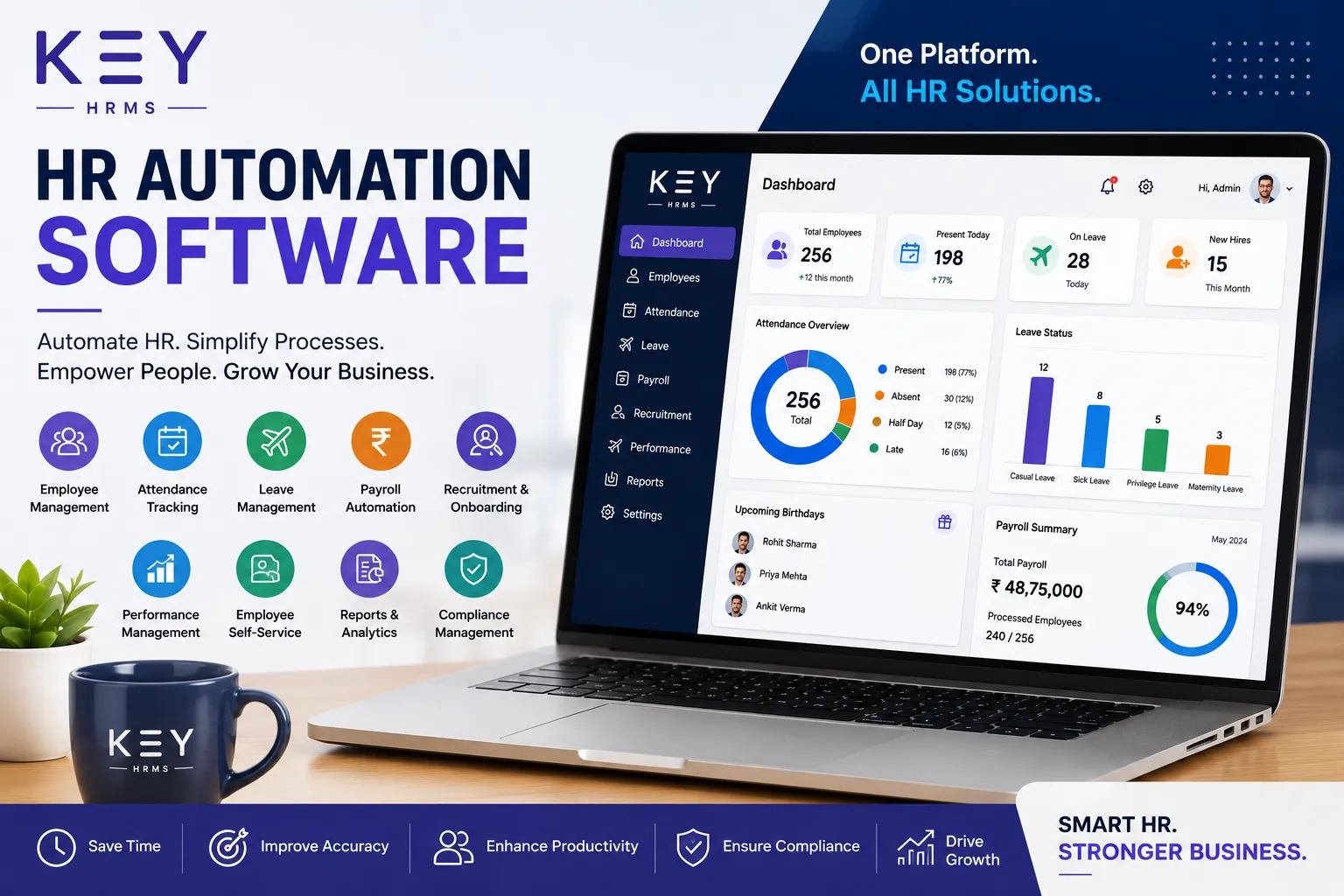
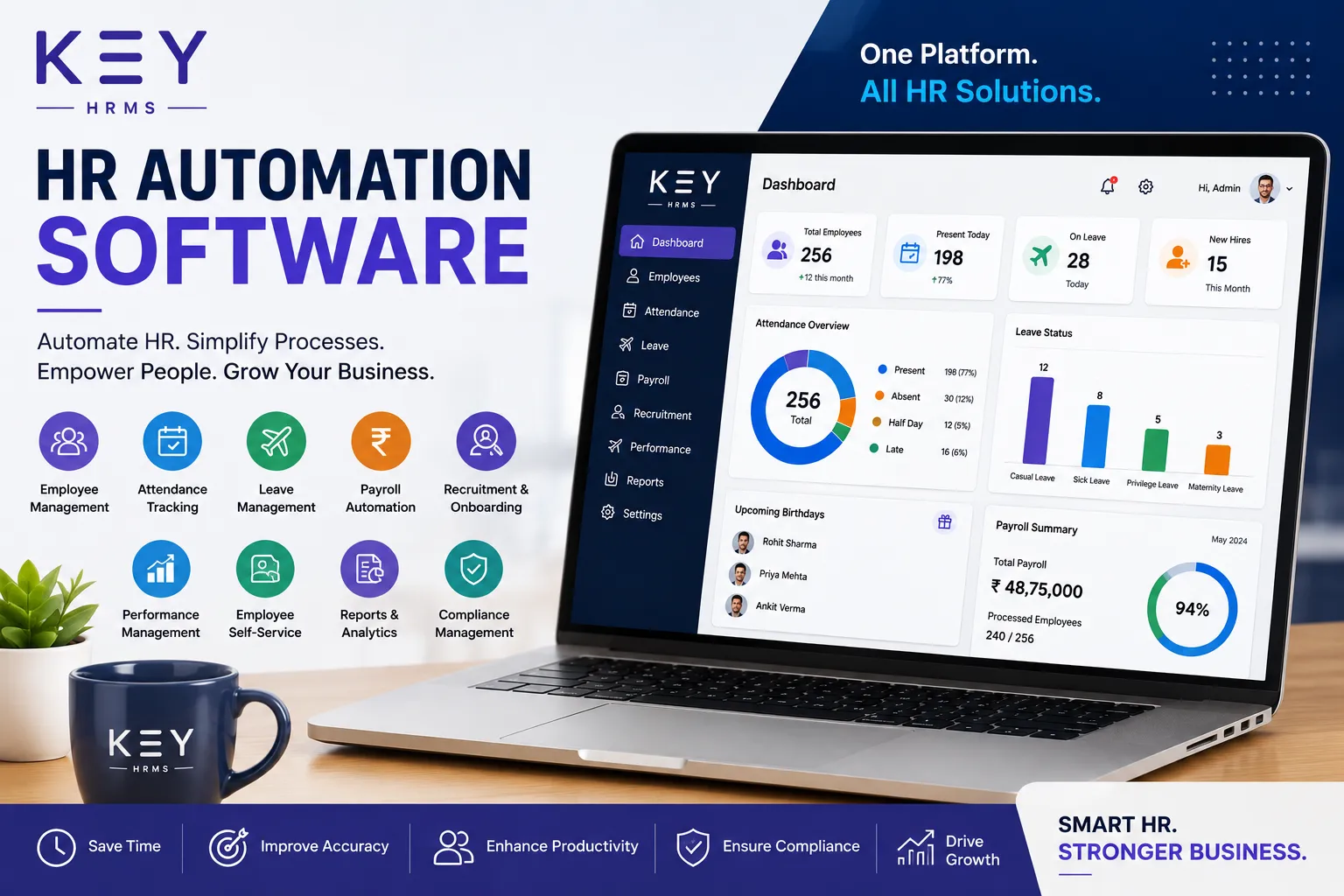
Employee Management
A centralized employee database helps HR teams manage employee profiles, employment details, documents, and other important information. Having organized records makes it easier to find and update information when needed.
Attendance and Leave Management
Automated attendance tracking helps businesses monitor working hours, shifts, overtime, and absences. Employees can also submit leave requests digitally, while managers can review and approve requests through defined workflows.
Payroll Automation
Payroll is an important area where automation can save significant time. Payroll systems can use employee information, attendance, approved leave, and overtime data to support salary calculations and reduce repetitive manual work.
Recruitment and Onboarding
HR automation can help organize job applications, candidate information, interviews, and onboarding activities. This allows HR teams to manage the hiring process more efficiently.
Employee Self-Service
Employee self-service portals allow employees to access payslips, check attendance, apply for leave, update personal information, and view HR documents. This reduces routine queries handled by HR teams.
Performance Management
Automation can also support employee goal setting, performance reviews, feedback, and development tracking, helping managers maintain a more structured performance management process.
How KEY HRMS Stands Out
KEY HRMS brings essential HR functions together through a cloud-based platform, including employee management, attendance, leave, recruitment, performance management, employee self-service, and payroll.
One of its key strengths is payroll automation. Attendance records, approved leave, overtime, and employee information can work together with payroll processing. This reduces duplicate data entry and helps businesses process employee salaries more efficiently.
By connecting attendance and payroll with other HR functions, KEY HRMS provides a more integrated approach to HR management rather than requiring businesses to manage each process separately.
Benefits of HR Automation
HR automation can provide several benefits for businesses:
- Reduces repetitive administrative tasks
- Improves employee data accuracy
- Saves HR processing time
- Simplifies attendance and leave management
- Supports more efficient payroll processing
- Improves employee self-service
- Provides better workforce visibility
- Helps HR teams focus on strategic activities
Automation can also make HR processes easier to manage as the organization grows.
Choosing the Right HR Automation Software
Businesses should consider factors such as ease of use, scalability, security, cloud accessibility, reporting, customization, integration capabilities, and employee self-service when selecting an HR automation solution.
It is also useful to choose a platform that connects multiple HR functions. An integrated system can reduce the need to enter the same information into different applications and create smoother workflows.
Conclusion
HR automation software helps businesses reduce manual HR work and create more organized workforce management processes. From employee records and attendance to leave, recruitment, performance, and payroll, automation can improve efficiency across everyday HR operations.
With its integrated approach and focus on payroll automation, KEY HRMS helps organizations connect important HR processes within one platform. By reducing repetitive work and improving access to employee information, HR automation can support a more efficient HR team and a better employee experience.