Leather Explained: Types, Quality Grades, and How to Choose and Care for It
7 Views
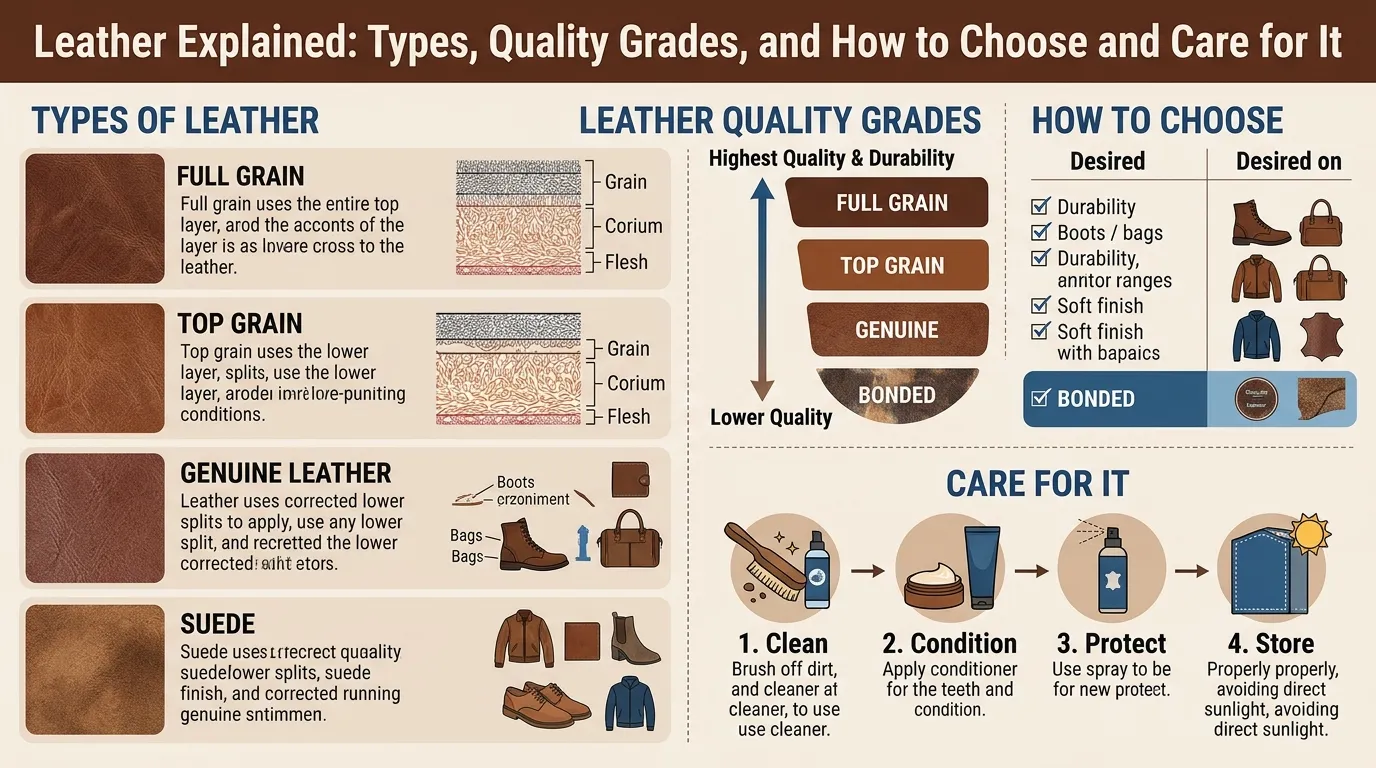
Leather has been used for thousands of years, from early clothing and shoes to modern jackets, bags, and costume pieces. It remains popular because it is durable, flexible, and develops character with age. But not all leather is the same. Prices, quality, and lifespan vary widely, and product labels can be confusing. This guide explains how leather is made, which types exist, and how to buy and care for it wisely.
1. What Is Leather?
Leather is a durable material made by tanning animal hides, most commonly cattle, but also goat, sheep, and buffalo. Tanning is a treatment that stops the hide from rotting and makes it strong and flexible. After tanning, the leather may be dyed, finished, and embossed to achieve the desired color, texture, and feel. Because it is a natural material, every piece has slight differences in grain, marks, and thickness, which is part of its appeal.
2. How Is Leather Made?
- Preparation: hides are cleaned, soaked, and trimmed.
- Tanning: chemicals or natural agents convert the hide into stable leather.
- Dyeing and conditioning: color and oils are added for softness.
- Finishing: coatings, polishing, or embossing give the final look.
The tanning method strongly affects the leather's feel, durability, and environmental impact.
3. What Are the Main Types of Tanning?
- Vegetable tanning: uses plant tannins, produces firm leather that develops a rich patina over time.
- Chrome tanning: uses chromium salts, faster and produces softer, more water-resistant leather.
- Combination tanning: blends both methods for balanced properties.
4. What Are the Quality Grades of Leather?
- Full-grain: the top layer with natural grain intact. It is the strongest and ages best.
- Top-grain: the surface is lightly sanded for a more uniform look. Slightly less durable than full-grain but still high quality.
- Genuine leather: made from lower layers of the hide, often with a coated finish. It is real leather, but of moderate quality.
- Bonded leather: scraps bound together with adhesive. It wears out quickly.
The phrase "genuine leather" does not mean the best grade, so always check the exact type.
5. How Can You Spot Good Quality?
- Smell: real leather has a natural, earthy scent, not a strong chemical smell.
- Texture: the grain should look uneven and natural rather than perfectly uniform.
- Edges: well-finished edges are smooth and sealed, with no fraying.
- Stitching: even, tight, and consistent.
- Flexibility: it should bend without cracking and return to shape.
- Hardware: metal parts should feel solid and finish cleanly.
6. Where Is Leather Used Beyond Everyday Items?
Leather is also popular in costume design, cosplay, fantasy wear, and event clothing, where durability and a dramatic look matter. Pieces such as corsets, harnesses, bracers, and belts rely on thick, well-finished hide to hold shape and last through repeated wear. Styles inspired by warrior themes, such as valkyrie leather, combine structure, straps, and hardware for a bold look. When buying costume or fashion pieces, check the leather type, stitching, and fit adjustments before purchasing.
7. What Are the Common Uses of Leather?
- Clothing: jackets, gloves, belts, and trousers.
- Footwear: boots, shoes, and sandals.
- Accessories: wallets, bags, watch straps, and cases.
- Furniture and interiors: sofas, chairs, and car seats.
- Specialty wear: costume pieces, armor-style items, and harness sets.
8. How Do You Care for Leather?
- Clean gently: wipe with a soft, slightly damp cloth.
- Condition regularly: use a leather conditioner every few months to prevent drying.
- Avoid soaking: water can stain or stiffen leather. If wet, let it dry naturally.
- Keep away from heat: radiators and direct sun cause cracking and fading.
- Store properly: keep in a cool, dry place, ideally in a breathable cover, not plastic.
- Test products first: try cleaners on a hidden spot.
9. How Long Does Leather Last?
Quality leather can last for decades with care. Full-grain leather often develops a richer look over time, while lower grades may crack or peel within a few years. Lifespan depends on use, climate, and maintenance. Regular conditioning and proper storage are the simplest ways to extend life.
10. Common Mistakes to Avoid
- Trusting labels like "genuine leather" without checking the grade.
- Using harsh cleaners that strip natural oils.
- Skipping conditioning, leading to dryness and cracks.
- Storing in damp or hot places.
- Buying by price alone instead of material and construction.
Frequently Asked Questions
What is leather made from?
Leather is made from tanned animal hides, most often cattle, but also goat, sheep, and buffalo.
What is the best quality of leather?
Full-grain leather is generally considered the best because it keeps the strongest top layer.
Is genuine leather real?
Yes, but it is usually a lower grade than full-grain or top-grain.
How can I tell if leather is real?
Check the smell, grain pattern, edges, and how it flexes. Real leather has natural variation.
How often should I condition leather?
Every three to six months, depending on use and climate.
Can leather get wet?
It can tolerate light moisture, but soaking can damage it. Dry it naturally away from heat.
Conclusion
Leather rewards careful buying and regular care. Learn the difference between grades, check the stitching and finish, and avoid harsh treatments. With the right choices and simple maintenance, a good leather piece can serve you well for many years.
Related Reading
Why Lifestyle & Culture is Transforming the Global Industry Landscape
Welcome to our in-depth exploration of Lifestyle & Culture. In an era define...
Expert Insights: Navigating the Complex World of Lifestyle & Culture
Welcome to our in-depth exploration of Lifestyle & Culture. In an era define...