Morganite Gemstone Guide: Color, Properties, Identification, Treatments and Care
By gemstonesafe
59 Views
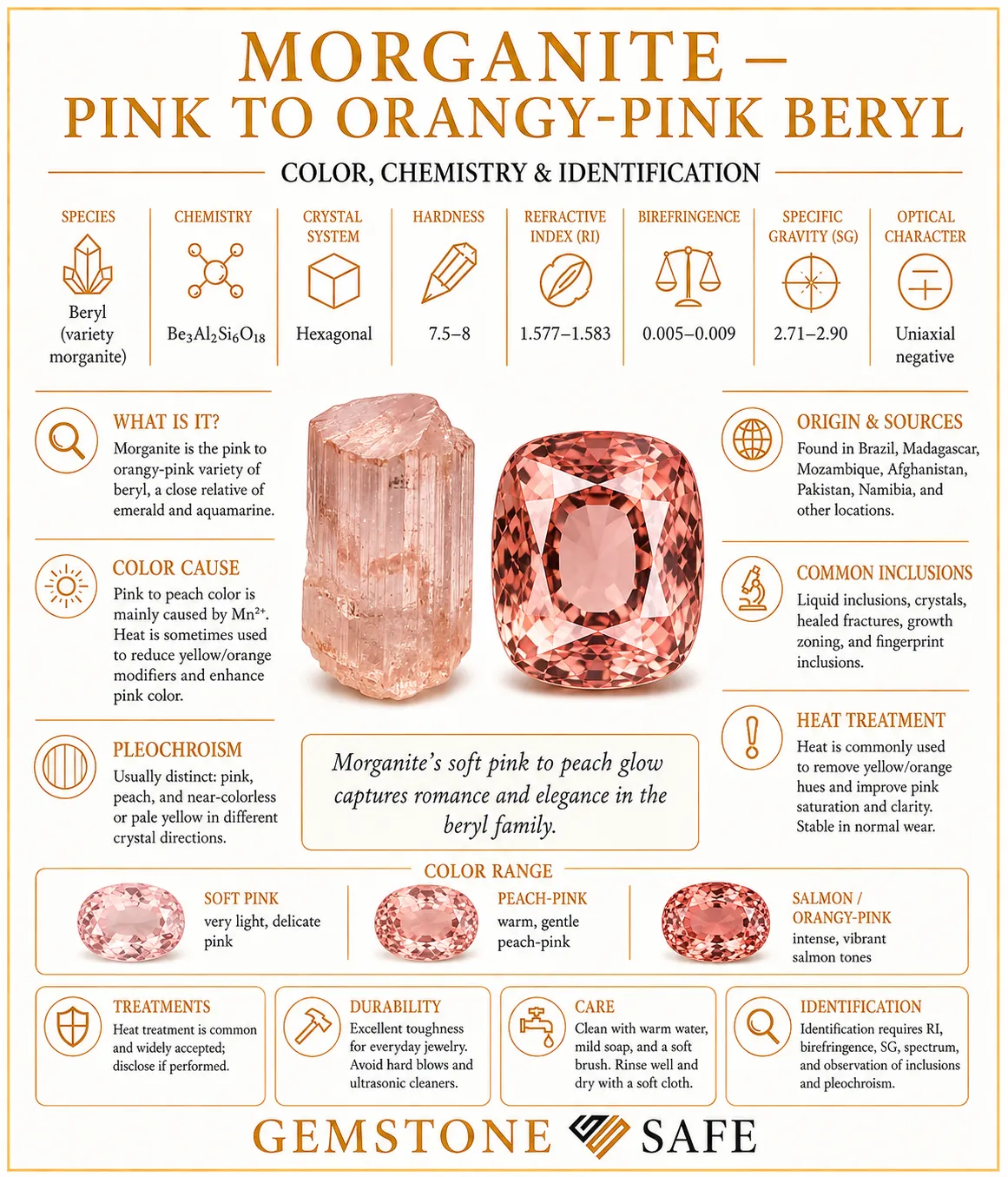
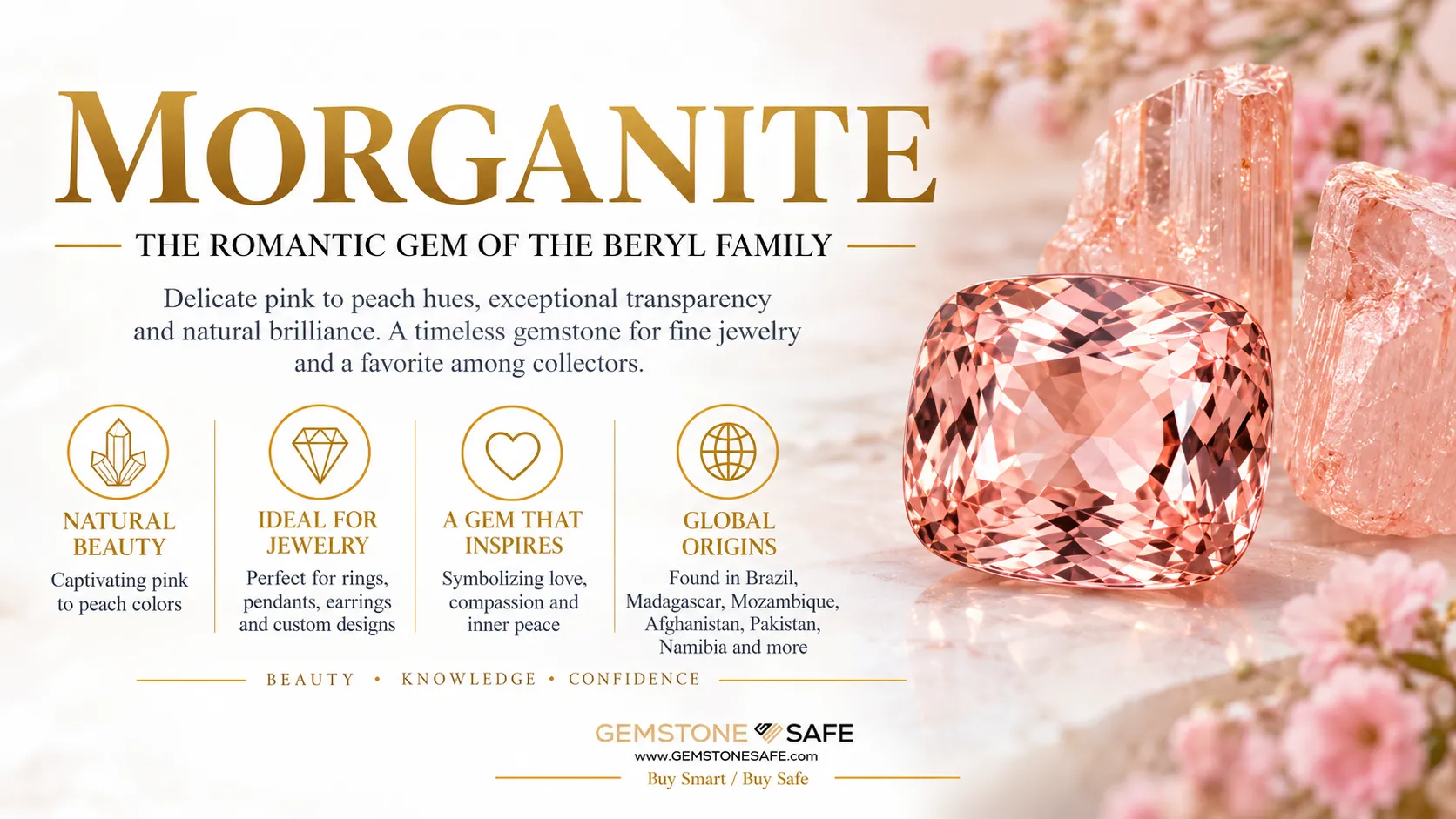
Morganite is one of the most admired gemstones in the beryl family, celebrated for its delicate pink, peach, and orangy-pink colors. Its romantic appearance, excellent transparency, and suitability for fine jewelry have made it a popular choice for engagement rings, pendants, earrings, and collectors. Beyond its beauty, morganite has a fascinating gemological identity defined by its chemistry, crystal structure, optical properties, and geological origins.
In this guide, we explore what morganite is, how its color develops, where it is found, how gemologists identify it, and what buyers should know about treatments and everyday care.
What Is Morganite?
Morganite is the pink to orangy-pink variety of the mineral beryl, the same mineral species that includes emerald and aquamarine. Its chemical formula is Be₃Al₂Si₆O₁₈, representing beryllium aluminum silicate. Beryl crystallizes in the hexagonal crystal system and often forms elongated, six-sided prismatic crystals.
Morganite's attractive colors range from very pale pink to stronger peach-pink and salmon-like hues. The finest appearance is a matter of personal preference, although stones with attractive saturation, good transparency, and pleasing cutting are especially desirable in jewelry.
The Color of Morganite
The pink and peach coloration of morganite is primarily associated with manganese. Different concentrations and oxidation states of trace elements, together with the gemstone's internal structure, influence the final appearance.
Morganite may display a range of colors, including:
- Soft pink: A delicate, light pink appearance.
- Peach-pink: A warm combination of pink and subtle orange.
- Salmon or orangy-pink: A stronger, warmer color with more noticeable orange influence.
Color should be evaluated under consistent lighting because gemstones can appear different under daylight, indoor illumination, and photography. A stone's tone and saturation, as well as its cut, can significantly influence its visual appeal.
Physical and Optical Properties
Morganite has a Mohs hardness of approximately 7.5–8, making it a durable gemstone suitable for many types of jewelry. However, hardness measures resistance to scratching rather than resistance to breaking, so care is still important.
Its refractive index is generally around 1.577–1.583, with birefringence commonly in the approximate range of 0.005–0.009. Morganite is uniaxial negative and has a specific gravity of approximately 2.71–2.90, although individual measurements may vary depending on composition and inclusions.
These properties are useful in gemological testing, but no single measurement should be considered sufficient for a complete identification.
Pleochroism and Appearance
Morganite can exhibit pleochroism, meaning that different colors or color intensities may be observed when the crystal is viewed from different directions. Depending on the specimen, these appearances may include pink, peach, or near-colorless tones.
Gemstone cutters consider crystal orientation when planning a cut, particularly when attempting to maximize desirable color and minimize unwanted color zoning. A well-executed cut can also improve brilliance, symmetry, and the overall presentation of the gemstone.
Where Is Morganite Found?
Morganite occurs in several gemstone-producing regions around the world. Important sources include Brazil, Madagascar, Mozambique, Afghanistan, Pakistan, and Namibia, among other locations.
It is commonly associated with granitic pegmatites, geological environments that can produce large and well-formed beryl crystals. The appearance and quality of material can vary considerably within a single mining region, so origin alone does not determine a gemstone's value.
Common Inclusions in Morganite
Like many natural gemstones, morganite may contain internal features formed during or after crystal growth. Common inclusions can include liquid-filled cavities, mineral crystals, healed fractures, growth zoning, and fingerprint-like patterns.
These features can provide valuable information during examination, but inclusions alone do not always establish whether a stone is natural, synthetic, or treated. A gemologist evaluates them together with optical properties and other diagnostic evidence.
Heat Treatment and Disclosure
Heat treatment is commonly used to modify the color of morganite, often reducing yellow or orange components and producing a more desirable pink appearance. The results depend on the original material and treatment conditions.
Heat-treated morganite is widely accepted in the gemstone market, but treatments should be disclosed accurately when known. Buyers should also understand that treatment history cannot always be determined through routine visual examination alone.
How to Identify Morganite
Professional identification involves a combination of gemological observations and measurements. A gemologist may examine refractive index, birefringence, specific gravity, optical character, pleochroism, absorption features, and inclusions.
These tests help distinguish morganite from other pink gemstones and simulants, including pink tourmaline, pink sapphire, rose quartz, and certain glass or synthetic materials. Some advanced cases may require laboratory testing to establish identity or treatment information confidently.
Photographs alone are not sufficient for a definitive gemstone identification, especially when several materials share similar colors and appearances.
Durability and Proper Care
Morganite is a practical choice for jewelry when worn and maintained responsibly. Its hardness provides good scratch resistance, but it should still be protected from hard impacts, abrasion, and sudden temperature changes.
For routine cleaning, use lukewarm water, mild soap, and a soft brush. Rinse carefully and dry with a lint-free cloth. Ultrasonic and steam cleaning should generally be avoided unless a qualified professional has assessed the stone and its setting, particularly when fractures or inclusions are present.
Store morganite separately from harder gemstones to reduce the risk of scratches.
Why Morganite Remains a Popular Choice
Morganite combines gentle color, attractive brilliance, and the durability of beryl with a distinctive romantic character. Whether selected for a custom jewelry design or a gemstone collection, its appeal extends beyond appearance to its mineralogical properties and natural formation.
Understanding morganite's color, identification characteristics, treatments, and care requirements allows buyers to make more informed decisions. At GEMSTONESAFE, gemstone education and transparent information are essential parts of helping customers appreciate the beauty and individuality of every stone.