Positive or Negative? Understanding Logic Input in Industrial Modules
38 Views
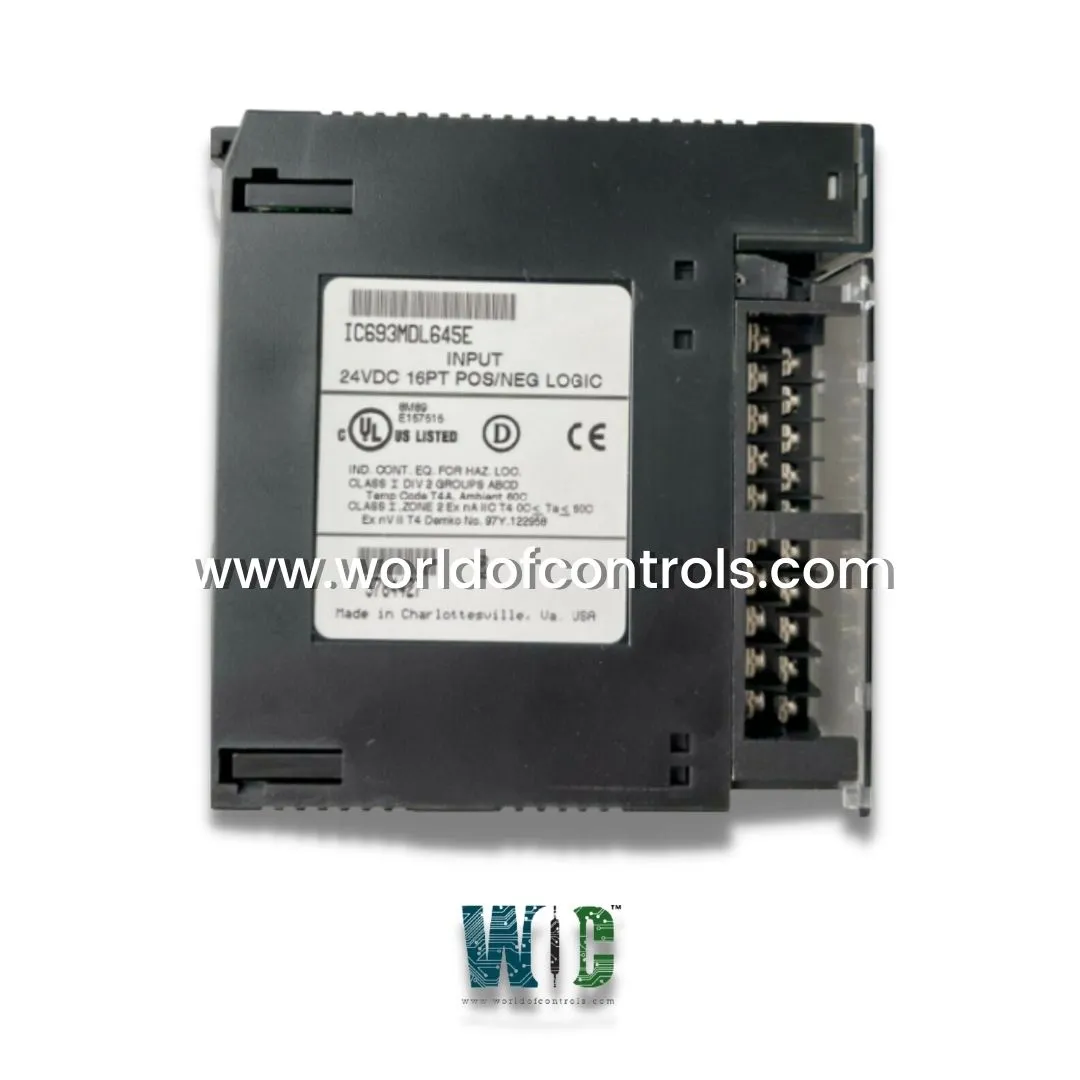
In industrial automation, digital input modules play a crucial role in bridging the gap between real-world devices and programmable logic controllers (PLCs). These input modules receive signals from field devices such as sensors and switches, allowing the PLC to monitor and react to various conditions in real time. One important distinction in these modules is their ability to handle positive or negative logic. Understanding the difference between the two—and knowing how to choose the right type—can make all the difference in the reliability and flexibility of your automation system.
What Is Logic Input in Industrial Automation?
Logic input refers to the electrical signal received by an input module, typically representing an ON or OFF state. These signals are classified as:
-
Positive Logic (Sourcing): An input is ON when a positive voltage (usually +24V DC) is applied.
-
Negative Logic (Sinking): An input is ON when connected to ground (0V).
Whether a device uses sourcing or sinking logic depends on its design, and compatibility with the input module is essential for accurate signal detection.
The Dual Logic Input Advantage
Modern input modules are often designed to accept both positive and negative logic inputs, offering much-needed flexibility in complex industrial environments. This dual-logic capability eliminates the need for separate modules for sourcing and sinking devices, reducing hardware costs, simplifying wiring, and supporting a wider range of devices from different manufacturers.
These modules typically support 24V DC input signals and include multiple input points—commonly 16—each isolated and monitored individually. With this setup, users can connect sourcing and sinking sensors within the same system, making integration smoother, especially in retrofits or mixed-technology setups.
How Positive and Negative Logic Inputs Work
Understanding how these two logic types function is key to effective installation:
Positive Logic (Sourcing Devices)
-
Devices output a positive voltage to signal ON.
-
The input module receives this voltage and registers a HIGH signal.
-
Common in North American industrial systems.
Negative Logic (Sinking Devices)
-
The input module senses the completed path to ground and registers the input as ON.
-
Frequently used in European and Asian automation systems.
Dual-logic modules can accommodate both, often featuring multiple common terminals to separate signal types and prevent electrical conflicts.
Installation and Best Practices
When installing a 24V DC logic input module with dual support:
-
Identify whether field devices are sourcing or sinking.
-
Group inputs logically, using separate commons for different logic types.
-
Ensure the power supply is stable and capable of handling the load from all connected devices.
-
Use LED indicators on the module to verify input status and troubleshoot easily.
-
Follow manufacturer wiring diagrams to avoid short circuits or incorrect readings.
Most modules are designed for plug-and-play compatibility with standard PLC baseplates, allowing fast installation and minimal configuration.
Common Industrial Applications
Dual logic input modules are used in a variety of industries and scenarios, such as:
-
Automated manufacturing lines with a mix of older and newer equipment.
-
Conveyor and material handling systems that use a combination of proximity and mechanical sensors.
-
Building management systems integrating door sensors, limit switches, and emergency stops.
-
Process control environments requiring redundancy and high reliability.
By supporting both logic types, these modules are ideal for mixed-signal environments and modular system design.
Conclusion
When it comes to industrial control, the choice between positive and negative logic doesn’t have to be limiting. Modern input modules that support both logic types bring a level of flexibility that simplifies design, enhances compatibility, and lowers costs. Whether you're integrating new equipment or maintaining legacy systems, selecting a dual-logic input module helps ensure your automation setup is robust, scalable, and future-ready.