Rohit Sharma's Batting Style: What Makes Him Effective in Limited-Overs Cricket?
By sonal gupta
11 Views
The short ball is approaching at 145 kph, but the batter isn't really moved a touch. And then his hips turn, and the ball is over midwicket. If you have ever looked at skyexchange during a Rohit Sharma innings, you will be familiar with that feeling.
His arm-solid technique and timing-based style, which earned him the nickname Hitman, sets him apart from most of the other most-flamboyant players. He appears to make it look easy at the crease, but then he hits the ball further than most others swing the bat. Just take a quick look at skyexchange during an India white-ball match, and you'll see exactly what I mean: the quiet start, the pull shot that turns the game, and the innings that keeps growing. This article breaks down the pull, the timing, the powerplay start, and the way he constructs the biggest innings in one-day cricket, and skyexchange is one place many fans watch it work in real time.
The Stats of the Style
Rohit Sharma was born on 30 April 1987 in Mumbai, India. Rohit made his debut in international cricket on 20 June 2007 in the ODI format, on 2 September 2007 in the Twenty20 International format, and on 14 Nov 2013 in the Test International format. Rohit has played 296 matches for India and scored 12150 runs in Test matches with an average of 48.60, which includes 35 centuries. In T20 Internationals, he has played 159 matches, scored 4231 runs at an average of 32.05.
Our headline is the 264 - played against Sri Lanka in Kolkata in November 2014 - the highest individual score in the history of the 50-over game. He has scored the most double hundreds of any player in ODIs - three: 209 not out, against Australia in 2013; 264, of course; and 208 not out, against Sri Lanka in 2017. He has 52 international hundreds, in all. To check skyexchange during a Rohit innings is to witness a batter who holds up to the fans' endorsement.
A staple of his arsenal: the Pull Shot
If a single shot can be described for Rohit Sharma, it is the pull. On the cement roads of Borivali in Mumbai, that was the shot he grew up playing, where the ball bounced true and quick.
The Pull Mechanics
Once he gets into position, he moves his weight onto his back foot, then swivels his hips so he is inside the line of the ball, then he uses a high backlift to play it. It's all about timing and rotation, not brute strength. He can play it off the front foot or the back foot, so every single time a batsman gets into position, a bowler can't settle into a restrictive shorter or fuller length. Fans viewing skyexchange when Rohit pulls will see the same - his head is still, then suddenly it's rotated, and the ball is over the ropes.
-
Weight: transfer to the back foot prior to ball arrival.
-
Hips: swivel them to get inside the line of the ball.
-
Hands: allow the high backlift and your wrists to do the work.
Timing Over Power: The Lazy Elegance
Some might say it looks lazy; Rohit calls it lazy elegance. And yet if it looks lazy, what looks like that is actually efficiency: fewer foot movements, a sound base, a head that remains steady from the moment of the trigger movement through contact with the ball, allowing him to judge his line and length impeccably well. He plays the ball late with great control.
The other half of it: a high backlift and a clean downswing. The bat comes down on plane, wrists power the shot, face meets ball square. A drive can be turned into a cut in an instant, because his eye and hands are fast enough to change his shot at the last moment. Checking skyexchange in a Rohit innings reveals the same pattern: the sixes that seem to be flicked wrist shots are more about timing than muscle.
How He Builds a Big ODI Innings
So, Rohit begins an ODI innings by finding his eye and scoring the singles that tick the scoring over. The first 50 comes easily. Once past his hundred, he then begins to go faster, and that's where the double hundreds are. 264 is his best: a slowish beginning, a hundred, then scores that go past the 150 mark.
The Powerplay Beginning
In the powerplay, he strikes length balls over mid-off, mid-on and up with just two men outside the circle. The ball hits the surface before it gets a chance to swing. That early sternness establishes the feeling for the entire innings. The sky exchange check for the first ten overs reveals that same trend: a tranquil beginning followed by a rocket launch that leaves the bowling team in a spin.
The T20 Shift: Attack from Ball One
Rohit gets after it from the first ball in T20 cricket, and the blueprint he laid out as captain took India to the T20 World Cup win in 2024. While he hung up his boots for T20Is after that final, the method remains: high strike rate, no waiting, and the pull shot before you can blink. His strike rate of 140.89 in T20Is screams it, while his five T20I centuries prove the hits are not recklessly outrageous, but premeditated. A quick look at skyexchange on the powerplay in a T20 game: Rohit is at it again.
What Young Openers Can Copy
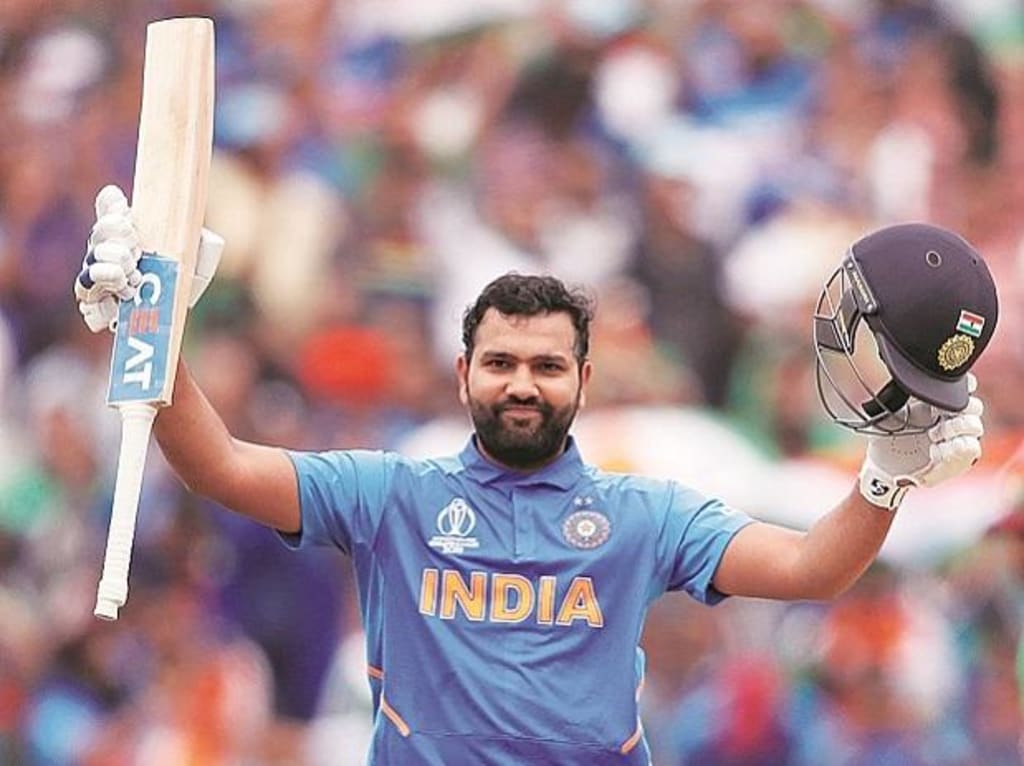
Young openers can emulate three things: a still head, a back-foot pull shot and hips, and patience. Find your eye in, reach your hundred, then accelerate.
It requires timing, tempo and repetition. Fans browsing skyexchange during the early part of a young opener's innings might even find the same truth: The players who stick around are the ones who can still maintain their technique in a high-pressure situation.
-
Still Head: keep your head still and follow through on the ball late, underneath your eyes.
-
Back-foot pull: shift your weight back and rotate your hips.
-
First patience: get your eye in and get to your hundred before opening up.
Frequently Asked Questions (FAQs)
Q1. What is Rohit Sharma's batting style known for?
Rohit Sharma's batting is characterized by effortless timing, a still head, and the pull shot. Rohit strikes the ball late and hits it much further than more forceful hitters.
Q2. What is Rohit Sharma's highest ODI score?
His highest score is 264 against Sri Lanka, made in Kolkata in November 2014. It is the highest individual score in cricket, off 173 balls with 33 fours and nine sixes.
Q3. What is the total number of double century runs scored by Rohit Sharma in ODIs?
Rohit Sharma has three to his name. He scored 209 not out vs Australia (2013), 264 vs Sri Lanka (2014), and 208 not out vs Sri Lanka (2017).
Q4. Has Rohit Sharma retired from cricket?
No, Rohit Sharma has not retired. Rohit Sharma retired from T20 internationals after the T20 World Cup 2024 final. He retired from Tests in May 2025. He still plays for India in ODIs.
Conclusion
Rohit's influence at the minnow levels of limited overs comes from a repeatable pattern: a still head, a high backlift, a pull shot based on timing, and a scheme that builds its story over several hours and then carries you home in a blur. A skyexchange Login shows you the current points and scores all in one place; a skyexchange register step is how you create an account to follow cricket there, and skyexchange will keep those scores at your fingertips through every delivery.
Related Reading
Why Business & Finance is Transforming the Global Industry Landscape
Welcome to our in-depth exploration of Business & Finance. In an era defined...
Expert Insights: Navigating the Complex World of Business & Finance
Welcome to our in-depth exploration of Business & Finance. In an era defined...