Simple Picture Hanging Solutions for Every Wall Type
By Evan Stone
104 Views
Every wall lies to you. Plasterboard promises to hold a nail then crumbles around it. Brick looks bombproof and blunts the drill bit. Rental walls hold anything you like, right up until the bond inspection. Picture hanging solutions are not one-size-fits-all, and most crooked frames and cracked plaster come from matching the wrong hardware to the wrong surface. Here are ten approaches, matched honestly to the walls they suit.
Command Strips (Best for Drywall, Tile, Glass)
Adhesive strips work through velcro-style pads that stick to the wall and the frame. They suit light frames on smooth, painted plasterboard, tile or glass, and they remove cleanly when pulled straight down. The catch is weight. Most strips top out at a few kilograms per pair, and humidity, textured paint and dusty surfaces all weaken the bond over time. Fine for a small print in a hallway. Risky for anything with glass in it above a bed.
Monkey Hooks (Best for Drywall)
A monkey hook is a curved wire pushed straight through plasterboard by hand, no drill required. The long curve distributes weight behind the sheet, which is why a piece of bent wire can hold a surprisingly heavy frame. They leave only a pinhole and take about ten seconds to fit. They only work in hollow plasterboard, though, so a stud, a masonry wall or a tiled surface stops them cold.
Picture Hanging Hooks (Best for Drywall & Plaster)
The classic brass hook with an angled nail remains the default for a reason. The nail enters at roughly 45 degrees, which converts downward pull into grip inside the wall material. Sized correctly, a single hook manages most framed prints, and doubling up spreads the load for wider frames. In older hard-plaster homes, a small pilot hole first prevents the plaster cracking around the nail.
Adhesive Hooks (Best for Tile, Glass, Smooth Surfaces)
Adhesive hooks suit the surfaces nothing else can touch without a masonry bit: bathroom tile, splashbacks, glass partitions and laminated panels. Clean the surface with alcohol first, press firmly, and give the adhesive a day to cure before loading it. Treat the weight rating on the packet as a maximum for ideal conditions rather than a promise.
Drywall Anchors (Best for Drywall without Studs)
Where a frame is too heavy for a hook and no stud sits where the picture needs to go, an anchor spreads the load through the plasterboard itself. Expanding plastic plugs handle light duties. Self-drilling metal anchors and toggle bolts step up from there, with toggles carrying serious weight by bracing against the back of the sheet. The trade-off is the hole, which needs patching whenever the picture moves.
Masonry Screws/Anchors (Best for Brick, Concrete)
Brick and concrete demand a masonry drill bit, a wall plug and a screw, in that order. Drill into the brick body rather than the mortar joint for full-strength holds, keep the hole depth slightly longer than the plug, and clear the dust before fitting. Done properly, a single plugged screw in brick will outlast the artwork. Done in a hurry, the plug spins and the hole is permanent.
Picture Rail Moulding (Best for Plaster or Historic Homes)
Many Australian homes built before the 1950s already have a timber picture rail running near the ceiling, and it exists precisely because hammering nails into plaster is a renovation waiting to happen. Rail hooks sit over the moulding and artwork hangs from cord or cable below. Modern picture rail hook systems upgrade the old approach with stainless steel cables and adjustable hooks, keeping the heritage look while gaining precise height control.
Brick Clips or Brick Hangers (Best for Brick Walls)
For exposed brick where drilling feels like vandalism, brick clips grip the top and bottom edges of a single brick and provide a hook on the face. No holes, no dust, fully removable. They need bricks that protrude slightly from the mortar, and weight capacity is modest, so they suit smaller frames and seasonal displays rather than a heavy mirror.
Tension Rods (Best for Hanging Without Walls, e.g. Rentals)
A tension rod braced inside an alcove, a window frame or between two walls creates a hanging point with zero fixings. Lightweight frames hang from the rod on cord or S-hooks. It sounds improvised because it is, but for renters facing a strict bond clause, improvised beats forfeited. The approach suits fabric art and light prints far better than glass.
Gallery Hanging Systems (Best for Flexible, Professional Setups)
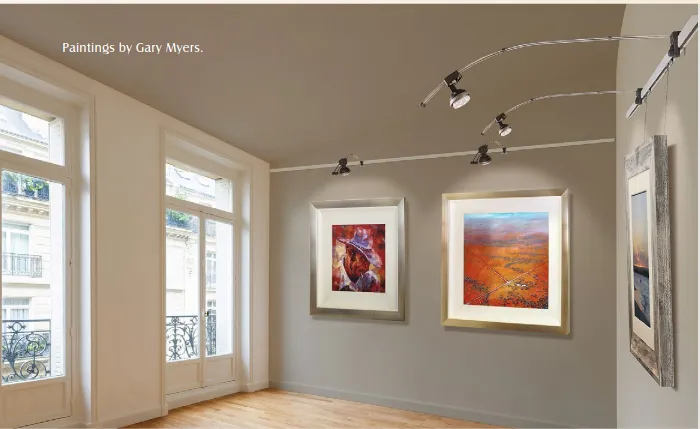
A gallery hanging system takes a different path entirely: install a discreet track once, at the ceiling line or wall, then hang everything from adjustable cables and hooks forever after. The wall gets drilled once, during installation, and never again. Cables slide sideways, hooks slide up and down, and an entire wall can be rearranged in minutes without a single new hole.
This is the approach galleries, museums and schools rely on because their displays never stop changing, and it translates directly to homes. Systems from Australian manufacturers carry substantial weight per cable, with heavier-duty tracks handling large works with confidence, and slimline versions all but disappearing against a white cornice. Among art hanging systems Australia has produced, locally made track systems have been solving this exact problem for decades, and they remain the only option on this list that gets more convenient the more often the art changes.
Conclusion
Match the method to the wall and the weight, and picture hanging stops being a gamble. Strips and hooks cover the light, casual jobs. Anchors and masonry plugs handle the heavy, permanent ones. For anyone who rearranges art more than once, or simply wants the option, a track-based system beats every other picture hanging solution on this list for flexibility, because one careful installation replaces every future hole.
Gallery Systems has manufactured art hanging systems in Australia for 38 years supplying homes, galleries, museums and schools nationwide, with 75 percent of its range licensed to display the Made in Australia logo. To talk through the right system for your walls, call 07 5493 8400 or email info@thegallerysystem.com.
Related Reading
Why Business & Finance is Transforming the Global Industry Landscape
Welcome to our in-depth exploration of Business & Finance. In an era defined...
Expert Insights: Navigating the Complex World of Business & Finance
Welcome to our in-depth exploration of Business & Finance. In an era defined...