Stem Cell Therapy for Stroke Recovery in Malaysia: What Patients and Families Should Know
By Reserve Daily
3 Views
A stroke changes life in a matter of minutes. Weakness on one side, slurred speech, or trouble walking can leave patients and families searching for every possible way to support recovery. Alongside physiotherapy and speech therapy, many people are now asking about stem cell therapy for stroke Malaysia programs, and whether regenerative medicine can play a supporting role in healing the brain.
This guide explains what a stroke is, how UC-MSC (umbilical cord mesenchymal stem cell) therapy is being used as a supportive option, and what a structured program available through ReserveDaily looks like.
What Is a Stroke?
A stroke happens when blood flow to part of the brain is disrupted, causing brain cells to be damaged. It is a cerebrovascular disease, and it usually falls into two types:
- Ischemic stroke: a blood vessel in the brain becomes blocked
- Hemorrhagic stroke: a blood vessel bursts and causes bleeding
Recovery depends on the extent of damage, the area of the brain affected, and how quickly treatment begins.
Why Stroke Matters in Malaysia
Stroke is a major health concern locally. Malaysia reports roughly 40,000 to 50,000 new stroke cases each year, and an estimated 10,000 to 15,000 stroke-related deaths annually. Common risk factors include:
- Hypertension (linked to around 70% of cases)
- Diabetes (around 45%)
- High cholesterol (around 40%)
Recognizing the Warning Signs
Stroke is a medical emergency. Go to the nearest hospital immediately if you notice:
- Sudden weakness or numbness on one side of the body
- Slurred speech or difficulty speaking
- Vision problems or sudden vision loss
- Loss of balance or trouble walking
- Severe headache or confusion
Stem cell therapy is not an emergency treatment. It is considered only after the acute phase, as part of a longer recovery plan.
How UC-MSC Stem Cell Therapy May Help
UC-MSCs are stem cells sourced from umbilical cord tissue. In regenerative medicine, they are studied for their ability to release growth factors and calm inflammation. In the context of stroke recovery, they may help in several ways:
- Supporting brain cell repair: may assist the regeneration of damaged brain tissue
- Protecting nerve function: growth factors released by the cells may support brain cell survival
- Reducing inflammation: may help lower harmful swelling in brain tissue
- Complementing other therapies: works alongside exosomes, NAD+, and brain booster infusions
It is important to be realistic. Stem cell therapy for stroke is still an evolving area of medicine, and results vary from person to person. It is best viewed as a complement to, not a replacement for, standard medical care and rehabilitation.
Inside the ReserveDaily Stroke Recovery Program
The program is structured to support gradual, sustainable progress rather than a single quick procedure.
Core Therapy
- 3 cycles of 100M UC-MSC treatments
Supportive Therapies
- 7 exosome restoration sessions (nasal delivery)
- 3 anti-aging NAD+ IV drips for cellular energy support
- 3 brain booster IV drips (Ginkgo)
Monitoring
- Pre-treatment medical screening
- Brain scans (MRI or CT) to assess progress
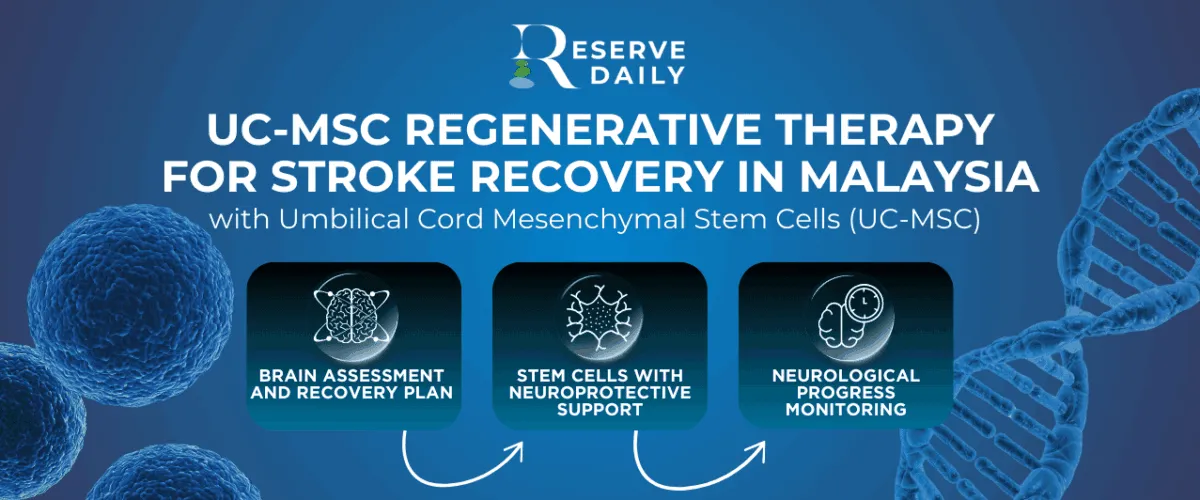
What the Patient Journey Looks Like
- Assessment: neurological evaluation and brain imaging
- Planning: a personalized recovery plan built around the patient's condition
- Treatment: UC-MSC sessions with exosome and NAD+ support
- Follow-up: repeat brain scans and neurological monitoring
Potential Benefits
Patients who go through a structured regenerative program may see support in areas such as:
- Neurological function and cognitive recovery
- Motor skills and mobility, especially when combined with rehabilitation
- Overall recovery alongside physiotherapy and speech therapy
Eligibility is always confirmed after medical screening, and outcomes cannot be guaranteed.
Why Choose ReserveDaily?
- Registered clinics and licensed professionals across Malaysia
- Structured, monitored programs with imaging and follow-up
- Transparent communication through a specialist consultation before you commit
- Easy contact via WhatsApp or online
Frequently Asked Questions
Is stem cell therapy for stroke safe?
When performed by licensed professionals in registered clinics after proper medical screening, it is generally considered a supportive option. Safety depends on the patient's condition, so a full assessment is essential before starting.
Can stem cells cure a stroke?
No. Stem cell therapy is not a cure. It is designed to support brain repair and recovery, and works best alongside physiotherapy, speech therapy, and medical management.
How long is the program?
The program is a structured, multi-month plan with several UC-MSC cycles and supportive therapies. Your specialist will confirm the exact duration and schedule after your assessment.
Who is a suitable candidate?
Suitability is decided after neurological assessment and brain imaging. Factors include the type of stroke, how long ago it happened, and the patient's overall health.
Can it be combined with physiotherapy?
Yes. In fact, regenerative therapy is intended to complement rehabilitation, not replace it. Continuing physiotherapy and speech therapy is strongly encouraged.
How do I get started?
Reach out to the ReserveDaily team on WhatsApp to speak with a specialist, who will guide you through screening and next steps.
Take the First Step
Recovery after a stroke is a long road, and every patient's journey is different. If you are exploring regenerative options to support healing, ReserveDaily can connect you with qualified professionals and a clear, monitored program. Talk to a specialist on WhatsApp to discuss whether this approach is right for you or your loved one.
This content is for educational purposes only and is not a substitute for professional medical advice. Stem cell therapy does not replace emergency care or standard stroke treatment. Results vary and are not guaranteed. Always consult a qualified healthcare professional before starting any treatment.