Swing Gate Repair: Common Mechanical Problems and Solutions
By 2Quick Garage Doors
3 Views
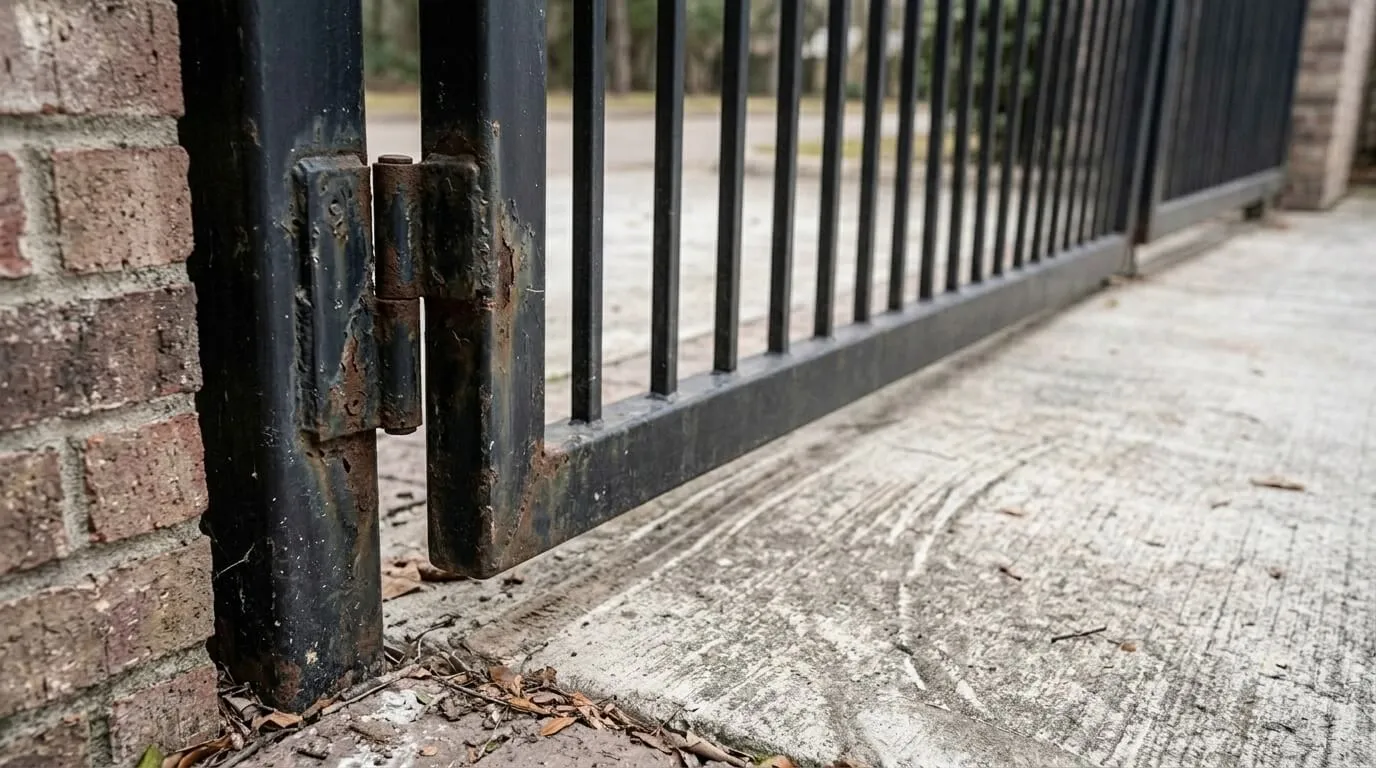
Swing gates look straightforward: a frame hung on hinges, opening like a door. In practice, they carry a lot of weight on a small number of attachment points, and they work against gravity, wind, and shifting soil every day. When a swing gate begins to drag, bind, or refuse to latch, the cause is almost always mechanical, and good swing gate repair starts by finding which part of the structure has moved, worn, or failed.
This guide is written for homeowners, property managers, and business owners in The Woodlands. It covers the most common mechanical problems with swing gates, what's safe to check yourself, and what professional solutions typically involve.
How a Swing Gate Works
A swing gate depends on a few key parts working together:
- The gate leaf (or leaves), the panel or panels that swing open
- Hinges, which carry the gate's weight and let it pivot
- Posts, which anchor the hinges and must stay plumb and stable
- Latches, locks, and stops, which hold the gate closed and limit its travel
- Drop rods or cane bolts, on double gates, which secure one leaf to the ground
- Operators, on automatic gates, which push or pull the gate open through arms or actuators
Any shift in these parts, even a fraction of an inch at the hinge, can show up as a gate that sags, rubs, or no longer lines up.
Problem 1: Sagging and Dragging
This is the classic swing gate complaint. The free end of the gate drops, and the bottom scrapes the ground or the driveway.
What it looks like:
- Scrape marks on the pavement
- The gate catches on the ground partway through its swing
- A gap at the top of the latch side, with the bottom pushed lower
- The gate that used to swing freely now needs lifting to latch
Typical causes:
- Loose or worn hinges
- Hinge pins that have worn or bent
- Posts that have leaned or settled
- A heavy gate leaf with inadequate support
- Frame fatigue or cracked welds
- Wet soil or erosion near the post
Professional solutions: Re-hanging the gate, replacing hinges or pins, adjusting hinge position, straightening or reinforcing the frame, and in some cases adding a support wheel or brace.
Problem 2: Hinge Wear and Failure
Hinges take the most abuse. They carry the weight of the gate every time it moves, and they're exposed to rain, dust, and humidity.
What it looks like:
- Squeaking, grinding, or sticking when the gate moves
- Visible rust or flaking
- Play or wobble in the hinge
- Cracked welds or loose mounting bolts
Typical causes:
- Lack of lubrication
- Rust and corrosion
- Overloaded or poorly sized hinges
- Impact damage
- Loose fasteners
Professional solutions: Cleaning and lubricating where appropriate, replacing worn hinges or pins, upgrading to hinges rated for the gate's weight, and tightening or re-welding mounting points.
Problem 3: Shifted, Leaning, or Damaged Posts
If the post moves, everything attached to it moves. A post that leans even slightly changes the gate's alignment and puts constant strain on hinges and latches.
What it looks like:
- The gate no longer closes squarely
- Gaps that change from one side to the other
- A visibly leaning or wobbly post
- Cracked concrete around the base
Typical causes:
- Ground settling or erosion
- Rotting wooden posts
- Insufficient concrete footing
- Vehicle impact
- Heavy gates stressing undersized posts
Professional solutions: Resetting or replacing posts, repairing or replacing footings, bracing, and re-aligning the gate after the structure is stable.
Problem 4: Latch and Lock Misalignment
A gate that doesn't latch is a security problem, and it's often a symptom of sagging or post movement rather than a problem with the latch itself.
What it looks like:
- The latch doesn't catch, or catches only if you lift or push the gate
- The lock bolt doesn't line up with its receiver
- Gate closes, but doesn't stay closed
- Wear marks at the strike plate
Typical causes:
- Sag or post lean
- Loose latch hardware
- Worn latch components
- Wind pushing the gate out of position
- Poor original alignment
Professional solutions: Correcting the sag or alignment first, then adjusting or replacing the latch, strike, or lock hardware.
Problem 5: Double-Gate Alignment and Drop Rod Issues
Double swing gates add another set of mechanical details.
What it looks like:
- Leaves that don't meet evenly in the middle
- A gap between leaves, or overlapping edges
- Drop rods that no longer align with their ground holes
- One leaf that closes before the other
Typical causes:
- Uneven hinge wear
- One post shifting more than the other
- Debris in drop rod holes
- Operators that aren't synchronized
Professional solutions: Re-aligning both leaves, adjusting or replacing drop rods, cleaning or resetting ground sockets, and re-timing operators on automatic systems.
Problem 6: Operator Arm and Linkage Problems (Automatic Swing Gates)
If your swing gate has a motor, the mechanical linkage matters as much as the motor.
What it looks like:
- The motor runs, but the gate moves little or not at all
- Arms that look bent, loose, or misaligned
- Jerky or uneven opening
- The gate stops partway or doesn't fully close
Typical causes:
- Loose mounting brackets or pivot points
- Bent arms from impact or forced movement
- A sagging gate that the operator can't move properly
- Wear in the pivot joints
- Limit settings that have drifted
Professional solutions: Tightening, replacing, or re-positioning arms and brackets, correcting the gate's sag first, and recalibrating limits and force settings. Fixing the mechanics often resolves complaints that seem like motor problems.
Problem 7: Rust, Weather, and Wind Damage
The Woodlands' humidity, heat, and storm season are tough on outdoor hardware.
What it looks like:
- Orange staining, flaking paint, or pitting
- Stiff or seized hinges
- A gate that slams or is pushed open by wind
- Cracked or weakened welds
Professional solutions: Treating or replacing rusted hardware, re-welding or reinforcing the frame, recommending protective coatings or more suitable materials, and adding stops or wind restraints where needed.
Quick Reference: Symptom to Likely Cause
Symptom
Likely Cause
Typical Solution
Gate drags on the ground
Sag from hinge wear or post lean
Re-hang gate; replace hinges; stabilize posts
Squeaks or grinds when moving
Dry or worn hinges
Lubricate; replace worn hinges or pins
Gate won't latch
Misalignment or sag
Correct sag first; adjust latch or strike
Leaves don't meet evenly
Post shift or uneven hinge wear
Re-align leaves; adjust drop rods
Motor runs, gate barely moves
Loose or bent operator arm
Repair or replace arm and brackets
Post wobbles or leans
Weak footing or ground movement
Reset or replace post; repair footing
Gate swings open on its own
Wind, unlatched, or out of level
Add stops or restraints; re-level
Visible rust on hardware
Humidity and weather
Treat or replace; protect surfaces
What You Can Safely Check Yourself
A few observations don't require tools or risk:
- Watch a full swing and note where the gate drags, rubs, or stalls
- Look for obvious damage: bent frame, loose hinge bolts, cracked welds, leaning posts
- Check the latch and strike to see where they no longer line up
- Check for ground issues: pooled water, erosion, or raised pavement near the gate
- Lubricate hinges with a product suitable for outdoor hardware, following any manufacturer guidance
- Tighten visible loose bolts, if you're comfortable and the gate isn't carrying unusual stress
- Take photos and notes of what you see
Avoid forcing a binding gate, removing hinges, or working on automatic operators.
When to Call a Professional
Bring in help when:
- The gate sags significantly or drags on the ground
- Posts lean, wobble, or have cracked footings
- Hinges are bent, cracked, or heavily rusted
- The gate frame is cracked or has failed welds
- A latch or lock won't secure the gate
- An automatic operator isn't moving the gate correctly
- The gate swings unpredictably in wind
- You're unsure what's wrong
Swing gates can be heavy, and removing or re-hanging them without proper support can cause injury or damage.
What a Professional Visit Involves
- Symptom review and history
- Inspection of the gate, hinges, posts, latches, drop rods, and any operator
- Testing of travel, alignment, and, for automatic gates, limits and safety devices
- Diagnosis with a clear explanation of the cause
- A written estimate before additional work begins
- Repair, such as re-hanging, replacing hinges, resetting posts, or adjusting operators
- Recalibration and final testing
- A summary of what was done and what to monitor
Preventing Mechanical Problems
- Lubricate hinges every few months, as appropriate for your hardware
- Inspect for rust and loose bolts twice a year
- Keep the gate's swing path clear of vegetation and debris
- Check posts for movement, especially after storms and soil changes
- Address drainage near posts so water doesn't undermine footings
- Schedule an annual inspection, particularly for heavy or automatic gates
For properties with gates alongside garage doors, openers, and other access hardware, making garage door maintenance part of the same yearly schedule can help ensure none of the entry points get overlooked.
Choosing a Provider
Because swing gates involve structure, weight, and sometimes motors, look for a provider who diagnoses the mechanics before replacing parts. Useful questions include:
- Are you licensed and insured?
- Do you work on my gate material and operator type?
- Will you inspect hinges, posts, latches, and the frame, not just the visible symptom?
- Is your estimate written and itemized?
- What warranty covers parts and labor?
A local company such as 2Quick Garage Doors is an example of the kind of provider property owners in The Woodlands can compare. If you'd like to see how a focused provider approaches the work, reading about Swing Gate Repair can help you judge whether their process covers the structural and mechanical diagnosis described above.
Frequently Asked Questions
Why is my swing gate dragging on the ground? The most common causes are loose or worn hinges, a leaning post, or frame fatigue. A technician can determine which applies and correct it.
Can I fix a sagging gate by tightening the hinges? Sometimes a minor sag improves with tighter hardware, but significant sag usually points to worn hinges, post movement, or structural issues that need professional attention.
Why won't my gate latch anymore? Latch trouble is usually a symptom of sag or misalignment rather than a bad latch. Fixing the alignment typically fixes the latch.
Can an automatic swing gate operator fix a sagging gate? No. A sagging gate strains the operator, so the mechanical problem should be fixed first.
How often should a swing gate be inspected? Once a year is a reasonable baseline, with more frequent checks for heavy or high-traffic gates.
Final Thoughts
Swing gate trouble almost always starts with something mechanical: a hinge that's worn, a post that's moved, a leaf that has sagged, or a linkage that has loosened. Spot the early signs, keep up basic lubrication and inspection, and let a professional handle heavy lifting, structural repairs, and operator work. A gate that's re-hung, re-aligned, and properly supported will move more freely, latch reliably, and last far longer than one that's patched repeatedly.