The Complete Guide to Advanced Cybersecurity Certifications
By harshit chaudhary
188 Views
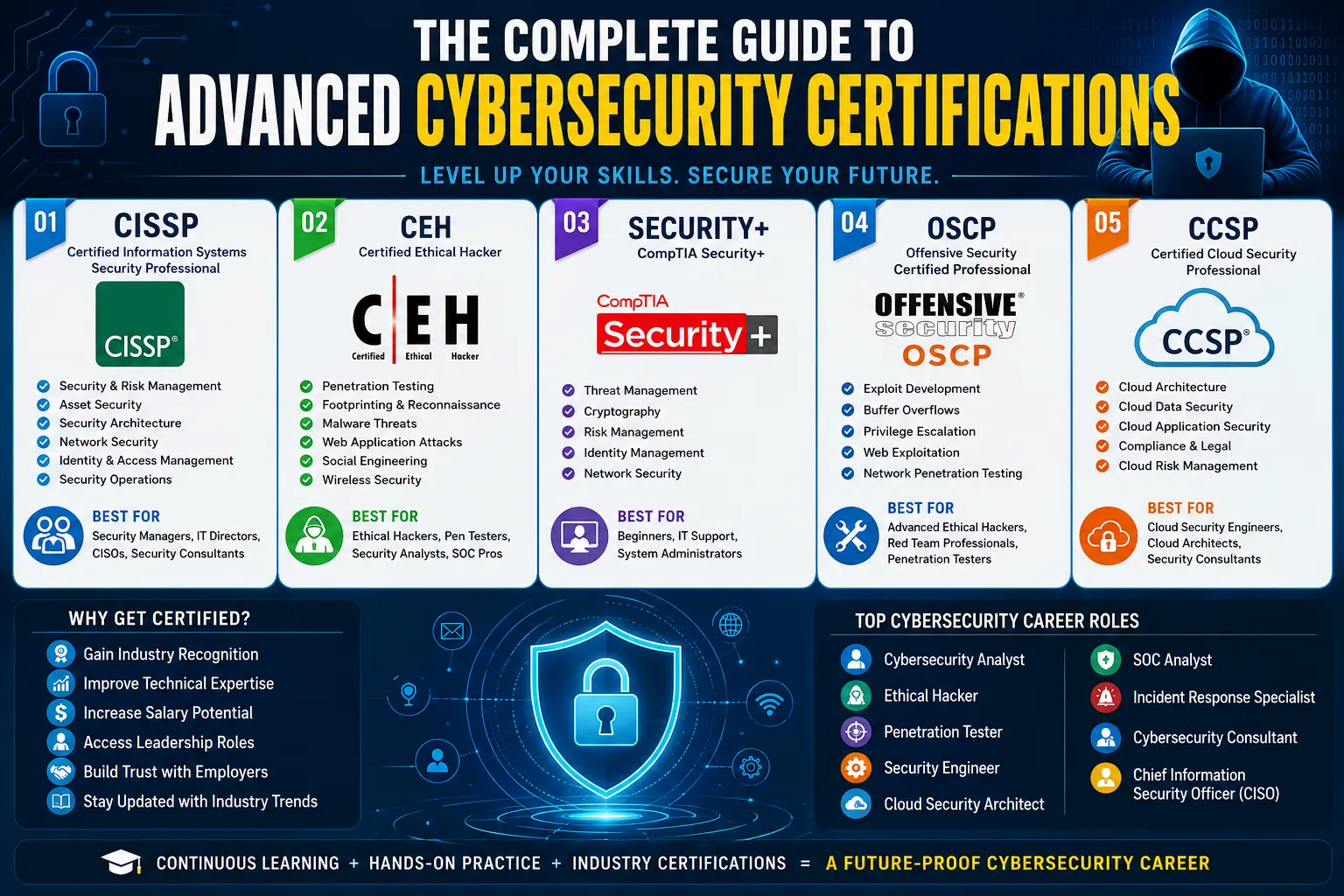
In today’s digital-first world, cybersecurity has become one of the most in-demand and high-paying career fields globally. From protecting sensitive business data to preventing ransomware attacks, cybersecurity professionals play a critical role in securing organizations against evolving cyber threats. As cyberattacks become more sophisticated, companies now prefer skilled professionals with advanced certifications that validate real-world expertise.
Whether you are an IT professional, ethical hacker, security analyst, or beginner planning to enter the cybersecurity industry, earning advanced cybersecurity certifications can significantly improve your career opportunities, salary potential, and industry credibility.
In this complete guide, we will explore the best advanced cybersecurity certifications, their benefits, eligibility, career scope, and how to choose the right certification for your goals.
Why Advanced Cybersecurity Certifications Matter
Cybersecurity certifications are more than just credentials. They demonstrate your practical knowledge, technical skills, and commitment to continuous learning in a rapidly changing industry.
Organizations today face threats such as:
- Ransomware attacks
- Data breaches
- Cloud security vulnerabilities
- Phishing scams
- Insider threats
- AI-powered cyberattacks
Because of these challenges, companies actively look for certified cybersecurity professionals who can secure networks, applications, and cloud environments effectively.
Advanced certifications help professionals:
- Gain industry recognition
- Improve technical expertise
- Increase salary potential
- Access leadership roles
- Build trust with employers
- Stay updated with modern security practices
Top Advanced Cybersecurity Certifications in 2026
1. Certified Information Systems Security Professional (CISSP)
The CISSP certification is one of the most respected cybersecurity credentials worldwide. It is ideal for experienced security professionals who want leadership or managerial roles.
Key Skills Covered:
- Security and risk management
- Asset security
- Security architecture
- Network security
- Identity and access management
- Security operations
Best For:
- Security Managers
- Security Consultants
- Chief Information Security Officers (CISO)
- IT Directors
Career Benefits:
Professionals with CISSP certification often secure high-paying roles in multinational companies and government organizations.
2. Certified Ethical Hacker (CEH)
The CEH certification focuses on ethical hacking techniques used to identify vulnerabilities before malicious hackers exploit them.
Topics Included:
- Penetration testing
- Footprinting and reconnaissance
- Malware threats
- Web application attacks
- Social engineering
- Wireless security
Best For:
- Ethical Hackers
- Penetration Testers
- Security Analysts
- SOC Professionals
This certification is highly popular among students searching for a practical cybersecurity certification course that provides hands-on exposure to ethical hacking tools and techniques.
3. CompTIA Security+
CompTIA Security+ is considered one of the best foundational-to-intermediate cybersecurity certifications. It is globally recognized and suitable for beginners transitioning into cybersecurity roles.
Skills Covered:
- Threat management
- Cryptography
- Risk management
- Identity management
- Network security
Ideal For:
- Beginners in cybersecurity
- IT support professionals
- System administrators
Why It’s Valuable:
Security+ helps candidates build a strong foundation before pursuing advanced certifications like CISSP or OSCP.
4. Offensive Security Certified Professional (OSCP)
OSCP is one of the most technically challenging certifications in cybersecurity. It focuses heavily on real-world penetration testing skills.
What Makes OSCP Unique?
Unlike theory-based exams, OSCP requires candidates to hack into live systems during the exam.
Skills Covered:
- Exploit development
- Buffer overflows
- Privilege escalation
- Web exploitation
- Network penetration testing
Best For:
- Advanced ethical hackers
- Red team professionals
- Penetration testers
Professionals holding OSCP certifications are highly respected in the cybersecurity community because of their practical expertise.
5. Certified Cloud Security Professional (CCSP)
As businesses rapidly move to cloud environments, cloud security professionals are in extremely high demand.
CCSP focuses on securing cloud infrastructure, applications, and data.
Topics Covered:
- Cloud architecture
- Cloud data security
- Cloud application security
- Compliance and legal frameworks
- Cloud risk management
Best For:
- Cloud security engineers
- Cloud architects
- Security consultants
Cloud cybersecurity skills are expected to dominate the future job market as organizations continue adopting AWS, Azure, and Google Cloud platforms.
How to Choose the Right Cybersecurity Certification
Choosing the right certification depends on your experience level, career goals, and area of interest.
For Beginners
Start with:
- CompTIA Security+
- CEH
These certifications help build foundational skills and practical knowledge.
For Intermediate Professionals
Consider:
- CISSP
- CCSP
These certifications are ideal for professionals aiming for managerial or cloud-focused roles.
For Advanced Technical Experts
Go for:
- OSCP
- Advanced penetration testing certifications
These focus on deep technical expertise and real-world offensive security skills.
Career Opportunities After Advanced Cybersecurity Certifications
Cybersecurity certifications can open doors to various high-demand job roles, including:
- Cybersecurity Analyst
- Ethical Hacker
- Penetration Tester
- Security Engineer
- Cloud Security Architect
- SOC Analyst
- Incident Response Specialist
- Cybersecurity Consultant
- Chief Information Security Officer (CISO)
According to global industry reports, cybersecurity professionals continue to experience strong salary growth due to increasing demand and talent shortages.
Skills You Need Alongside Certifications
While certifications are valuable, employers also look for practical skills and hands-on experience.
Important cybersecurity skills include:
- Network security
- Linux administration
- Python scripting
- Threat analysis
- SIEM tools
- Vulnerability assessment
- Incident response
- Cloud security
- Security automation
Building labs, participating in Capture The Flag (CTF) competitions, and working on real-world projects can strengthen your expertise significantly.
The Future of Cybersecurity Certifications
The cybersecurity landscape is evolving rapidly due to emerging technologies like Artificial Intelligence, IoT, blockchain, and cloud computing.
Future cybersecurity certifications are expected to focus more on:
- AI security
- Cloud-native security
- Zero Trust architecture
- DevSecOps
- Threat intelligence
- OT and IoT security
Professionals who continuously upskill themselves will remain highly competitive in the industry.
Final Thoughts
Advanced cybersecurity certifications are essential for professionals looking to build a successful career in information security. They validate your expertise, improve job prospects, and help you stay ahead in a constantly evolving digital world.
Whether you are starting your journey or aiming for senior cybersecurity roles, selecting the right certification path can accelerate your professional growth significantly.
Investing in cybersecurity education, hands-on practice, and industry-recognized certifications today can help you secure a rewarding and future-proof career tomorrow.