Top Benefits of Learning Management Systems for Educational Institutions
By Edtech Innovate
153 Views
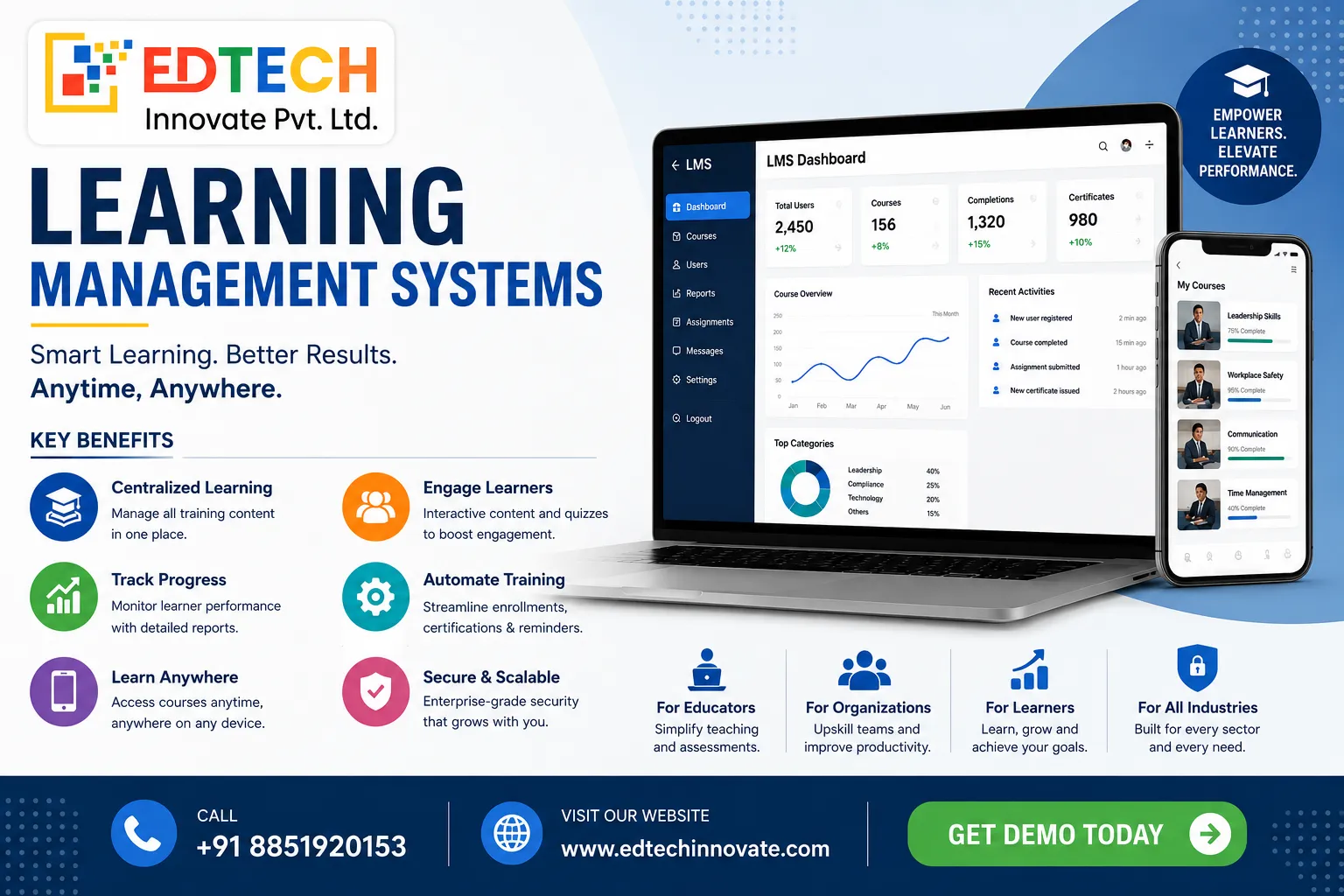
The education sector in India is rapidly embracing digital transformation, and learning management systems have become an essential part of modern teaching and training. Schools, colleges, universities, coaching centers, and training institutes are now using digital platforms to improve learning experiences, simplify administration, and increase student engagement.
As online and hybrid education models continue to grow, institutions need reliable Learning Management Software that supports interactive learning, performance tracking, and easy communication. Modern LMS for educational institutions help educators manage courses efficiently while giving students the flexibility to learn anytime and anywhere.
In this blog, we will explore the top benefits of learning management systems for educational institutions and why they are becoming a necessity in India’s evolving education landscape.
What Are Learning Management Systems?
Learning management systems are digital platforms used to create, manage, deliver, and track educational content and training programs online. These platforms provide a centralized environment where educators, students, and administrators can interact effectively.
Most top learning management systems offer features such as:
- Online course management
- Virtual classrooms
- Student performance tracking
- Assignment and quiz management
- Attendance monitoring
- Communication tools
- Mobile learning support
These features help institutions deliver better learning experiences while reducing manual administrative work.
Top Benefits of Learning Management Systems
1. Flexible and Accessible Learning
One of the biggest benefits of learning management systems is flexibility. Students can access learning materials anytime and from anywhere using smartphones, tablets, or laptops.
This is especially valuable in India, where many students prefer remote and hybrid learning models. Online accessibility ensures uninterrupted education even during emergencies or travel limitations.
Key Advantages:
- 24/7 access to study materials
- Self-paced learning opportunities
- Easy remote education support
- Improved convenience for students and teachers
2. Better Student Engagement
Modern LMS for educational institutions are designed to make learning more interactive and engaging. Traditional lectures are now supported with digital tools that encourage participation.
Interactive features include:
- Live video classes
- Discussion forums
- Interactive quizzes
- Gamification elements
- Multimedia content
- Instant feedback systems
These tools help students stay motivated and involved throughout the learning process.
Example:
A university using a cloud-based LMS can conduct live classes, share recorded sessions, and provide instant quizzes to improve student interaction.
3. Simplified Course Management
Managing multiple courses manually can be time-consuming for educators and administrators. Learning Management Software simplifies this process by centralizing all educational activities in one platform.
Teachers can:
- Upload learning materials
- Schedule assignments
- Conduct online exams
- Track attendance
- Share announcements
This reduces paperwork and improves overall efficiency.
4. Personalized Learning Experiences
Every student learns differently. Learning management systems support personalized learning paths that allow students to progress at their own pace.
Students can:
- Review recorded lectures
- Focus on weak subjects
- Access additional learning materials
- Receive customized recommendations
This approach improves learning outcomes and helps students build confidence.
read more: How an Admission Management Sytem Simplifies Student Enrollment
5. Improved Performance Tracking and Analytics
One of the most valuable features of top learning management systems is detailed analytics and reporting.
Educators can monitor:
- Student attendance
- Assignment completion rates
- Quiz performance
- Learning progress
- Course completion statistics
These insights help institutions identify struggling students early and improve teaching strategies accordingly.
6. Cost-Effective Education Management
Educational institutions can reduce operational costs by using digital learning platforms. Learning management systems eliminate many traditional expenses such as:
- Printed study materials
- Physical infrastructure costs
- Travel expenses
- Manual administration costs
Cloud-based LMS platforms are particularly affordable because they require minimal hardware and maintenance.
7. Enhanced Communication and Collaboration
Effective communication between teachers and students is essential for successful learning. LMS platforms provide multiple communication tools that improve collaboration.
Common features include:
- Messaging systems
- Discussion boards
- Group projects
- Real-time notifications
- Live Q&A sessions
These features create a connected and collaborative learning environment.
8. Mobile Learning Support
Smartphone usage in India continues to grow, making mobile learning an important feature for educational institutions.
Most learning management systems now offer:
- Mobile-friendly dashboards
- App-based learning
- Offline content access
- Push notifications
Students can continue learning anytime, improving flexibility and participation.
9. Scalable Solutions for Growing Institutions
Educational institutions often expand their courses, departments, and student intake over time. Modern LMS platforms are highly scalable and can support growing educational demands.
Whether an institution has 100 students or 50,000, learning management systems can handle increased data, users, and learning activities efficiently.
10. Support for Hybrid and Online Learning Models
Hybrid learning has become increasingly popular in India. Institutions now combine traditional classroom teaching with digital education methods.
Learning management systems support:
- Online live classes
- Recorded lectures
- Blended learning environments
- Virtual assessments
- Digital collaboration
This flexibility helps institutions adapt to modern educational trends easily.
Types of LMS for Educational Institutions
Understanding different types of LMS helps institutions choose the right solution based on their requirements.
Cloud-Based LMS
Hosted online and accessible through the internet. Ideal for flexibility and scalability.
Self-Hosted LMS
Installed on institutional servers for greater customization and data control.
Academic LMS
Specifically designed for schools, colleges, and universities.
Corporate LMS
Used by companies for employee training and skill development programs.
Choosing the right Learning Management Software depends on budget, scalability, and institutional goals.
Learning Management Systems for Businesses
Learning management systems for businesses are also gaining popularity in India. Companies use LMS platforms to improve employee training and development.
Business use cases include:
- Employee onboarding
- Compliance training
- Leadership development
- Technical skill training
- Remote workforce learning
Businesses benefit from consistent training delivery and improved employee productivity.
Future of Learning Management Systems in India
The future of digital education in India is strongly connected to advanced LMS technology. Artificial intelligence and automation are making modern platforms more personalized and efficient.
Future trends include:
- AI-powered learning recommendations
- Virtual reality classrooms
- Advanced analytics
- Adaptive learning systems
- Interactive simulations
As digital education continues to grow, learning management systems will play a major role in shaping modern education.
Conclusion
Learning management systems have transformed the education industry by improving accessibility, engagement, communication, and learning efficiency. From personalized learning experiences to simplified course management, LMS platforms provide significant benefits for educational institutions across India.
Whether you are a school, university, coaching center, or business, investing in the right Learning Management Software can improve learning outcomes while reducing administrative challenges.
If you are searching for reliable LMS for educational institutions, edtechinnovate offers advanced and scalable solutions designed to support modern digital learning. Explore innovative learning management systems with edtechinnovate and build a smarter future for education today.
FAQs
1. What are learning management systems?
Learning management systems are digital platforms used to manage, deliver, and track online learning and training programs.
2. Why are LMS platforms important for educational institutions?
They improve student engagement, simplify administration, support online learning, and enhance communication.
3. What are the main types of LMS?
The main types include cloud-based LMS, self-hosted LMS, academic LMS, and corporate LMS.
4. How do LMS platforms improve student learning?
They provide flexible access, interactive learning tools, personalized education, and performance tracking.
5. Can businesses use learning management systems?
Yes, businesses use LMS platforms for employee training, onboarding, and professional development programs.