Water Damage Restoration in Florida: First 24 Hours
By ronnie
45 Views
How Water Damage Restoration in Florida Works After a Storm or Leak
Water damage in Florida rarely gives much warning. A summer storm dumps rain faster than the yard can drain it, a supply line behind the washing machine lets go, or an AC drain backs up while you are at work. A few hours later you are standing in a soaked hallway wondering what to do first. Knowing how water damage restoration in Florida actually works — the first moves that matter, why speed is everything, and what a professional cleanup involves — can save you thousands of dollars and a lot of stress. This post walks through the common causes, the first 24 hours, the drying process, the insurance side, and how to pick the right local crew.
Why Water Damage Is So Common in Florida
Few states hand homeowners as many ways to end up with a wet floor. Hurricane season brings storm surge and days of heavy rain, and Florida’s flat, low-lying ground does not drain quickly. Add a high water table, near-constant humidity, and the afternoon downpours that roll through most of the summer, and the outside water is already working against you.
Inside the house, the usual suspects show up too: burst or corroded pipes, failed water heaters, dishwasher and washing-machine hoses, roof leaks after wind damage, and air-conditioning systems that drip or overflow. Because the humidity never really lets up, moisture that would dry on its own in a drier climate tends to linger here — which is exactly why water problems in Florida escalate faster than people expect.
The First 24 Hours After Water Damage
What you do in the first day makes a bigger difference than almost anything else. If it is safe, start by shutting off the water at the source — the valve behind the appliance or the main shutoff for the house. If water is near outlets, wiring, or the electrical panel, cut the power to that area first, and never walk through standing water that could be electrified.
Next, protect what you can. Move furniture, electronics, and anything valuable out of the wet zone, and lift soaked rugs off the floor. Take plenty of photos and short videos before you move much, because your insurer will want to see the damage as it happened. If the water is clean and shallow, you can start mopping or using a wet vac, but do not put yourself at risk for a few square feet of flooring. Then call a professional — the sooner trained crews arrive with real extraction and drying equipment, the less damage you are left paying for.
Why Fast Water Removal and Drying Matters
Here is the part most homeowners underestimate: mold can begin growing within 24 to 48 hours of a surface staying wet. According to the EPA’s guidance on mold, the single most effective way to prevent it is to dry wet materials quickly. Once mold takes hold inside walls, under flooring, or in insulation, the job stops being a simple cleanup and turns into a remediation project.
Water also does not stay put. It wicks up drywall, soaks into subfloor and framing, and travels to rooms that looked dry an hour ago. That is why professional water extraction and structural drying matter so much — pulling the standing water out is only step one, and getting the materials behind it dry is what actually stops the damage from spreading.
What the Restoration Process Looks Like
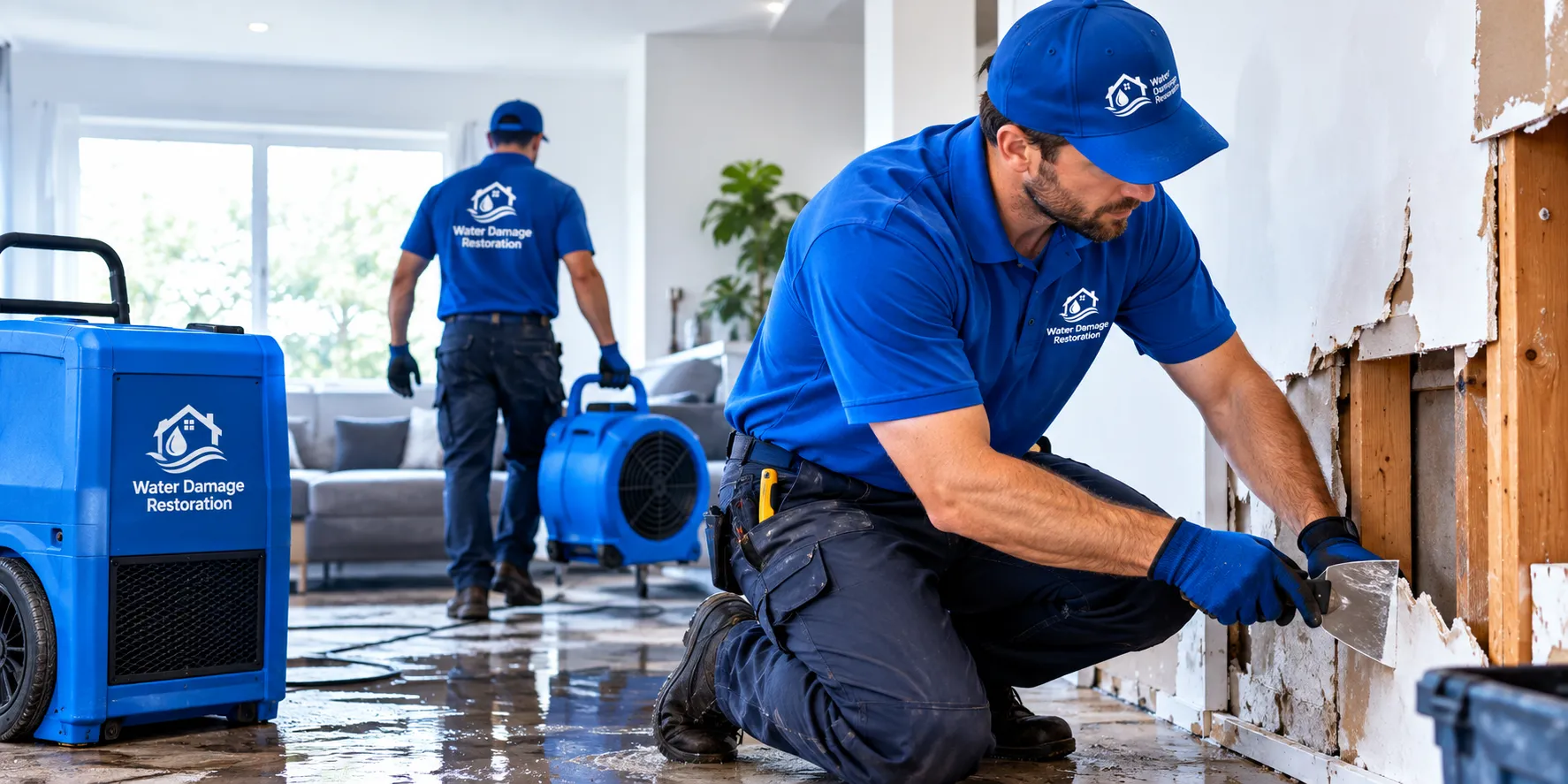
A good restoration company follows a clear sequence rather than just shop-vaccing the floor and leaving. It usually starts with an inspection to find the source and map how far the moisture has traveled, often with meters and sometimes infrared cameras that see dampness behind surfaces.
From there, crews extract the standing water, then set up industrial air movers and dehumidifiers to dry the structure to measured targets — not just “it feels dry.” Affected areas are cleaned and sanitized to control odor and bacteria, which matters even more when the water came from a flood or a backup. If mold is already present, mold remediation is handled with containment so spores do not spread. Finally, repairs put the property back together, from replacing drywall and baseboards to full rebuilds after serious flood damage restoration.
Does Homeowners Insurance Cover Water Damage in Florida?
It depends on how the water got in. Most policies cover damage that is sudden and accidental — a pipe that bursts overnight, an appliance that fails without warning. What they typically will not cover is damage from gradual leaks or neglect, the slow drip under a sink that went ignored for months.
Flooding is its own category. Rising water from storms and surge is usually not covered by a standard homeowners policy and needs separate flood insurance, which many Florida homeowners carry through the National Flood Insurance Program. Whatever the cause, thorough documentation — photos, moisture readings, and a clear scope of work — makes the claim go far more smoothly, and a reputable restoration company will provide all of it for your adjuster.
Choosing a Water Damage Company in Florida
When your floor is underwater, you do not have time to vet a dozen companies. Look for a few things fast: a genuine 24/7 emergency line, a crew based locally so they actually arrive quickly, and a team that handles the whole job — extraction, drying, mold, and repairs — rather than handing you off halfway through. Ask whether they document everything for insurance, and whether they dry to measured moisture targets instead of guessing.
Conclusion
A soaked floor in Florida is not the disaster it feels like in the moment — but how quickly you respond decides how expensive it gets. Shut off the water, protect your belongings, document the damage, and get trained crews on site before mold has a chance to start. Whether it is a burst pipe, a roof leak, or storm flooding, fast and professional water damage restoration in Florida turns a scary situation into a manageable one.