What Automotive Manufacturers Should Evaluate When Selecting A PVD Coating Provider
By alexjoe
61 Views
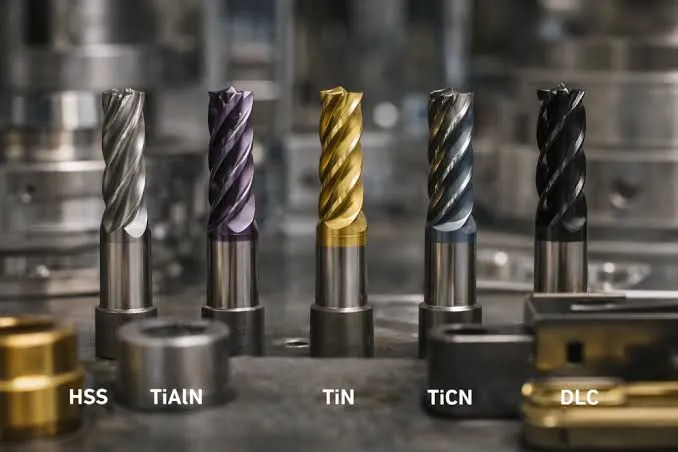
Selecting a PVD coating provider for automotive manufacturing involves more than price and availability. Automotive production demands consistent coating quality across high volumes, substrate compatibility, and clear communication from quote to delivery. The wrong provider creates production delays, inconsistent tool life, and quality issues that ripple through the schedule.
Here are the variables automotive manufacturers, procurement teams, and engineering groups should evaluate before committing to a coating partner.
Coating Range: More Options Mean Better Application Fit
Automotive manufacturing uses coatings across two distinct categories: coatings on the tools that make the parts, and coatings on the finished parts themselves. These require different coating types with different properties.
Cutting tools, drills, inserts, and forming dies used in automotive production machining benefit from hard PVD coatings like AlTiN (HV 3,400 to 3,600), TiAlN high temperature coating for automotive applications (HV 3,300, max 700°C), and TiCN (HV 3,500, COF 0.25). These coatings resist abrasive wear and thermal degradation at the cutting edge.
Finished drivetrain components, bearings, piston pins, and valve-train parts benefit from DLC (COF 0.05 to 0.1) for friction reduction and CrN (HV 1,800) for corrosion resistance. These are performance requirements, not cutting requirements, and they demand different coatings.
A provider with a limited coating portfolio may force compromises. A provider with a broad range of coating options, spanning PVD, DLC, and proprietary formulations, can match the right coating to each application within the same order.
Substrate Experience: Not Every Provider Coats Every Material
Automotive parts and tooling span a wide range of base materials: carbide inserts, HSS drills, tool steel dies (D2, M2, H13), stainless steel components, aluminum alloy housings, and cast iron fixtures. Each substrate has different adhesion characteristics, surface preparation requirements, and coating compatibility profiles.
A provider experienced with carbide cutting tools may not have the same expertise with stainless steel automotive components or aluminum alloy parts. Ask the provider which substrates they coat regularly, what surface preparation protocols they follow for each, and whether they have documented experience with the specific materials in your application. Automotive PVD coating services should cover the full range of substrates used in your production environment, not just one category.
Volume Capability and Lead Time Consistency
Automotive production schedules are unforgiving. A coating provider that delivers on time for a prototype order but struggles with production volumes creates downstream delays that affect machining schedules, assembly lines, and delivery commitments.
Evaluate the provider's capacity against your actual volume requirements. Ask about current lead times, how lead times change during peak demand periods, and what communication process they use to flag delays before they affect your schedule. Consistent lead times matter more than fast lead times if they are unpredictable.
Quality Documentation and Traceability
Automotive OEMs and tier-one suppliers increasingly require documented quality records from their coating providers. ISO 9001:2015 certification is the baseline. For suppliers also serving aerospace programs, AS9100D certification indicates a higher level of process control and traceability.
Verify what documentation ships with each order. At minimum, the provider should supply lot traceability linking coated parts to specific coating runs, process parameters, and inspection results. Ask what in-house testing the provider performs: thickness measurement (Calo Testers, Fisherscope X-ray), adhesion testing, friction verification (Tribo Meters), and visual inspection (optical microscopes).
Ask the provider what testing and documentation practices they follow, and how consistently those practices are applied across production orders. Consistent quality verification builds confidence that the coatings arriving at your facility meet the same standard every time.
Engineering Support: Consultation, Not Just Application
Automotive PVD coating services should include technical consultation as part of the relationship. A provider that accepts your coating specification without reviewing whether it fits your application is a vendor. A provider that evaluates your substrate, cutting conditions, operating temperatures, and failure modes before confirming the specification is a partner.
Ask whether the provider has engineering staff who can discuss coating selection with your team. Ask whether they recommend coatings based on your application data or simply apply whatever is requested. The difference between these two approaches shows up in coating performance, tool life, and the number of problems you solve before they reach the production floor rather than after.
What the Evaluation Comes Down To
The right automotive coating provider combines a broad portfolio, documented quality processes, and engineering support. TiAlN high temperature coating for automotive applications on a carbide insert and DLC on a finished piston pin require different expertise within the same facility. A provider that handles both consistently and with documentation is well positioned to support automotive manufacturing programs.