Why Choose a Lithium-Ion Rechargeable Battery Today?
By jacobevansjb31
4 Views
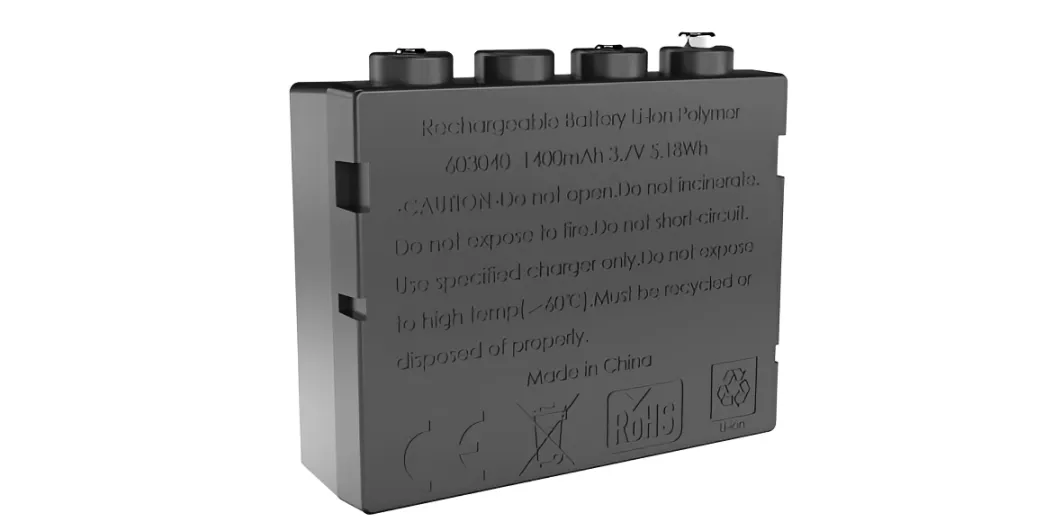
From handheld scanners to cordless instruments, modern equipment needs power that travels wherever the work happens. A Lithium-Ion Rechargeable Battery meets that challenge by storing substantial energy in a relatively compact form and allowing repeated charging. For designers, technicians and everyday users, the attraction is not just portability but the freedom to build devices around dependable, reusable energy.
However, lithium-ion is a family of technologies rather than one universal battery. Cell chemistry, voltage, protection electronics and charging requirements must match the application.
How Does a Lithium-Ion Battery Store Energy?
A lithium-ion cell contains two electrodes separated by an electrolyte. During discharge, lithium ions travel internally between the electrodes while electrons move through the external circuit, providing electrical power.
Charging reverses this process using an appropriately controlled external power source. Because the reaction is rechargeable, the same cell can complete many charge and discharge cycles, although its usable capacity gradually decreases with age and use.
Different Lithium Rechargeable Batteries offer distinct combinations of size, chemistry and energy capacity, allowing designers to select a suitable cell for a specific product rather than treating every lithium battery as interchangeable.
Why Energy Density Matters
Energy density describes how much energy a battery stores relative to its mass or volume. Lithium-ion technology is widely chosen because it can support longer operation without making portable equipment excessively heavy.
Still, runtime also depends on device consumption, operating temperature and the battery's condition. A larger capacity rating does not automatically guarantee better performance in every product.
Where Do Rechargeable Lithium Batteries Make the Biggest Difference?
In professional equipment, reduced battery weight can improve portability. Inspection instruments, communications devices and portable data terminals often benefit from rechargeable power when operators work away from fixed sockets.
At a larger scale, compatible Rechargeable Battery Packs combine cells to achieve the voltage and capacity required by equipment such as cordless tools and specialised machinery. These assemblies need suitable electrical protection and engineered connections rather than improvised cell combinations.
Consumer devices, medical equipment and certain energy-storage systems use lithium-ion technology too. Each application has different safety, performance and certification requirements.
What Do Voltage and Capacity Actually Tell You?
Voltage indicates the electrical potential available from a cell or pack. Many common lithium-ion chemistries have nominal cell voltages around 3.6 to 3.7 V, while lithium iron phosphate cells are typically around 3.2 V.
Capacity, often expressed in milliampere-hours, describes how much charge the battery can deliver under specified test conditions. Watt-hours describe stored energy more directly because they incorporate voltage.
Match the Numbers to the Equipment
Before selecting a battery, check:
- The exact chemistry and nominal voltage required.
- Capacity, physical dimensions and terminal arrangement.
- Continuous and peak discharge-current ratings.
- Manufacturer-approved charging voltage and current.
- Operating-temperature and protection requirements.
- Relevant safety approvals for the intended application.
Never substitute cells solely because they have similar dimensions. A conventional lithium-ion cell is not a direct replacement for a standard 1.5 V AA battery without a specifically designed and approved solution.
Why Does Battery Management Matter?
Lithium-ion cells must remain within defined electrical and thermal limits. Excessive charging voltage, deep discharge, overcurrent or overheating can damage cells and create serious hazards.
Properly designed Battery Management circuitry can supervise cell voltage, current and temperature, helping a battery-powered system respond to abnormal conditions. Multi-cell arrangements may also require balancing to manage differences between cells.
Protection electronics improve system control, but they cannot make a damaged or incorrectly assembled pack risk-free. The complete design still needs suitable components, testing and manufacturer guidance.
How Should You Charge a Lithium-Ion Battery?
Charging must follow the chemistry and limits specified by the cell or pack manufacturer. Suitable chargers regulate charging behaviour rather than applying an uncontrolled power supply directly to a cell.
When comparing Battery Chargers, verify battery chemistry, pack voltage, connector arrangement and approved charge current before connecting anything. A matching plug does not establish electrical compatibility.
For safer everyday use:
- Use the manufacturer-approved charger and accessories.
- Charge on a stable surface away from combustible materials.
- Avoid extreme temperatures, particularly during charging.
- Keep batteries clear of crushing, puncturing and moisture.
- Stop using units that swell, leak, smoke or become unusually hot.
- Follow manufacturer instructions for supervision and storage.
If a battery shows signs of imminent fire, move away, warn others and contact emergency services. Do not attempt to open or repair a damaged cell.
How Can You Check Battery Condition?
A battery that charges successfully may still have reduced usable capacity. Ageing, high temperatures and repeated cycling gradually influence performance, so a device may run for less time even when its charge indicator looks normal.
Compatible Battery Testers can support routine checks of suitable battery types, while advanced equipment may measure capacity or internal resistance. A simple voltage reading alone cannot reliably establish the remaining health of every lithium-ion battery.
If runtime falls sharply, check the equipment's demand, charging system and battery condition before replacing components.
What Happens at the End of Battery Life?
Rechargeability reduces repeated use of disposable cells in appropriate applications, but a lithium-ion battery does not last forever. Responsible handling also matters when it reaches retirement.
Do not place loose lithium-ion cells in household rubbish or ordinary recycling. Instead, use an authorised battery collection facility and insulate exposed terminals according to local collection guidance to reduce short-circuit risks.
Better Portable Power Starts with the Right Match
A Lithium-Ion Rechargeable Battery offers an effective balance of energy storage, compact dimensions and repeated use for compatible electronics. Yet its real-world value depends on much more than its advertised capacity.
Matching chemistry, voltage, protection and charging methods to the equipment helps deliver safer, more consistent operation. With thoughtful selection and responsible care, lithium-ion technology can support reliable portable power across a wide range of modern applications.
Related Reading
Why Business & Finance is Transforming the Global Industry Landscape
Welcome to our in-depth exploration of Business & Finance. In an era defined...
Expert Insights: Navigating the Complex World of Business & Finance
Welcome to our in-depth exploration of Business & Finance. In an era defined...