Why Creative Activities Are Important for Early Childhood Learning
By Twisha Sai
3 Views
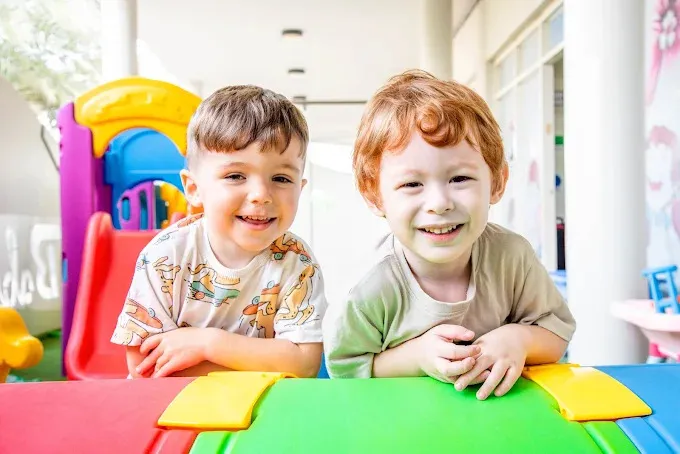
Creative experiences help young children explore ideas, express feelings, and discover the world around them. When comparing JLT nurseries, parents may want to examine how art, music, storytelling, movement, and imaginative play are incorporated into the daily programme rather than viewing them as occasional entertainment.
Creativity as a Learning Tool
Young children often communicate through actions and play before they can fully explain their thoughts in words. Creative activities provide different ways to investigate materials, experiment with ideas, and share discoveries.
Exploring Art and Materials
Drawing, painting, collage-making, and working with age-appropriate modelling materials introduce children to colour, texture, shape, and movement.
The objective should not be to produce identical finished projects. Allowing children to make choices encourages experimentation and gives them opportunities to develop their own ideas.
Activities should be adapted to the child's age, with suitable materials and appropriate supervision.
Developing Language Through Stories
Storytelling introduces new vocabulary, characters, emotions, and situations. Listening to stories also helps children practise attention and understand the sequence of events.
Educators can encourage participation by asking simple questions, inviting children to predict what happens next, and allowing them to describe pictures in their own words.
Repeating familiar stories can be beneficial because children gradually recognize patterns and gain confidence using language.
Music, Movement, and Physical Development
Songs, rhythm games, and movement activities provide opportunities to coordinate actions, listen carefully, and respond to instructions.
Learning Through Rhythm
Clapping patterns, tapping simple instruments, and singing familiar songs help children notice sounds and repetition. These experiences can support listening skills and participation in group activities.
Music sessions also create opportunities for children to express themselves without relying entirely on spoken language.
Building Coordination
Dancing, balancing, jumping, and moving through simple obstacle courses help develop gross motor skills. Activities involving safe tools, large blocks, and age-appropriate puzzles can also encourage fine motor control.
The learning environment should provide enough space for movement while maintaining clear safety boundaries.
Imaginative Play and Problem-Solving
Pretend play allows children to explore familiar situations through imagination. A play kitchen, toy shop, puppet theatre, or collection of dress-up materials can encourage communication and cooperation.
Children may invent roles, negotiate what happens next, and solve small problems as their games develop.
Educators can extend this learning by introducing new materials or asking open-ended questions without controlling every part of the activity.
Connecting Creativity with Everyday Learning
Creative activities can reinforce concepts introduced in other learning areas. Sorting art materials by colour, counting objects in a story, or creating patterns with blocks combines creativity with early mathematical thinking.
Nature walks can lead to leaf-printing activities, while conversations about weather may inspire drawings, songs, or simple experiments.
These connections help children understand that learning is not limited to a single classroom task.
How Parents Can Support Creativity at Home
Families do not need expensive equipment to encourage creative development. Reading together, drawing on paper, singing familiar songs, building with blocks, and providing safe opportunities to explore everyday materials can all be useful.
Allow children time to experiment without requiring every activity to produce a perfect result. Praise their effort, curiosity, and ideas rather than comparing their work with that of other children.
Final Thought
Creative learning gives children opportunities to communicate, experiment, develop coordination, and approach problems in different ways. Parents choosing an early education setting should ask how creative experiences are planned, supervised, and connected to developmental goals. A supportive nursery in Marina Dubai can help children discover their interests while building a strong foundation for future learning.