Why Is Festo PUN Hose Pipe Ideal for Automation?
By jacobevansjb31
89 Views
Introduction
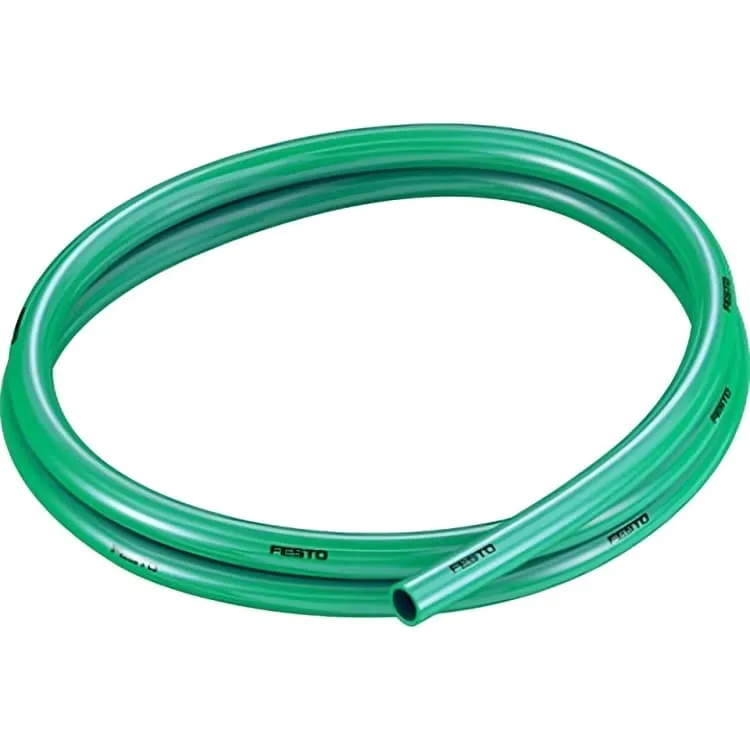
A Festo PUN Hose Pipe provides a flexible and lightweight route for compressed air in automated machinery. Its polyurethane construction supports close installation around frames, valves, actuators, and moving assemblies while helping engineers create organised pneumatic circuits.
Unlike rigid pipework, PUN tubing follows compact layouts with fewer directional joints. Reliable performance still depends on the correct series, diameter, bend radius, pressure range, temperature rating, and connection method.
The wider Pneumatic Connectors, Fittings & Hose range helps designers coordinate tubing with compatible connection and air-management components. Careful system planning reduces restrictions and avoids mismatched parts.
What Makes Festo PUN Tubing Different?
Festo PUN tubing is manufactured from polyurethane for pneumatic applications. The material combines flexibility with low weight, making it suitable for fixed installations and selected moving-machine duties.
Different variants address different environments. PUN-H offers strong flexibility and hydrolysis resistance, while specialist versions may provide antistatic behaviour, flame resistance, or protection near welding processes.
Therefore, buyers should identify the complete product designation instead of selecting by colour or outside diameter alone.
How Does Flexible Tubing Improve Machine Design?
Modern automation equipment often contains many components inside limited space. Flexible PUN hose can travel around guards, panels, valve terminals, and sensors without requiring complex metal pipework.
A planned route also improves maintenance access. Technicians can trace lines, inspect joints, and replace damaged sections without dismantling large parts of the machine.
Where a retractable line suits the application better than a straight run, Recoil Hoses can provide temporary reach while keeping excess tubing controlled. The correct choice depends on movement, space, and working length.
Supporting Moving Equipment
Festo identifies flexible PUN-H tubing as suitable for moving parts such as cable chains. However, repeated motion creates stress, so designers must control the bend radius and prevent rubbing, twisting, or pulling at the connections.
How Do Diameter and Length Affect Airflow?
The outside diameter determines fitting compatibility, while the inside diameter influences flow capacity. A narrow bore or excessively long route can create pressure loss and slow cylinders, grippers, or air-operated tools.
Every bend, branch, valve, and connector adds resistance. Consequently, designers should calculate peak air demand instead of sizing the hose only from an existing port.
Suitable Pneumatic Regulators help maintain controlled downstream pressure. Nevertheless, a regulator cannot correct severe restrictions caused by undersized tubing.
Why Does Compressed-Air Quality Matter?
Moisture, rust, oil residue, and particles can travel through a pneumatic line and damage valves, seals, and actuator surfaces. Clean air also supports more consistent machine response.
Correctly selected Pneumatic Filters remove specified contaminants before air enters the tubing network. Filter grade, drain type, and flow capacity must match the system.
Which Connections Work with PUN Hose?
Many PUN installations use push-in connectors because they support fast assembly and straightforward tube replacement. The hose must match the fitting’s specified outside diameter and material requirements.
For machinery requiring regular disconnection, Pneumatic Quick Connect Couplings can create practical service points. Confirm the coupling profile, shut-off function, port size, flow, and pressure rating before installation.
How Should Festo PUN Hose Be Installed?
First, isolate the compressed-air supply and release stored pressure. Measure the route carefully and leave enough length for movement, maintenance access, and gradual curves.
Cut the hose squarely with a suitable tool. A crushed or angled end may prevent full insertion and damage the fitting seal.
Push the tube into the connector until it reaches the internal stop, then apply a gentle pull to confirm engagement. Restore pressure gradually and inspect every joint for leakage.
Avoid these installation problems:
- Bending below the permitted radius
- Routing across sharp metal edges
- Placing the hose against hot surfaces
- Twisting the tube during connection
- Mixing incompatible tube and fitting sizes
- Leaving moving sections without guidance
- Reusing damaged tube ends
How Does PUN Hose Work with Actuators?
PUN tubing commonly supplies cylinders, slides, grippers, and rotary devices. It must deliver sufficient airflow at the required pressure while remaining securely connected during repeated operating cycles.
Systems using Pneumatic Piston Rod Cylinders should size the hose according to cylinder bore, stroke, speed, cycle frequency, and load. An undersized line can reduce movement speed even when supply pressure appears correct.
Which PUN Variant Suits the Environment?
Standard automation may use a general PUN or PUN-H tube, while demanding locations can require a specialist version. Selection should consider moisture, chemicals, static electricity, welding spatter, temperature, and cleaning procedures.
Important checks include:
- Exact Festo series and part number
- Tube inside and outside diameter
- Permitted pressure and temperature
- Minimum bend radius
- Approved working medium
- Hydrolysis and chemical resistance
- Antistatic or flame-resistant requirements
- Relevant industry approvals
- Suitability for static or moving installation
Technical data for the precise product should guide the final choice because similarly coloured tubes can have different properties.
How Can Maintenance Prevent Air Leaks?
Inspect PUN hose for cuts, abrasion, flattening, hardening, discolouration, swelling, and reduced flexibility. Pay particular attention to moving areas and sections immediately beside fittings.
Small leaks waste compressed air and may cause inconsistent equipment behaviour. If a tube end becomes scratched or deformed, isolate the system and cut back to a clean section when enough hose remains.
Repeated failures often indicate poor routing, vibration, heat, incompatible media, or excessive movement. Correcting the cause is more effective than repeatedly replacing the same section.
Why Choose the Correct Festo PUN Hose Pipe?
The correct Festo PUN Hose Pipe supports compact routing, efficient airflow, easy installation, and reliable pneumatic movement. Its flexible polyurethane construction suits many automation systems, including machines with restricted space or selected dynamic sections.
Successful use depends on matching the hose variant, dimensions, pressure, temperature, bend radius, air quality, and connectors to the application. With careful selection and regular inspection, PUN tubing can create a clean, responsive, and maintainable compressed-air network.