Why More People Are Choosing Their Own Stone Instead of Following the ‘Diamond Default’
By Karob Jewels
44 Views
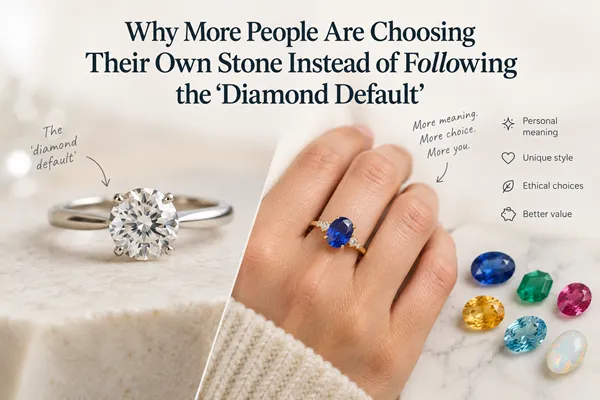
For most of the last century, getting engaged came with an unspoken instruction manual: buy a diamond, ideally round, as large as the budget allowed, and don’t ask too many questions about why. A blue topaz engagement ring would have registered, not long ago, as a deviation from that script, maybe a choice that needed explanation.
But today, it doesn’t need explaining at all. It’s simply the choice.
Where the “Diamond Default” Actually Came From
It’s worth remembering that the diamond engagement ring tradition is younger than most people assume, in short, a mid-20th-century marketing success rather than an ancient custom. That’s not a criticism of diamonds themselves, which remain genuinely beautiful but, simply a useful fact to sit with, because it reframes the entire question. If the “default” was constructed relatively recently, choosing something else isn’t really breaking tradition. It’s just declining to inherit someone else’s marketing decision because it was personal preference.
Why This Realisation Is Landing Differently Now
What’s changed is a broader cultural shift toward treating major life decisions, including how a relationship gets marked and celebrated, as things to be actively designed rather than passively accepted. An engagement ring is one of the most visible, permanent objects a couple will ever choose together, and increasingly, partners want that object to reflect a decision rather than a default choice.
Choosing Blue Topaz for What It Represents
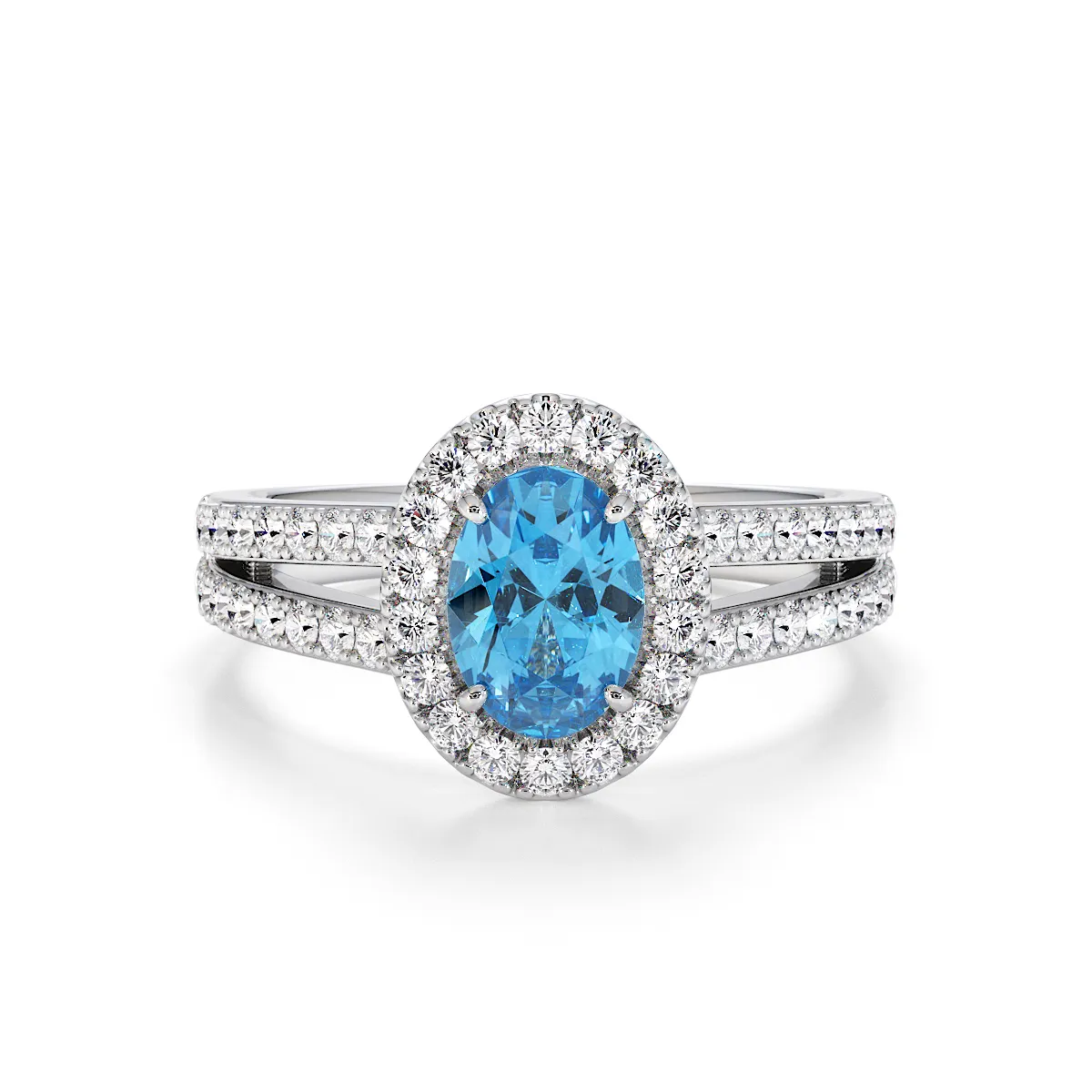
Blue topaz is one of the clearest examples of this shift, because the appeal isn’t really about avoiding diamond but more about actively wanting blue.
What the Colour Actually Represents
Blue topaz carries a genuinely royal, striking tone, long associated with fidelity and trust; meanings that map onto an engagement far more directly than a colourless stone ever could. For couples who find themselves drawn to that specific blue rather than settling for whatever’s traditional, choosing it isn’t a compromise. In fact, it’s closer to the opposite: choosing a stone whose actual symbolism aligns with what the ring is meant to represent in the first place.
Why This Appeals Beyond Its Traditional Birthstone Audience
Blue topaz has traditionally been associated with December birthdays, but it’s increasingly chosen by people with no particular birthstone connection at all, drawn purely to its colour and what it represents. That’s a small but telling detail as it suggests the choice is being made on the stone’s own merits, not out of an obligation to some other unrelated tradition like a birth month.
The Citrine Engagement Ring: For People Who Are Never Related to “Traditional”
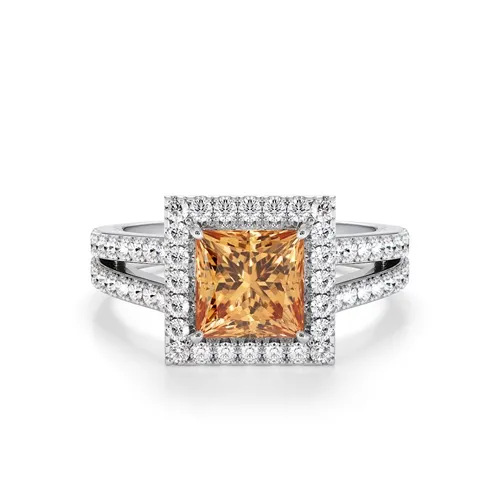
A citrine engagement ring tends to appeal to a slightly different instinct, which is less about symbolism, more about identity.
A Deliberate Move Away from the Expected
Citrine rings are frequently chosen specifically by people who describe themselves as non-traditionalists, drawn to something that celebrates unconventional jewellery rather than replicating what everyone else has done. It’s not that citrine is “less than” diamond in some hierarchy but, that for a specific kind of person, choosing the expected stone would feel like a small act of self-erasure on one of the most personal purchases they’ll ever make.
What This Says About How People Want to Be Seen
Choosing this particular stone is, in a small way, a public statement: this relationship, and the person in it, isn’t interested in doing things simply because they’re expected. That’s a meaningfully different motivation than choosing a stone purely for its price point, and it reflects a broader cultural move toward personal identity mattering more than convention, even in moments as steeped in tradition as a proposal.
Rarity as a Personal Statement
A tanzanite engagement ring tells a slightly different story again, which is one rooted less in symbolism or identity and more in genuine scarcity.
A Stone That’s Actually Rarer Than Diamond
Tanzanite comes from a single known source in the world, a relatively small mining region in Tanzania, which makes it considerably rarer than diamond by most estimates. For couples specifically drawn to the idea of choosing something genuinely uncommon, this fact holds significant importance; it reflects geographic reality rather than manufactured scarcity.
A Colour That Refuses to Sit Still
This particular stone is pleochroic, meaning it shifts between blue, violet, and burgundy tones depending on the angle it’s viewed from, which is a quality no diamond, however well cut, can replicate. For many couples, choosing a stone that genuinely changes character based on the viewing angle feels like a more honest metaphor for a relationship than selecting a stone that appears identical from every angle, every single day, for the rest of its existence.
What This Shift Actually Reveals About Modern Relationships
Underneath all three of these choices sits the same underlying idea: couples increasingly want the physical symbol of their relationship to reflect something specific about them, rather than about what an engagement ring is generally supposed to look like.
Personalisation Over Tradition, Without Rejecting Meaning Entirely
This isn’t a rejection of meaning or tradition wholesale; in reality, it’s the opposite. Choosing a stone for its symbolism, its unconventional identity, or its rarity and shifting colour is arguably a more deliberate engagement with meaning than defaulting to whatever’s expected. The ring stops being a box ticked and starts being an actual decision, made deliberately, for reasons a couple could articulate if asked.
A Quiet Reflection of How Couples Approach Everything Else
It’s hard not to notice the parallel with how many modern couples approach other major decisions too, like weddings, living arrangements, and even the shape of their relationship itself. Fewer people feel obligated to follow a script simply because it’s there. The engagement ring, it turns out, is just one more place where that shift is showing up.
Summing Up
To sum up, the rise of coloured gemstone engagement rings isn’t really a story about gemstones at all. This narrative reflects a generation that is increasingly unwilling to allow a decades-old marketing default to dictate one of the most personal decisions of their lives; instead, they are choosing to consider what the ring should actually mean, rather than focusing solely on its appearance.
Related Reading
Why Lifestyle & Culture is Transforming the Global Industry Landscape
Welcome to our in-depth exploration of Lifestyle & Culture. In an era define...
Expert Insights: Navigating the Complex World of Lifestyle & Culture
Welcome to our in-depth exploration of Lifestyle & Culture. In an era define...