Why Professional Driving Lessons Are Worth It in Officer
By AUZ Driving School
109 Views
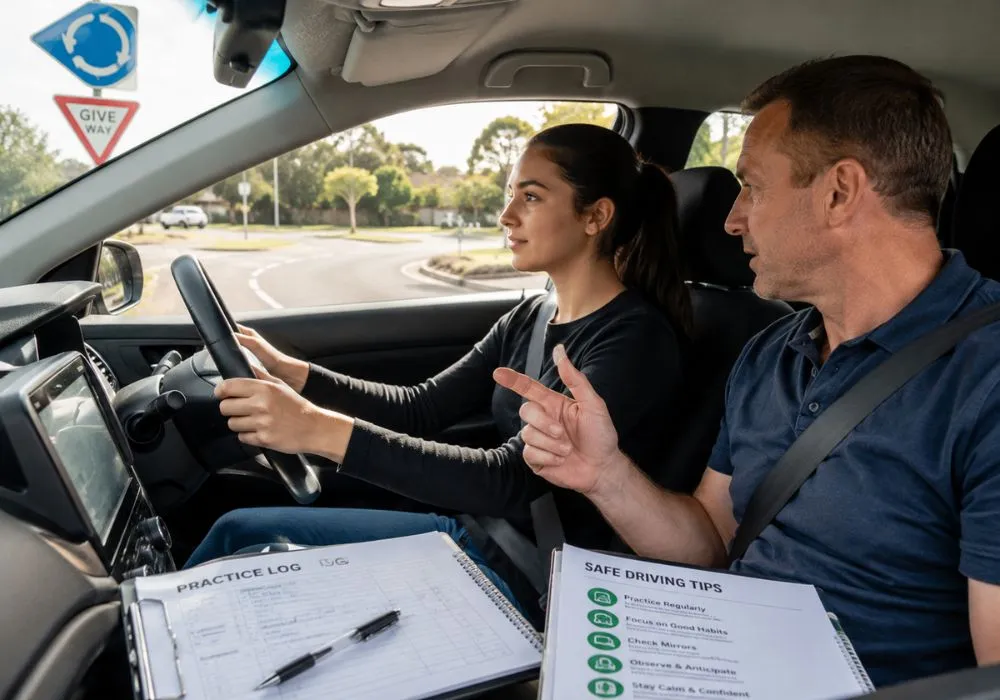
Professional lessons aren't meant to replace practice with parents; professional driving lessons do something different, and that's the point.
What an Instructor Teaches
Research into parent-supervised driving has found that only 6 to 17 per cent of the instruction parents provide is what's classified as 'higher order' teaching, the kind that builds transferable decision-making skills rather than responding to the immediate situation.
A DIA-accredited instructor works differently. They plan each lesson, identify gaps in technique, and build skills in a deliberate sequence, and progress a learner through a staged approach that mirrors what Transport Victoria and VicRoads actually assess.
The Safety Case
According to the TAC (Transport Accident Commission), young Victorians in their first year of driving are almost four times more likely than experienced drivers to be involved in a fatal or serious injury crash. Young drivers aged 18 to 25 make up just 10 per cent of Victorian licence holders but account for 18 per cent of Victorian drivers killed.
The riskiest window is the first three to six months on a P1. And for learner drivers in Officer taking professional lessons, that's a genuine reason to invest in structured instruction before you get to that stage, not after.
An accredited instructor doesn't just teach you to pass. They build hazard recognition, scanning habits, and the reasoning behind decisions the stuff parents handle by instinct but rarely explain.
The Logbook Hours Importance
If you're under 21, you need to log at least 120 hours of supervised driving before your Drive Test, including 20 hours at night. Those hours can come from parents, siblings, or any adult who holds a full (non-probationary) licence for the same type of vehicle.
A learner who has spent 110 hours practising on familiar local roads and 10 hours with a professional instructor is very different from someone who has spread those same 120 hours across varied conditions with structured guidance at key stages. But the quality of that time still determines how ready you actually are.
The best setup is professional lessons to introduce new conditions and fix technique, with parent practice in between to reinforce it.
Officer Roads Are Different
Officer is a suburb of new estates, arterial connectors, roundabouts, and roads that merge into Pakenham's busier network. Learners here aren't just dealing with quiet residential streets for long.
The Drive Test for Officer residents runs out of Pakenham East Licence Testing Centre at 129 Treloar Lane. The test is structured in two stages: a low-speed manoeuvring section and an on-road driving section, typically running 30 to 40 minutes total.
Practising with a parent on roads you already know is useful. But a good instructor will deliberately take you somewhere unfamiliar, make you deal with a roundabout you haven't seen before, or ask you to merge onto a road with faster-moving traffic.