Why Professional Driving Lessons Are Worth It in Wongarbon
By AUZ Driving School
126 Views
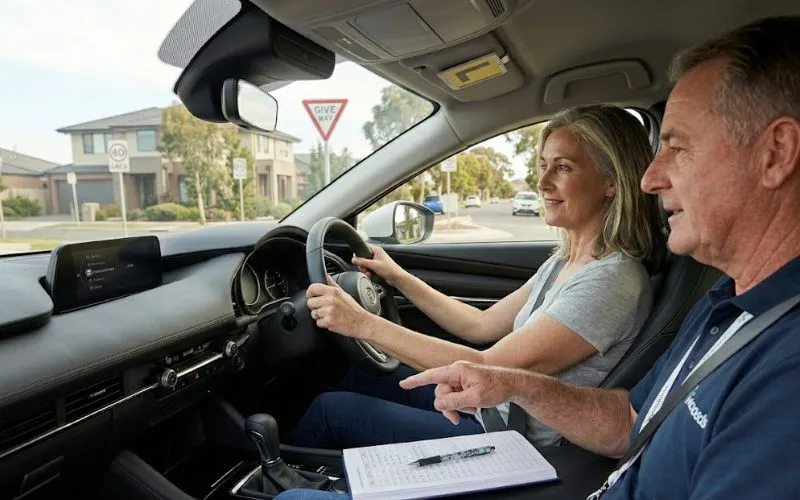
A lot of learners in Wongarbon assume that mum or dad in the passenger seat is enough. It isn't, and the reasons go beyond passing a test. But professional driving lessons are about being prepared for the roads you'll drive on.
What Professional Lessons Give You
Hazard perception is taught
Research consistently shows that professional driving instructors develop higher-order skills, like hazard perception and situational awareness, more effectively than parents or supervisors. Supervised practice with family tends to focus on vehicle handling and road rules. Instructors teach you how to read the road itself.
This matters in a regional area. Open country roads around Wongarbon involve higher speed limits, less predictable traffic, livestock hazards, and road fatigue, conditions that demand more hazard awareness than a suburban Sydney street.
Dual-control vehicles create a safer learning environment
Licensed instructors use dual-control vehicles. This means the instructor has their own brake pedal on the passenger side and can intervene immediately if something goes wrong. This setup lets you attempt situations you might hesitate to try in the family car, merging at speed, navigating roundabouts, handling a sudden hazard, without the same level of risk.
It also removes the anxiety that comes from feeling like any mistake puts your family in danger. That stress reduction directly speeds up learning.
Instant feedback beats correction after the fact
When you practice with a parent, feedback usually comes after the event: "You turned too wide back there." A licensed instructor corrects technique in the moment the error happens, which is how technique actually changes.
Over multiple lessons, an instructor tracks your specific patterns of error and targets them directly. A parent can't do that. They weren't trained to track error patterns.
The 3-for-1 Logbook Benefit
Every hour you spend with a Transport for NSW licensed instructor counts as three hours in your logbook, up to a maximum of 10 professional lessons. That's 30 logbook hours from 10 paid lessons (your 10 actual hours, plus 20 bonus hours credited by Transport for NSW).
Combined with the NSW Safer Drivers Course (which requires at least 50 actual on-road hours before you're eligible), you can reduce the remaining supervised driving you need with family to 70 hours.
Book professional lessons spread across different conditions, a mix of morning, afternoon, and ideally one or two night lessons. If a lesson is at night, only that 1 hour counts toward your mandatory 20 night hours. The other 2 hours from the 3-for-1 scheme go toward your daytime total.
What to Look for in a Dubbo-Based Driving School
Since Wongarbon has no driving school physically in the village, learners typically head into Dubbo for lessons. The drive takes around 15 minutes along the Mitchell Highway, which itself becomes part of your practical training.
When choosing an instructor, confirm these points before booking:
- They hold a current NSW driving instructor licence, issued by Transport for NSW
- They teach in a dual-control vehicle
- They have experience with professional driving lessons in Wongarbon area and know the local test routes
- They offer lesson packages that qualify for the 3-for-1 log book bonus
- They can provide a pre-test warm-up lesson and use of their vehicle on your test day
Sitting your driving test in a familiar dual-control car, with a warm-up lesson beforehand, removes two significant sources of test-day stress: an unfamiliar vehicle and cold nerves.
The Crash Risk Picture for New P-Platers
This is the part most people don't think about before they start lessons. A first-time P-plater is 33 times more likely to be involved in a crash than a learner driver, according to UNSW research. The difference is the supervisor: learners have one, P-platers don't. That risk roughly halves six months after getting their P1 licence.
Transport for NSW data confirms that young drivers under 26 make up about 14% of all licence holders in NSW, but were involved in almost a quarter of annual road fatalities in 2021.
Based on NSW Government data from 2019 to 2023, around 78% of all fatal crashes on country roads happen on roads with a speed limit of 80km/h or higher.
Professional lessons build the hazard-reading skills that make a difference in those first high-risk months. No one expects a new P-plater to be perfect.
The question is whether they've got the instincts to respond when something goes wrong at 100km/h on the Mitchell Highway. That's what professional lessons actually build.