Feeling Full After Eating Very Little: Could It Be an Ovarian Health Warning Sign?
By Dr Amrita Clinic
87 Views
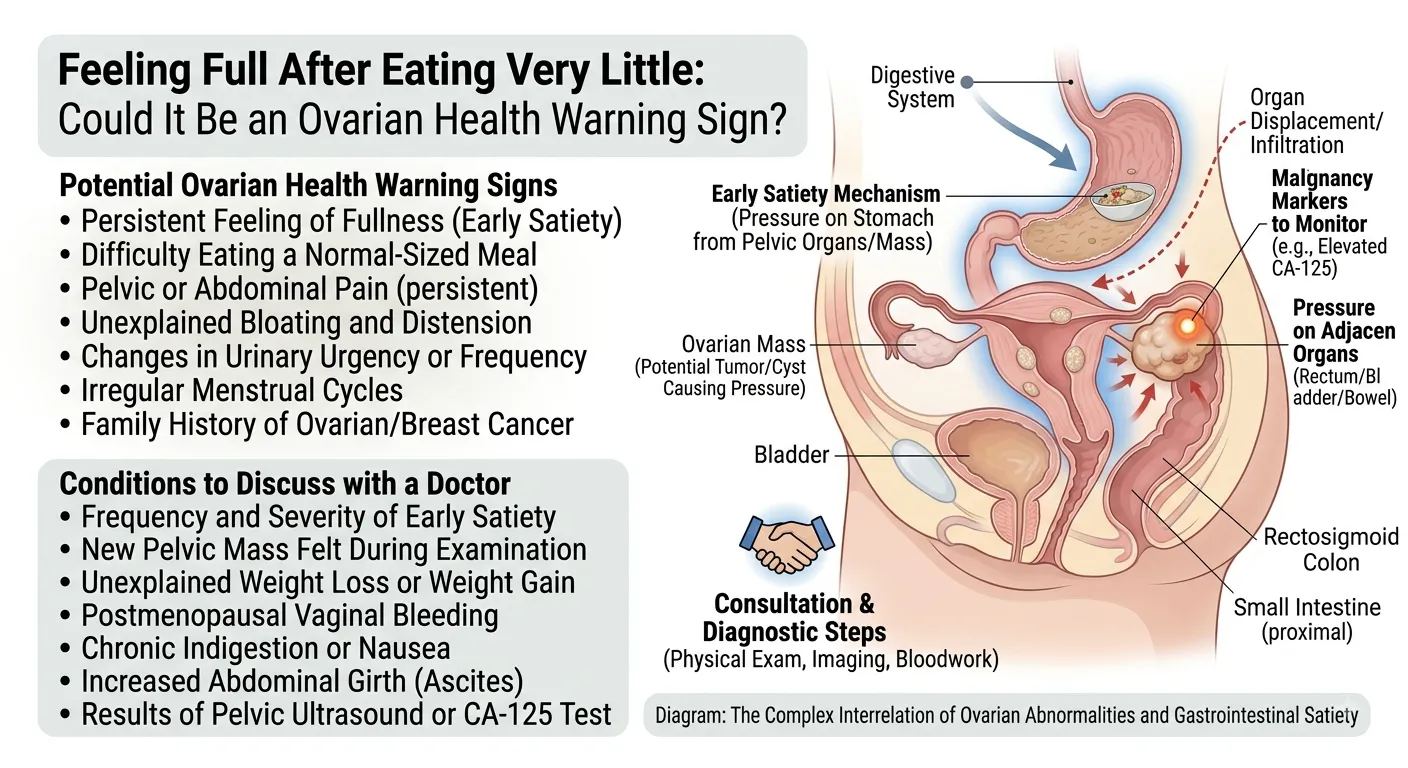
Let me tell you about a patient I saw recently. She walked into my clinic looking perfectly healthy. Normal weight. Good complexion. No obvious signs of illness. But she sat down and said something that immediately put me on alert. She said, "Doctor, I eat half of what I used to eat, and I feel completely full. Like I've had a heavy meal. Something feels off."
She had been living with this for about two months. She had tried changing her eating habits, taking digestive enzymes, even fasting for a few days. Nothing helped. And she was convinced it was a stomach problem. In a way, that is exactly what I find concerning. Women assume early satiety—the medical term for feeling full after eating very little—is always about digestion. But as a gynecologist, I have learned that sometimes it is not the stomach at all. Sometimes it is the ovaries.
What Early Satiety Actually Means
Let us be clear about what we are discussing. Early satiety is not the same as feeling full after a proper meal. It is the sensation of being unable to eat more than a few bites before your stomach feels uncomfortably full. It is persistent. It does not improve with dietary changes. And it often comes without any other digestive symptoms like nausea, heartburn, or diarrhoea.
What makes this symptom particularly dangerous is how easy it is to dismiss. Women blame stress, busy schedules, or just getting older. They adjust by eating smaller portions and do not think much about it. But when this happens consistently, especially in women over 40, it deserves a proper evaluation. The reasons go far beyond the digestive tract.
The Ovarian Connection
Why would the ovaries cause early satiety? The answer is simple anatomy. The ovaries sit in the pelvic cavity, which is directly below the abdominal cavity. When an ovarian cyst grows, or when an ovarian tumour enlarges, it takes up space. It pushes upward against the stomach and intestines. That physical pressure creates the sensation of fullness, even when very little food has been consumed.
This is not theoretical. I have seen patients whose ovarian cysts grew so large that they occupied a significant portion of the abdomen. Their clothes no longer fit. They complained of bloating and early fullness. And yet, many of them did not associate these symptoms with their reproductive system until I pointed it out.
Ovarian Cancer: The Link No One Wants to Think About
Here is the part that I need to address directly. Persistent early satiety, particularly when combined with other symptoms, is one of the warning signs of ovarian cancer. This is not a fact I share to cause alarm. I share it because awareness saves lives.
Ovarian cancer is often called a silent disease, but that is not entirely accurate. It has symptoms. They are just subtle. Early satiety, bloating, pelvic pain, and urinary urgency—when these symptoms appear together and persist for weeks, they should not be ignored. Research has shown that women who experience these symptoms and seek evaluation early have significantly better outcomes.
As a top gynaecologist in malviya nagar delhi, What I find concerning is how many women are not aware of this connection. They treat ovarian cancer as something that only affects others. But ovarian cancer is the fifth leading cause of cancer death among women, and early detection remains the single most important factor in improving survival.
Benign Causes That Also Matter
It is important to say this—most cases of early satiety are not caused by ovarian cancer. I do not want women to panic. But I also do not want them to ignore the symptom entirely.
Ovarian cysts are far more common than ovarian cancer, and they can cause the exact same sensation of fullness. These fluid-filled sacs often resolve on their own, but larger cysts may need monitoring or even surgical removal. Uterine fibroids, which are non-cancerous growths in the uterus, can also push against the abdomen and cause early satiety. Endometriosis, adenomyosis, and even severe pelvic inflammatory disease can create enough pelvic pressure to affect appetite.
The point is not to assume the worst. The point is to stop assuming it is nothing.
When Does It Stop Being "Just Digestion"?
This is the question I get asked most often. When should a woman stop blaming her stomach and start considering her gynaecological health?
Here is what I tell my patients. If you have felt full after eating very little for more than two weeks, and it does not improve with changes in diet or eating habits, it is worth investigating. If that sensation is accompanied by pelvic pain, bloating, changes in urination, or unexplained weight changes, the need for evaluation becomes even stronger.
I also tell women to pay attention to the persistence of the symptom. Digestive issues tend to come and go. They fluctuate with meals, with stress, with what you eat. Gynaecological issues often present with a steadiness—the symptoms linger day after day, regardless of what is on your plate.
What a Gynaecological Evaluation Looks Like
If you come to me with early satiety, I will start with a detailed history. I will ask about your menstrual cycle, your family history of ovarian or breast cancer, and any other symptoms you might have overlooked. I will perform a pelvic examination to check for any masses or tenderness in the pelvic region. And I will almost certainly recommend a transvaginal ultrasound.
The ultrasound is the most reliable initial tool. It allows me to see the ovaries clearly, measure any cysts or growths, and assess whether further testing is needed. Sometimes a blood test for CA-125 is ordered as well, though I always explain that this marker is not definitive on its own.
The process is straightforward. It is not painful. And it provides answers that no amount of guesswork can offer.
A Final Word
Feeling full after eating very little is not normal. It is a symptom that your body is sending you. And as a gynecologist, I have seen too many women push this symptom aside for months, only to discover that an earlier evaluation could have made a significant difference.
If you are in Delhi and experiencing this symptom, do not wait. You can consult with a gynecologist in Malviya Nagar Delhi who can take a thorough history, perform the necessary examinations, and help you understand what is happening. Early evaluation gives you options. Delaying evaluation narrows them.
Your health is not something to take chances with. And your ovaries deserve the attention they rarely get. If something feels different, trust that instinct and seek help. It could make all the difference.