RFID Provides Frictionless Shopping to American Neighborhoods
By senitronusa
84 Views
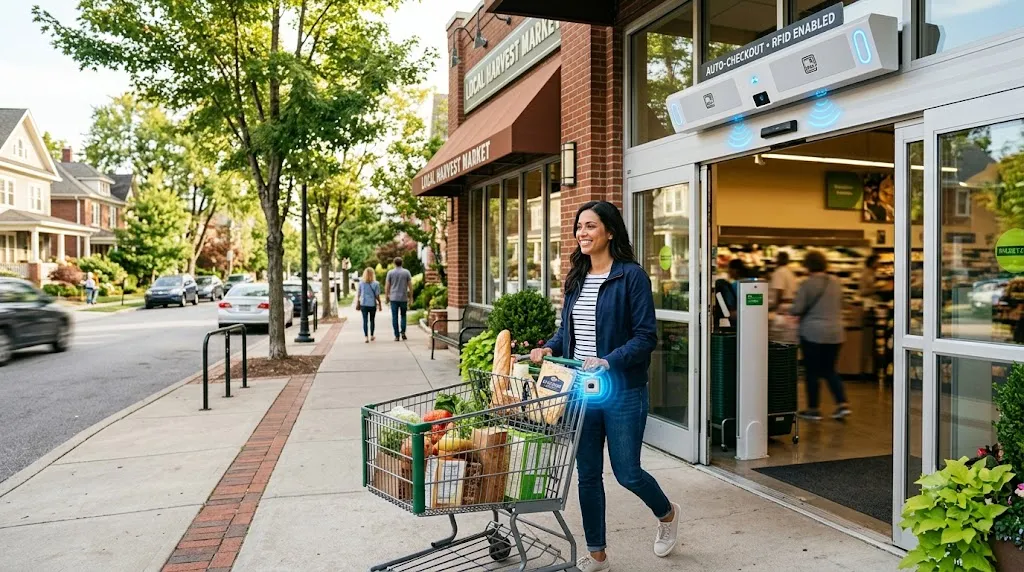
For more than 50 years, barcodes have been the backbone of retail. They are cheap and simple to print and are most known by any shopper. But they have a major flaw: each one has to be scanned individually, which is a hindrance at the checkout counter and a dream come true for hassle-free shopping.
That may change with a new breed of technology dubbed chipless RFID. Chipless RFID—which does not require the costly silicon microchips that power traditional RFIDs—could make frictionless shopping more attainable for retail giants and for neighborhood grocery stores, pharmacies, and independent stores throughout America. Most businesses are already using RFID retail inventory service and getting some major benefits.
What Is Chipless RFID?
The conventional RFID tags are silicon chips that store information and communicate with the RFID readers. These are very effective but also too expensive to use in lower-margin consumer products.
Chipless RFID works differently.
It does not contain a microchip; rather, it has special printable patterns that reflect radio waves in different ways. Every pattern generates a unique "frequency signature" which can be used to recognize a product.
The benefits of the chipless RFID system are:
a. Reduced production costs by a great deal.
b. The labels that can be printed would be like the ones used today for barcodes.
c. No silicon components
d. A light and flexible material
e. Make it easier to use and implement on common, everyday products.
The technology is also potentially able to be printed directly onto packaging, meaning that retailers would be able to tag millions of products for a fraction of the cost of conventional RFID systems. Talk to an expert who can help you with an RFID management software system for businesses.
Creating a Frictionless Checkout Also Makes It Affordable
Consumers have been captivated by the no-cashier checkout scenario that has been showcased by big brands. Adopting such systems, however, can be costly and include the installation of considerable infrastructure, as well as the use of expensive cameras and sensors to capture the data, and the use of AI platforms to process and analyze the data.
This may not be a practical solution unless the technology of Chipless RFID is developed.
Picture you walk into your local supermarket, put 50 products into your cart, and just walk through the RFID checkout gate.
It could: The system could, within seconds:
1. Count all the items in the cart
2. Find the total cost of all items purchased
3. Link a payment method to the charge
4. Sync products with inventory (auto-products)
5. Send an e-receipt to the customer/buyer.
The Benefits of Faster Shopping
Chipless RFID can revolutionize retail in many ways.
Potential benefits include:
a. Reduced checkout congestion
b. Improved inventory accuracy
c. Faster restocking processes
d. Lower product shrinkage
e. Better demand forecasting
Challenges Still Ahead
Several hurdles remain:
1. Standardization across manufacturers
2. The accuracy of the reader when handling densely packed carts
3. Integrated with the current retail systems.
4. Consumer privacy concerns
5. Infrastructure costs at the start of the project (scanners)
The experts predict that it will grow slowly, starting with specific product categories and experimental projects, and then moving to wider retail areas.
Tips on Observing the Trend
If you want to prepare for the chipless RFID, you need to consider the following factors:
1. Observing new industry developments.
2. Assessing current stock management procedures.
3. Enhancing or piloting in high-volume product categories.
4. Training employees on new retail innovations.
5. Evaluating customers' preferences for the shopping experience without friction.
6. The start of a barcode-free future is in sight. A barcode-free future is on the horizon.
Barcodes are unlikely to be going away anytime soon, but their reign may be coming to an end. One of the most promising ideas of the future of retail is the concept of the "nearly invisible shopper" with "easy transactions" and "no checkout lines. America's suburban grocery stores and pharmacies might one day provide a first-class shopping experience – one previously available only to the largest tech-powered stores.