Why Are Spectroscopy and Spectrometry Essential for Accurate Laboratory Analysis?
By jacobevansjb31
77 Views
Introduction
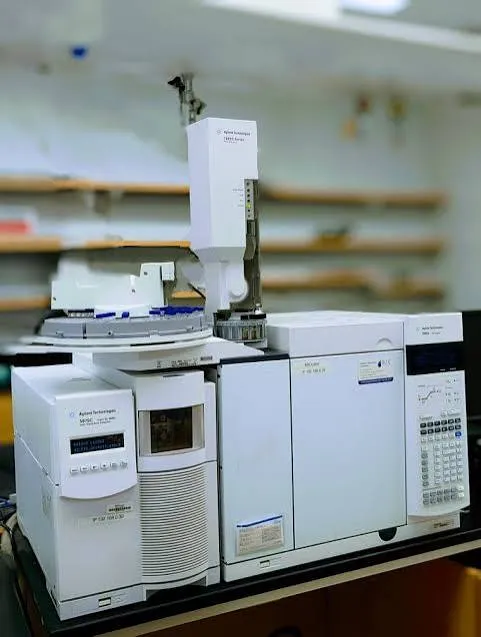
Modern laboratories rely on analytical techniques that can identify substances, measure concentrations, characterise materials, and detect elements at extremely low levels. Among the most important methods supporting this work are Spectroscopy And Spectrometry techniques. These analytical approaches help scientists understand how matter interacts with electromagnetic radiation or how individual components can be separated and measured according to properties such as mass, wavelength, or elemental composition.
From pharmaceutical development and environmental monitoring to materials science and food testing, spectroscopy and spectrometry provide laboratories with valuable quantitative and qualitative information. Accurate results, however, depend on more than advanced instrumentation. Appropriate calibration standards, high-purity laboratory materials, careful sample preparation, controlled operating conditions, and validated analytical procedures all contribute to reliable measurements.
Understanding Spectroscopy and Spectrometry
Although spectroscopy and spectrometry are closely related, they describe different aspects of analytical measurement.
Spectroscopy generally examines interactions between matter and electromagnetic radiation. Depending on the technique, scientists can study absorption, emission, fluorescence, or scattering behaviour. These interactions can reveal information about molecular structures, chemical bonds, elemental composition, and concentration.
Spectrometry refers more broadly to measuring and analysing a spectrum or distribution. Mass spectrometry, for example, separates ions according to their mass-to-charge ratio, while techniques such as ICP-MS enable laboratories to detect trace and ultra-trace elements in complex samples.
Common analytical techniques include:
- Atomic absorption spectroscopy (AAS)
- Inductively coupled plasma mass spectrometry (ICP-MS)
- Inductively coupled plasma optical emission spectrometry (ICP-OES)
- UV-visible spectroscopy
- Infrared spectroscopy
- Fluorescence spectroscopy
- X-ray fluorescence (XRF)
- Mass spectrometry
Each technique serves different analytical objectives, making method selection an important part of laboratory planning.
Why Calibration Standards Matter
Even highly advanced analytical instruments require calibration before dependable quantitative results can be produced. Calibration standards contain accurately known concentrations of specific elements or compounds and provide reference points against which unknown samples can be measured.
For multi-element analysis, laboratories may use standards containing several elements at controlled concentrations. These can simplify preparation procedures while supporting calibration of instruments used for environmental analysis, pharmaceutical testing, materials characterisation, and industrial quality control.
Reliable reference standards can support:
- Instrument calibration
- Method development
- Analytical verification
- Quality-control procedures
- Detection-limit assessment
- Measurement consistency
- Routine performance checks
Traceability and appropriate documentation are particularly valuable when laboratory results must meet internal quality systems, regulatory requirements, or recognised analytical procedures.
The Importance of Sample Preparation
Successful spectroscopy and spectrometry begin before a sample reaches the instrument. Contamination, incorrect dilution, unsuitable containers, poor mixing, and impurities in laboratory materials can all influence analytical accuracy.
For many analytical workflows, suitable Solvents are therefore an important part of sample preparation. High-purity solvents can help minimise unwanted background signals and reduce the risk of introducing contaminants into sensitive analyses.
Depending on the technique and sample matrix, preparation may involve dilution, digestion, filtration, extraction, dissolution, or chemical treatment. Every stage should be carefully controlled because small preparation errors can become significant when measuring substances at trace concentrations.
Clean laboratory equipment and suitable storage conditions are equally important, particularly when analysing metals, environmental contaminants, pharmaceutical impurities, or other low-level analytes.
Applications Across Scientific and Industrial Laboratories
Spectroscopic and spectrometric techniques are widely used because they can provide detailed analytical information across many different sample types.
Environmental Analysis
Environmental laboratories analyse water, soil, sediment, and other samples to identify metals, pollutants, and contaminants. ICP-MS, ICP-OES, and AAS can provide sensitive elemental measurements that support environmental monitoring and research.
Pharmaceutical and Chemical Testing
Analytical laboratories use spectroscopy and spectrometry during raw-material verification, formulation research, impurity investigations, quality control, and process development. Accurate analytical measurements can help scientists understand composition and maintain consistency during research or production.
Food and Beverage Analysis
Elemental and molecular analysis can support investigations into nutritional composition, mineral levels, authenticity, contamination, and product quality. Reliable calibration and sample preparation are essential when comparing results between batches or laboratories.
Materials Science
Metals, alloys, coatings, polymers, ceramics, and other materials can be characterised using different spectroscopic methods. Elemental composition measurements are particularly useful when researchers need to confirm material properties or investigate unexpected variations.
Academic and Research Laboratories
Universities and research organisations use spectroscopy and spectrometry for disciplines ranging from chemistry and biology to physics and materials engineering. Flexible analytical techniques allow researchers to explore molecular behaviour, elemental composition, reactions, and newly developed materials.
Supporting Accurate Measurements with Laboratory Equipment
Analytical measurements are often supported by additional laboratory equipment used during preparation, verification, and environmental control. Appropriate Measuring Instruments can assist laboratories with measurements such as temperature, mass, conductivity, pH, and other parameters that may influence experimental conditions.
Maintaining consistent conditions is especially important when laboratories compare measurements over time. Changes in sample mass, preparation volume, temperature, reagent concentration, or instrumental conditions can introduce variability into analytical results.
For this reason, spectroscopy workflows should be considered as complete analytical systems rather than isolated instrument measurements.
Choosing Materials for Spectroscopy and Spectrometry Workflows
Selecting laboratory materials should begin with the analytical method and required detection range. A routine measurement at relatively high concentration may have different purity requirements from trace-element analysis performed at extremely low concentrations.
Laboratories should consider:
- Required analytical technique
- Target analytes or elements
- Expected concentration range
- Sample matrix
- Required standard concentration
- Chemical compatibility
- Purity requirements
- Storage conditions
- Preparation procedures
- Traceability and documentation
Careful product selection can help reduce unnecessary method troubleshooting and support more reproducible laboratory workflows.
Improving Reproducibility in Analytical Laboratories
Reproducibility is one of the most important goals in analytical science. Laboratories need confidence that repeated measurements of the same material will produce results within an acceptable range.
Good analytical practice includes regular instrument calibration, appropriate blanks and controls, documented preparation procedures, clean laboratory equipment, stable storage conditions, and suitable reference materials. Instrument maintenance and performance checks should also be performed according to the requirements of the analytical method.
When these practices are combined with suitable laboratory materials, spectroscopy and spectrometry become powerful tools for generating dependable scientific data.
Building More Reliable Analytical Workflows
Spectroscopy and spectrometry continue to play central roles in modern analytical science because they allow laboratories to investigate substances with exceptional sensitivity and detail. Their applications extend from routine quality control to advanced research involving complex materials and trace-level measurements.
Reliable analysis depends on the complete workflow: appropriate calibration standards, suitable solvents, accurate measuring equipment, careful sample preparation, controlled conditions, and validated analytical procedures. By considering each of these elements together, laboratories can improve measurement confidence, minimise avoidable errors, and build analytical processes capable of supporting demanding scientific and industrial applications.